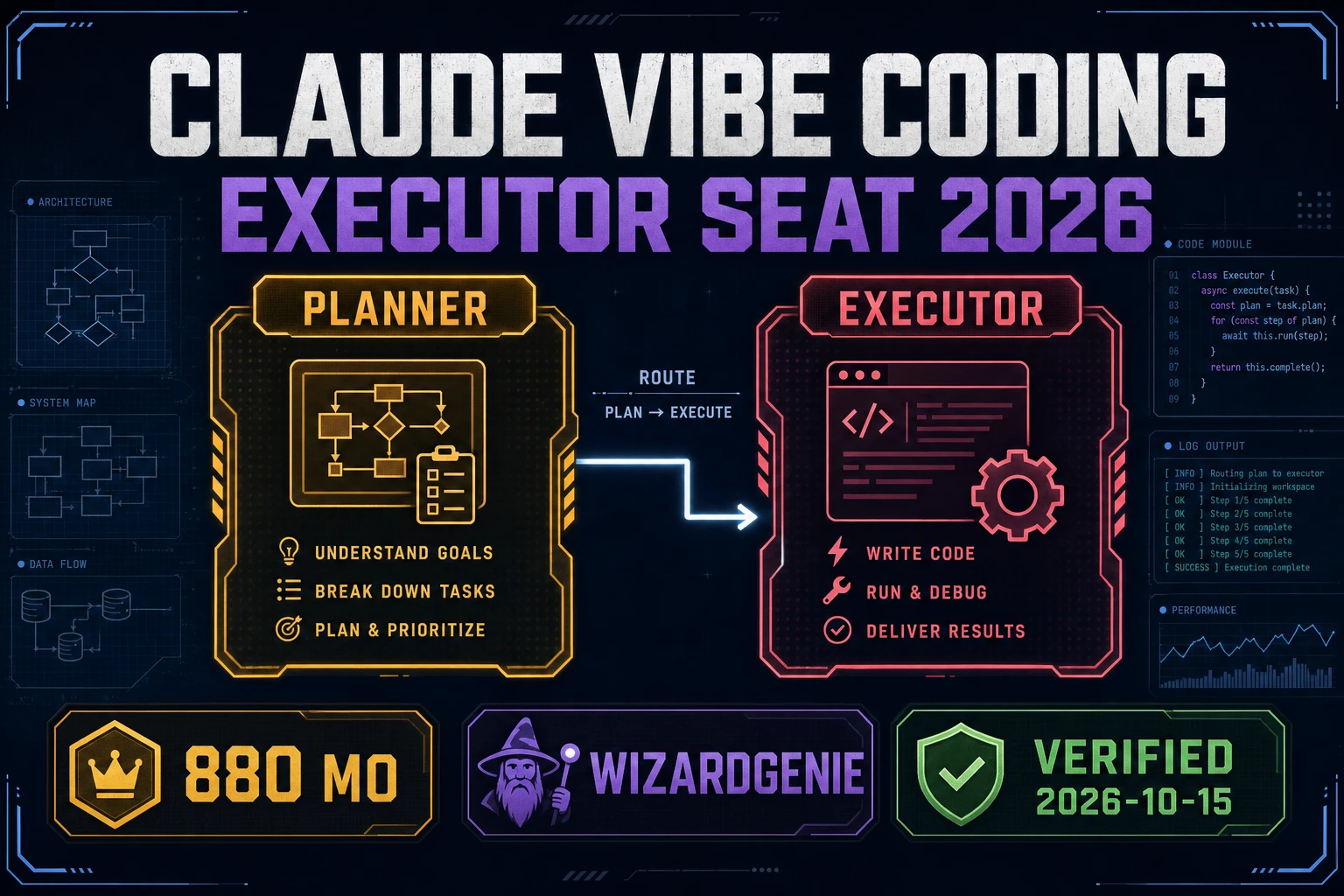
Most people who type claude vibe coding into a search bar already know Claude can write code. What they are really asking is which chair Claude should sit in when a game prototype has to survive a playtest, not just a green compile. Put the frontier model on every keystroke and the bill climbs while the diff quality stays noisy. Route Claude to the Planner seat, hand a short brief to a budget Executor, and close the loop yourself — that is the workable 2026 pattern.
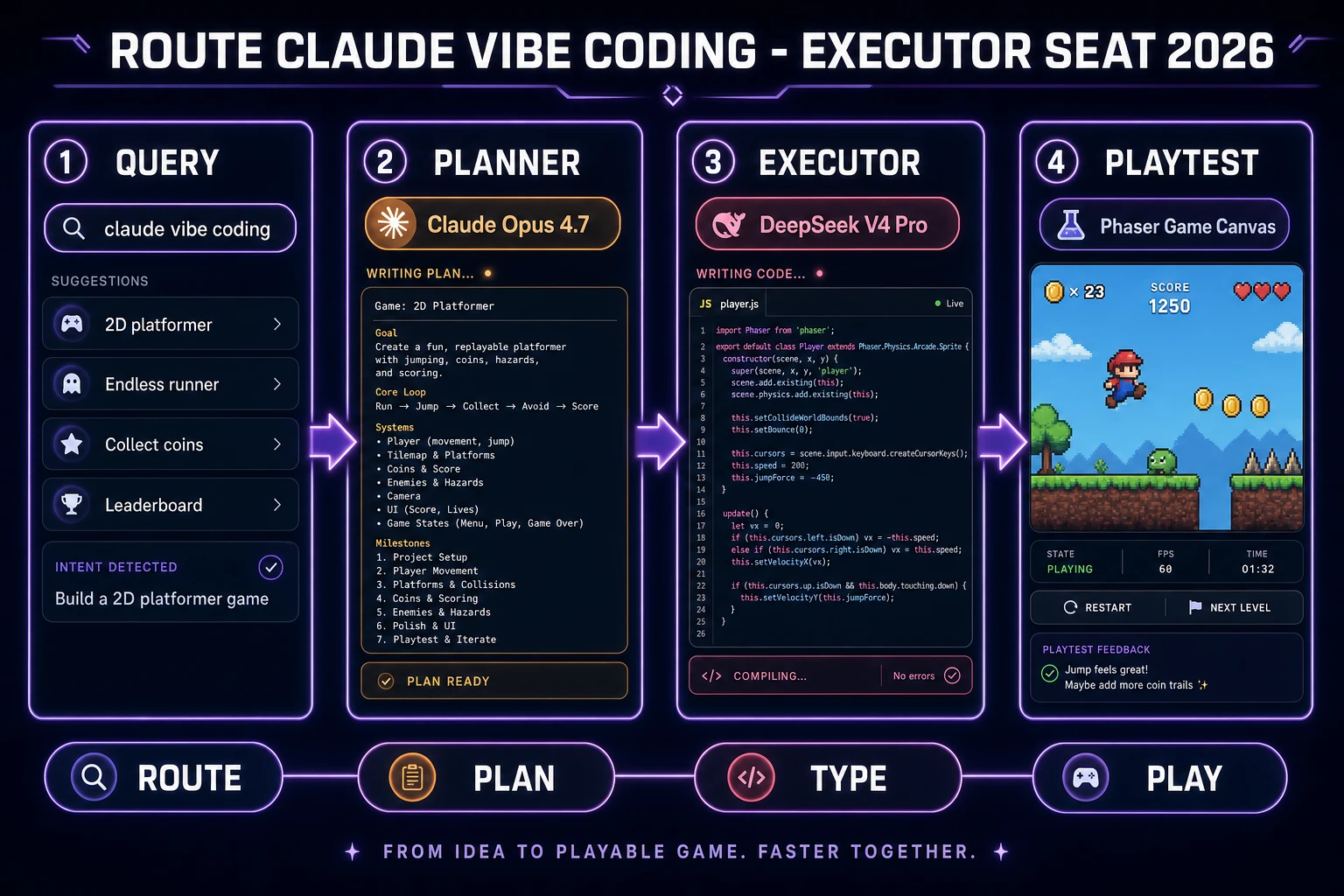
What claude vibe coding searchers actually want
DataForSEO lists claude vibe coding at 880 searches a month with KD 7 and navigational intent (verified 2026-10-14 in tools/research-supplement.md, seed claude vibe coding). Sibling phrases in the same cluster include vibe coding with claude (480/mo, KD 0), vibe coding claude (260/mo, KD 7), claude code for vibe coding (260/mo, KD 12), and claude code vibe coding (210/mo, KD 7). The head query is not “what is Claude” and it is not “paste my whole RPG pitch.” It is “how do I run Claude as the thinking layer without burning tokens on every indentation fix?”
Wikipedia’s Vibe coding page (verified 2026-10-15) defines the practice as describing a project in natural language to a large language model that generates source code, notes Andrej Karpathy’s February 2025 coinage, records Merriam-Webster listing the term as slang in March 2025, and lists Collins English Dictionary naming it Word of the Year for 2025. The same page catalogues the standing critique: accountability, maintainability, and security risk when AI-generated code ships without review. For game makers, that critique is not abstract — a floaty jump apex or a broken coyote window fails in the player’s hands, not in a unit test.
Sibling posts on this blog already cover definition intent (what is vibe coding, vibe coding meaning) and the reverse-order informational phrase vibe coding with Claude. This article locks the higher-volume navigational phrasing and focuses on the Executor seat — who is allowed to type once Claude finishes thinking.
Planner vs Executor seats for claude vibe coding
Treat the chat as two jobs, not one persona.
- Planner. Reads the playable sentence, names the files that may change, freezes the systems that must not move, and writes a done-when playtest. This is where Claude earns its price: Claude Opus 4.7, GPT-5.5, Gemini 3.1 Pro, or Grok 4.2 from Sorceress Code’s
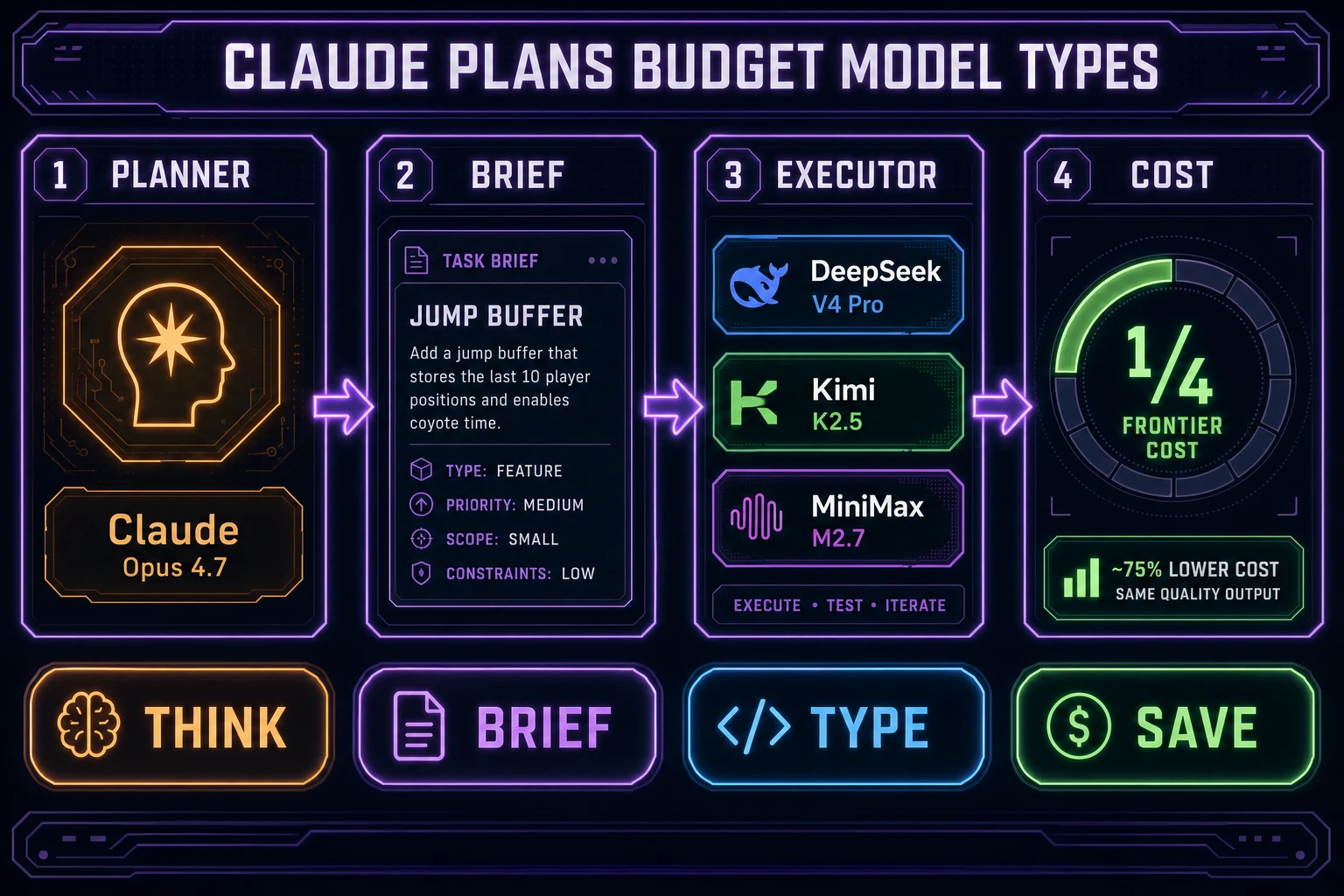
CODING_MODELSlineup (src/app/_home-v2/_data/tools.tslines 767–775, verified 2026-10-15). - Executor. Receives a short brief and produces a tiny diff. Acceptable budget seats on the same lineup are DeepSeek V4 Pro, Kimi K2.5, and MiniMax M2.7. Claude Sonnet 4.6 appears in the catalog as “Fast + smart,” but it is still a frontier-priced typer — do not put it on the Executor chair for this pattern.
A Planner brief that matches the seat split:
Goal: gap B feels unforgiving on keyboard.
Files allowed: src/player.js only.
Change: add 6-frame coyote time and 8-frame jump buffer.
Do not touch gravityScale, maxRunSpeed, or enemy AI.
Done when: walking off ledge still allows jump for 6 frames
and pressing jump 8 frames early still queues the jump.
Playtest: run level-01 gaps A, B, and C three times each.
Hand that card to the Executor. You get a diff, not a rewrite. You read it. You playtest. Claude never needed to burn output tokens on every brace.
Cost math when the Executor seat is wrong
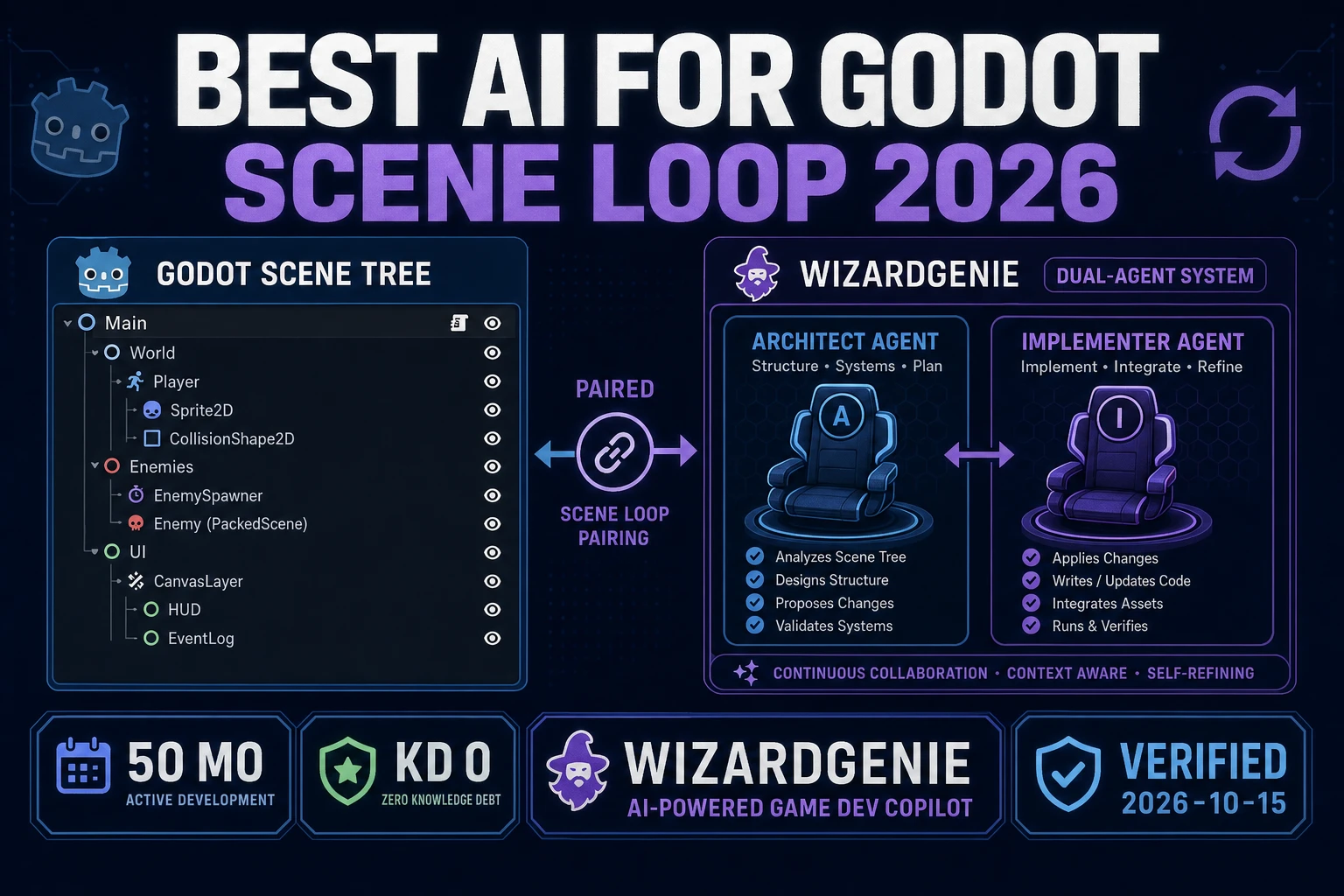
WizardGenie documents Dual-agent Planner + Executor in source as “A smart Planner thinks; a cheap Executor codes. Same quality at roughly a quarter of the token cost” (src/app/wizard-genie/page.tsx lines 297–299, verified 2026-10-15). That claim only holds when the Executor is genuinely cheap. Put Claude Opus 4.7 or GPT-5.5 on both chairs and you paid for two frontier streams — the dual-agent UI becomes costume, not economics.
Practical routing rules for claude vibe coding sessions:
- One plan, one typing pass. Do not let the Planner rewrite files mid-execution. If the brief was wrong, stop, replan, then type again.
- Cap the blast radius. One or two files per Executor turn. Anything wider is a new Planner job.
- Reject expensive typers. Sonnet, Opus, GPT-5.5, and Gemini 3.1 Pro stay on the thinking side. Budget models type.
- Count playtests, not prompts. Three Executor turns without a loop check means you are collecting diffs, not shipping feel.
When teams ignore the seat split, the bill pattern is predictable: a long Claude session that rewrites the same controller three times, followed by a playtest that still feels wrong. The tokens were spent on narration, not on narrowed diffs. Routing Claude vibe coding through Dual-agent flips that ratio — short expensive plans, long cheap typing, human feel checks — which is why WizardGenie surfaces the pattern as a first-class agent power instead of a prompt tip.
That is the same filter adjacent posts apply to celebrity and Reddit vibes — hobby lane invents freely; product lane requires diffs you can defend. The difference here is the named brand in the query: Claude is the Planner brand people already trust, so the failure mode is over-trusting it as a stenographer.