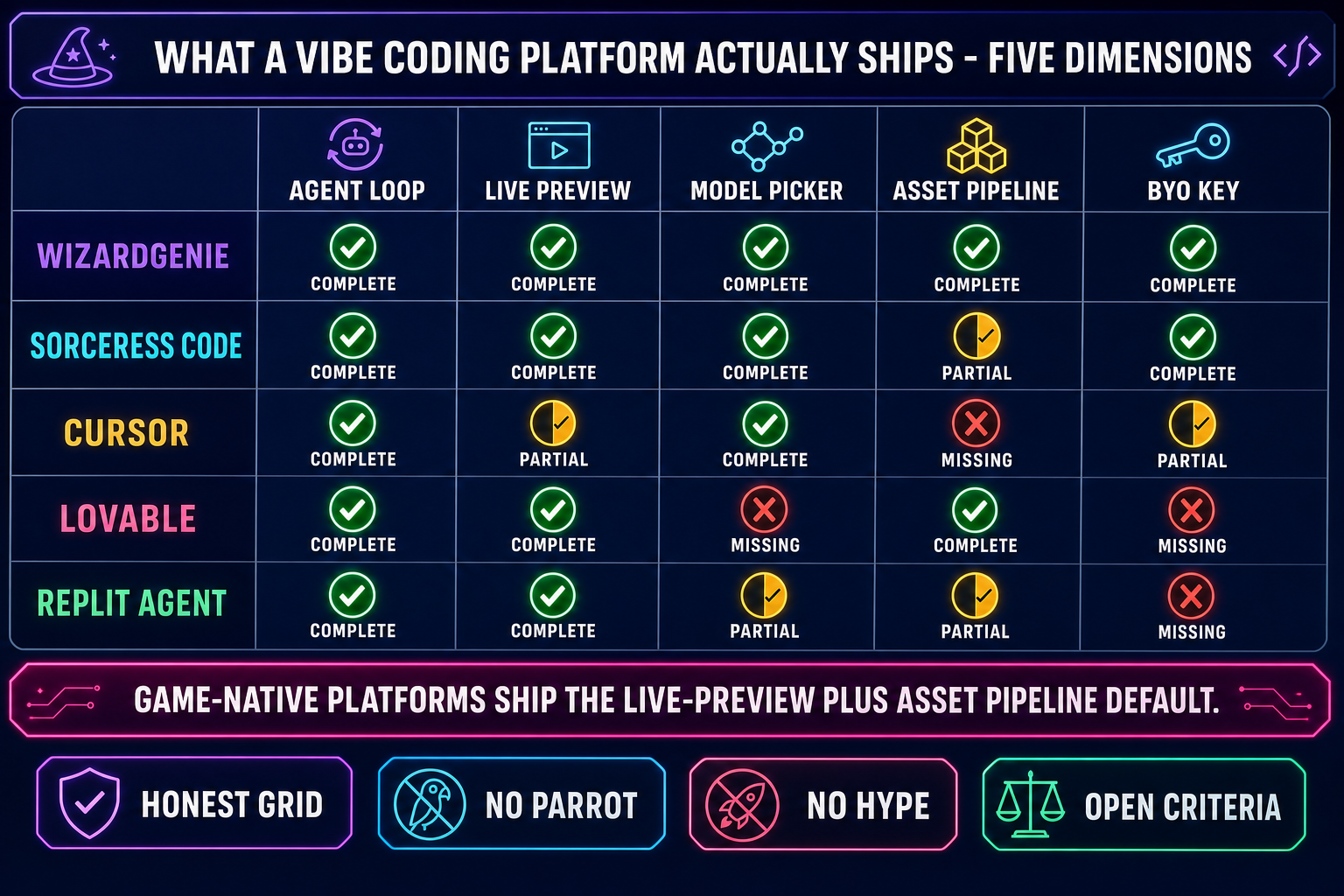
The vibe coding platforms market in 2026 is loud, well-funded, and split cleanly down the middle. On one side sit the game-native agents — WizardGenie and Sorceress Code — built for Phaser 4, Three.js, in-loop sprite and 3D and audio generation, and the “ship a playable game from a prompt” loop. On the other side sit the general-purpose web platforms — Cursor 3, Lovable, v0, Bolt.new, Replit Agent, Windsurf — built for React, Next.js, Supabase, and the “ship a full-stack web app from a prompt” loop. The two halves overlap in surface area and diverge sharply in what each one actually ships under the hood. This is an honest tour, verified against each platform’s live documentation on May 13, 2026, of what is in the box on each side of the line.
What a vibe coding platform actually ships in 2026
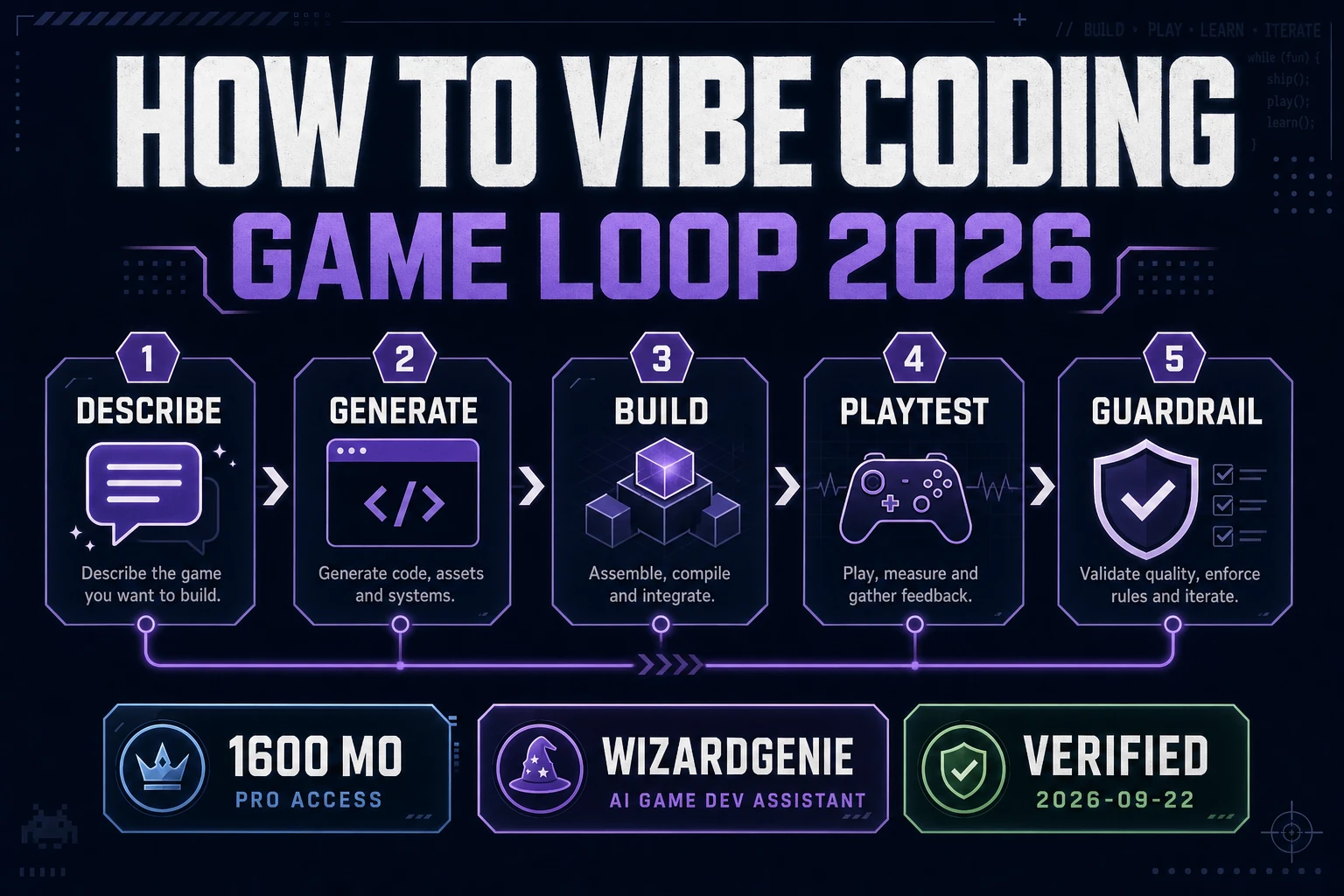
The line between a vibe coding platform and a regular AI coding assistant is whether the AI controls the runtime. A regular coding assistant — chat completion in an editor, autocomplete in the gutter, a sidebar that suggests diffs — leaves the developer driving every file write, every shell invocation, every test run. A vibe coding platform hands the agent the keyboard. The agent edits files directly, runs the build, executes the test suite, deploys to a preview URL, and reports back when something fails. Every entry in this tour sits on the agentic side of that line; what they differ on is how the agent loop is shaped and what is wired into it by default.
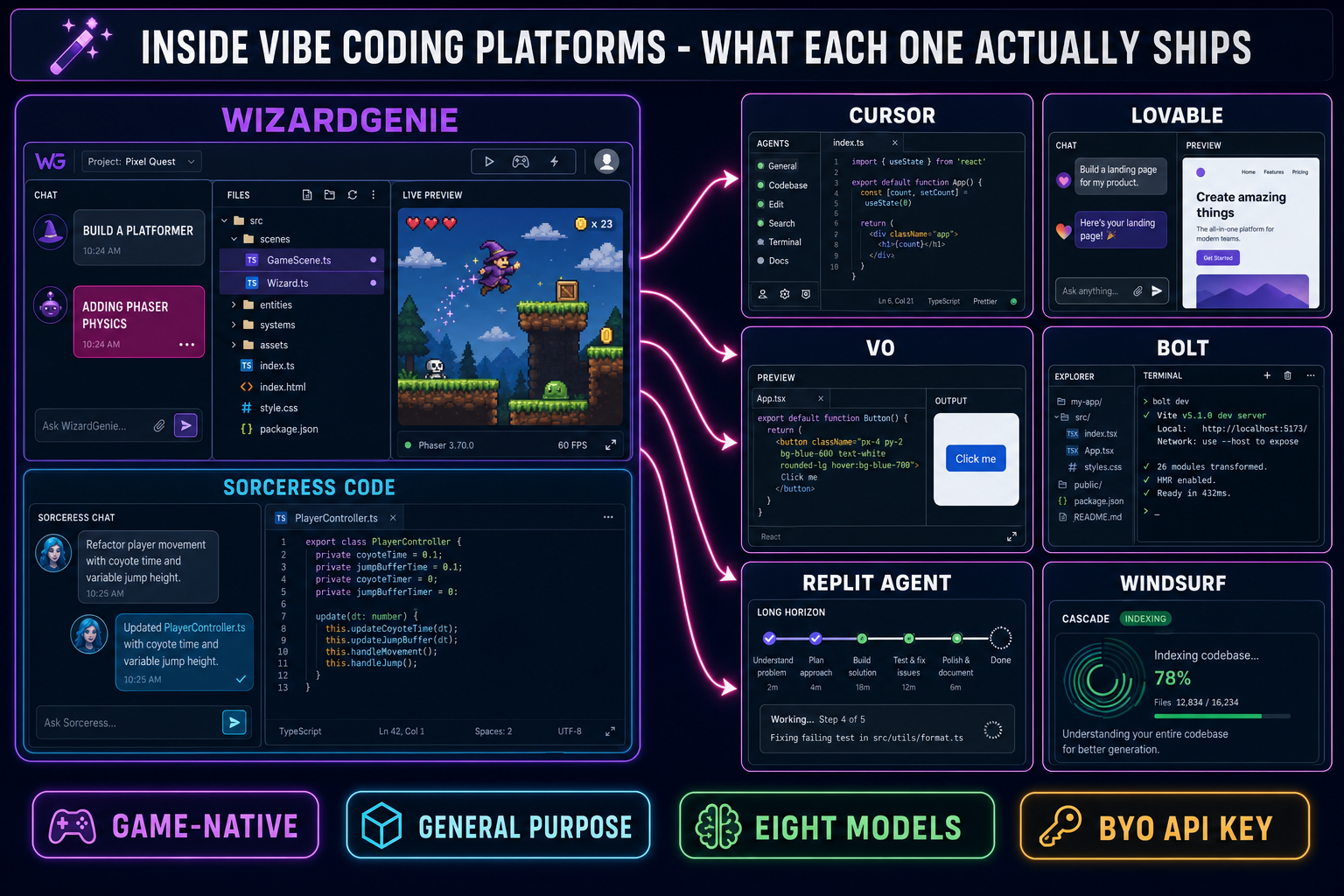
Five dimensions matter when comparing vibe coding platforms in 2026. Agent loop quality is whether the platform actually edits files in your project rather than pasting suggested diffs into a chat. Live preview is whether the running app appears next to the agent without a manual reload. Model picker is whether the developer can switch between frontier coding models per turn, or whether the platform locks in one model. Asset pipeline is whether the platform handles non-code work — sprites, 3D models, music, sound effects, voice — inside the same window as the code agent, or forces the developer to context-switch out. Bring-your-own-key is whether the developer pays the model vendor directly for tokens or pays the platform a token markup. Each of the eight vibe coding platforms below ships some subset of those five; none ship all five except the game-native pair.
The criteria are deliberately operational. The pretty-screenshot dimension — design polish, marketing-page copy, social-proof testimonials — is not on the list because it does not survive contact with a real project. Either the platform writes maintainable code under your project conventions or it does not; either the live preview reloads on save or it does not; either the developer keeps their own API key or the platform owns the token economics. The rest is noise.
1. WizardGenie — the game-native vibe coding platform
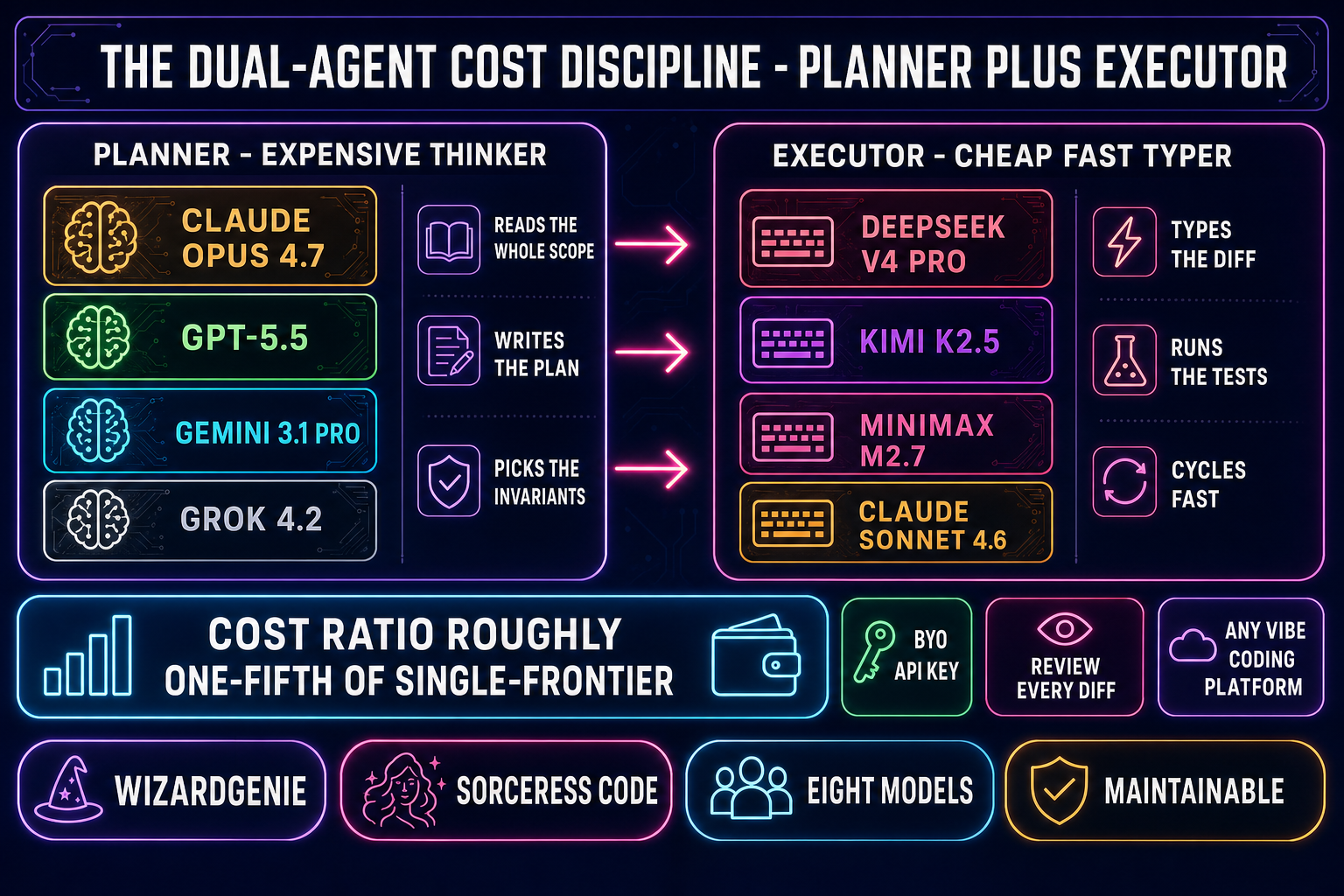
WizardGenie is the agent-native browser-and-desktop game engine at the center of the Sorceress stack. The agent drives any of eight frontier coding models — Claude Opus 4.7, Claude Sonnet 4.6, GPT-5.5, Gemini 3.1 Pro, DeepSeek V4 Pro, Kimi K2.5, Grok 4.2, MiniMax M2.7 — verified against the CODING_MODELS array in src/app/_home-v2/_data/tools.ts on May 13, 2026. The model picker is a per-turn dropdown, so the same project can run Opus 4.7 on a refactor and DeepSeek V4 Pro on the follow-up fix without quitting the session.
What sets WizardGenie apart on the vibe coding platforms grid is the asset pipeline. The agent loop is wired into the rest of Sorceress — Quick Sprites for animated sprite sheets, 3D Studio for image-to-3D plus auto-rigging plus text-to-motion, Music Gen for instrumental and vocal tracks, SFX Gen for batched sound effects, and Speech Gen for NPC voice. A platformer prompt asks WG to write the Phaser 4 code; the same chat asks it to generate the player sprite sheet, the level music, and the jump SFX, all without leaving the editor. None of the general-purpose vibe coding platforms ship that pipeline. The live preview pane reloads on save and runs the actual playable game next to the agent. Bring-your-own-key is the default flow for paid users; the free trial uses platform-routed DeepSeek V4 Pro. WizardGenie is the only entry on this list that ships all five dimensions.
2. Sorceress Code — the general-purpose Sorceress agent
Sorceress Code is the lighter-weight, general-purpose agent in the Sorceress stack — the same eight-model picker as WizardGenie, the same bring-your-own-key flow, and a Monaco-based editor with a file tree, terminal, and live-preview iframe. The agent edits files directly, runs npm scripts, and surfaces build output the same way WizardGenie does. The difference between the two on the vibe coding platforms grid is the asset pipeline. Sorceress Code does not embed the sprite, 3D, music, and SFX tools into the chat surface; the developer opens those tools as separate Sorceress pages and pipes the output back as URLs or downloaded assets. For non-game work — an internal tool, a dashboard, a one-off script, a static site — that trade is the right one. For a Phaser project, WG is the closer fit.
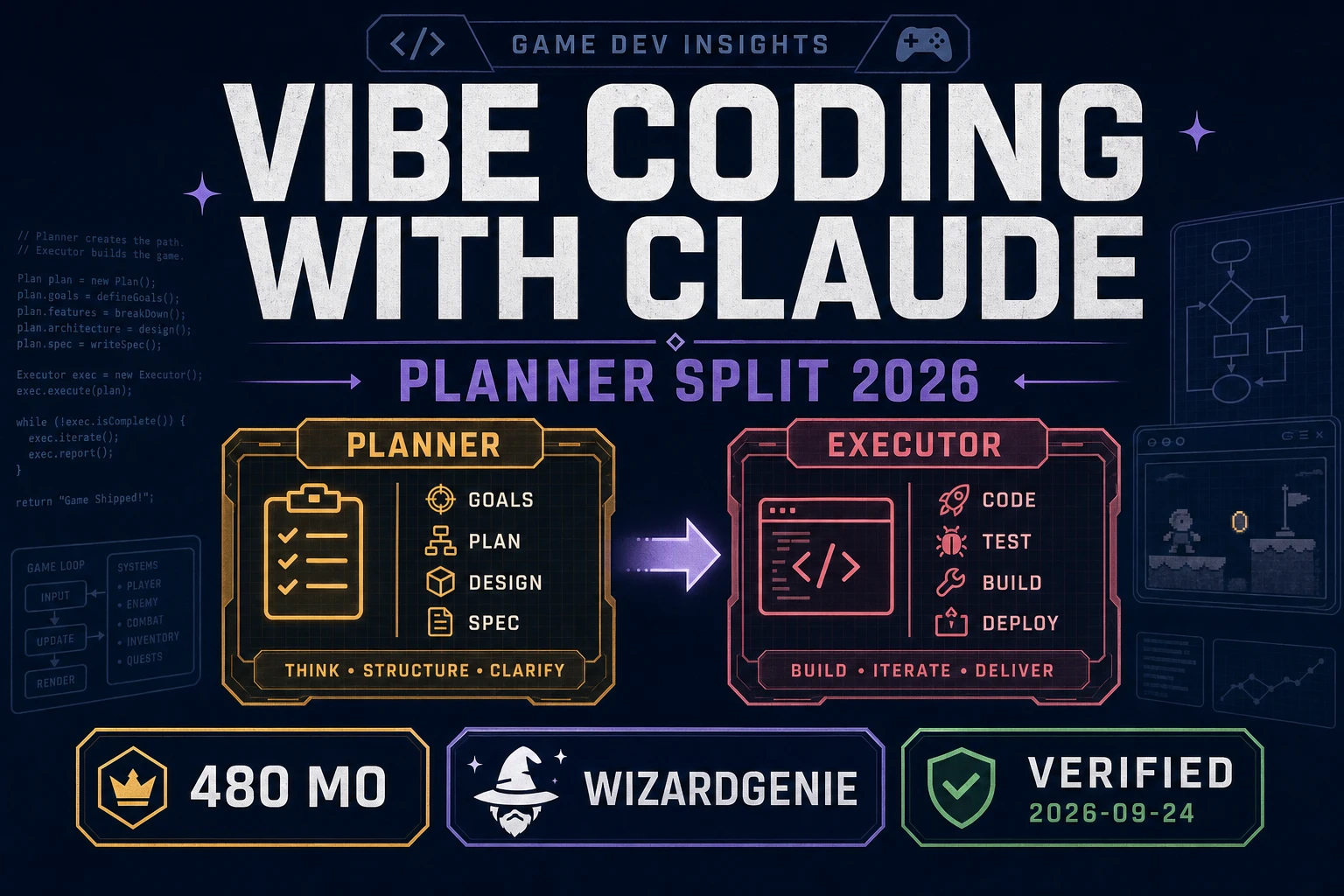
The model lineup matters more on Sorceress Code than on most vibe coding platforms because Code is positioned as the place senior developers route agentic refactors through. The Planner+Executor pattern is the first-class flow: pair a frontier reasoner with a cheap fast typer, ship the dual-agent cost ratio. The bring-your-own-key flow lets the developer keep the model-vendor relationship intact while paying Sorceress a flat fee for the agent runtime, which is the same economics WizardGenie offers.
3. Cursor — the senior-developer agentic IDE
Cursor is the senior-developer vibe coding platform of record in 2026 — an integrated development environment rebuilt around the agent loop, and the Cursor 3 redesign is the most aggressive interface bet on the list. The new layout drops the classic IDE chrome in favor of an agent-first surface: a unified sidebar of all running agents, parallel agent fleets that can review each other’s plans, seamless movement between cloud and local environments, built-in Git for staging and pull requests, and an integrated browser the agent can drive. Plan Mode in Background lets one model write the plan while another model executes it, in the foreground or behind the scenes — the closest direct analog to the dual-agent pattern that ships across the rest of this list.
Composer 2 is Cursor’s in-house frontier-level coding model, priced at roughly $0.50 per million input tokens and $2.50 per million output tokens, with a faster variant for cheaper turns. The model also ships with the cross-vendor frontier roster, so the picker dimension is strong even though the asset pipeline dimension is empty. There is no in-IDE sprite or 3D or audio generation, so a game project that lives entirely in Cursor will tab out for assets the same way it would in any general-purpose editor. The reader who has shipped twelve refactors in WG should still try Cursor for non-game agentic work; the reader who has shipped twelve refactors in Cursor should still try WG for the game-native loop.
4. Lovable — the full-stack web-app generator
Lovable is the platform that turned the “prompt to full-stack web app in 90 seconds” loop into a $400 million ARR business in roughly two years. The reporting verified on May 13, 2026 puts the company at 146 employees as of March 2026, with $100 million added in revenue in February 2026 alone and 2,800% year-over-year growth from 2024 to 2025. The output of every Lovable prompt is the same shape: a working React 18 plus TypeScript frontend, a Supabase backend with row-level security, Google and GitHub sign-in, optional Stripe checkout, and the full project synced to GitHub with no vendor lock-in on the code itself.
Lovable 2.0 and the April 2026 mobile release pushed the platform into native iOS and Android with voice prompting and background agent work, plus a built-in security scanner that checks Supabase RLS, public endpoints, and API key exposure. Lovable Cloud absorbs the backend setup that used to require external Supabase configuration. The free tier is $0; paid tiers run $20 per month (Starter), $50 per month (Launch), and Enterprise on quote. What Lovable does not ship on the vibe coding platforms grid is a model picker — the platform routes prompts through its own model selection, and there is no bring-your-own-key flow for the heavy users who would otherwise prefer to pay the model vendor directly. For a SaaS prototype or an internal dashboard, that trade is fine; for a Phaser game or a Three.js scene, Lovable is the wrong tool.