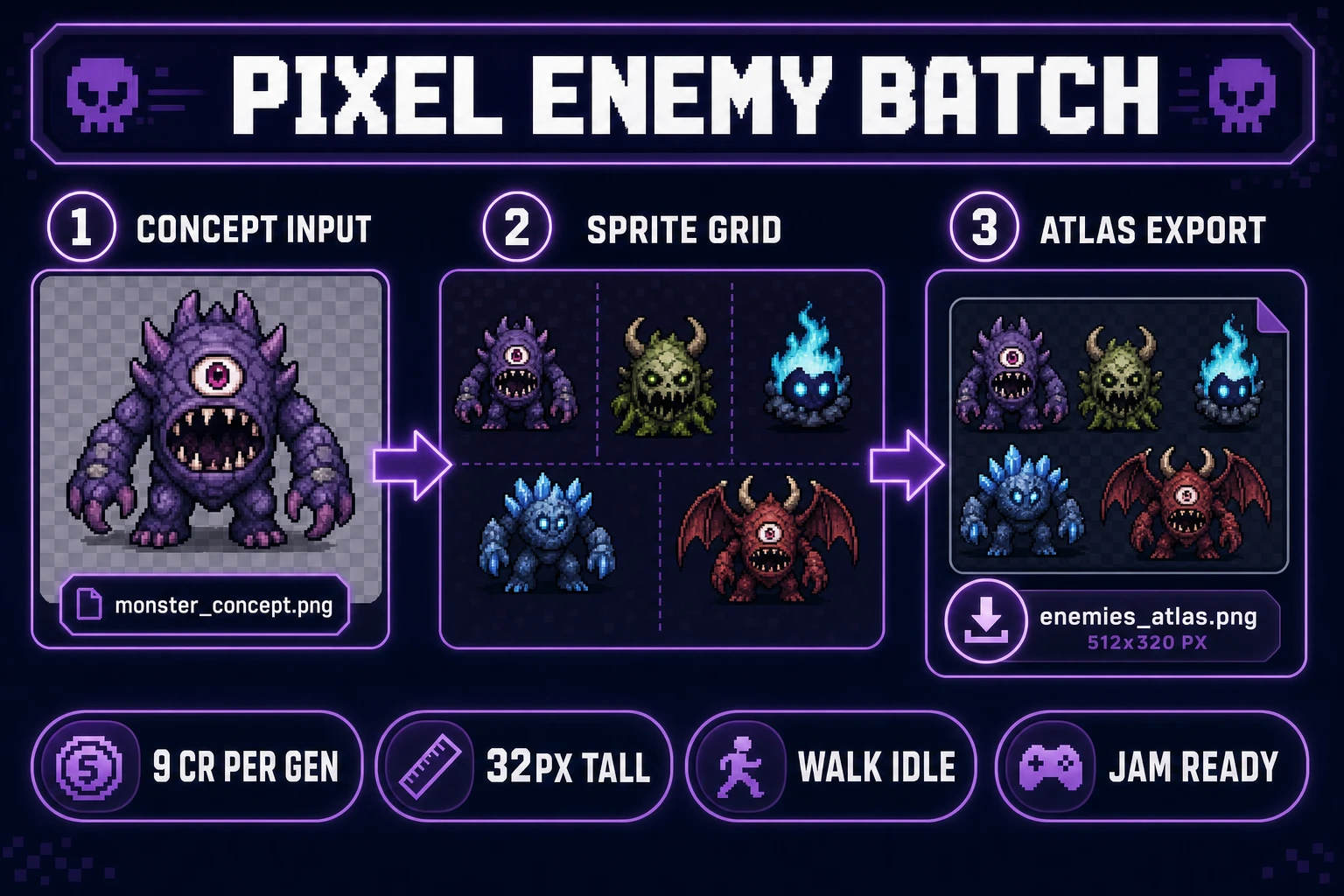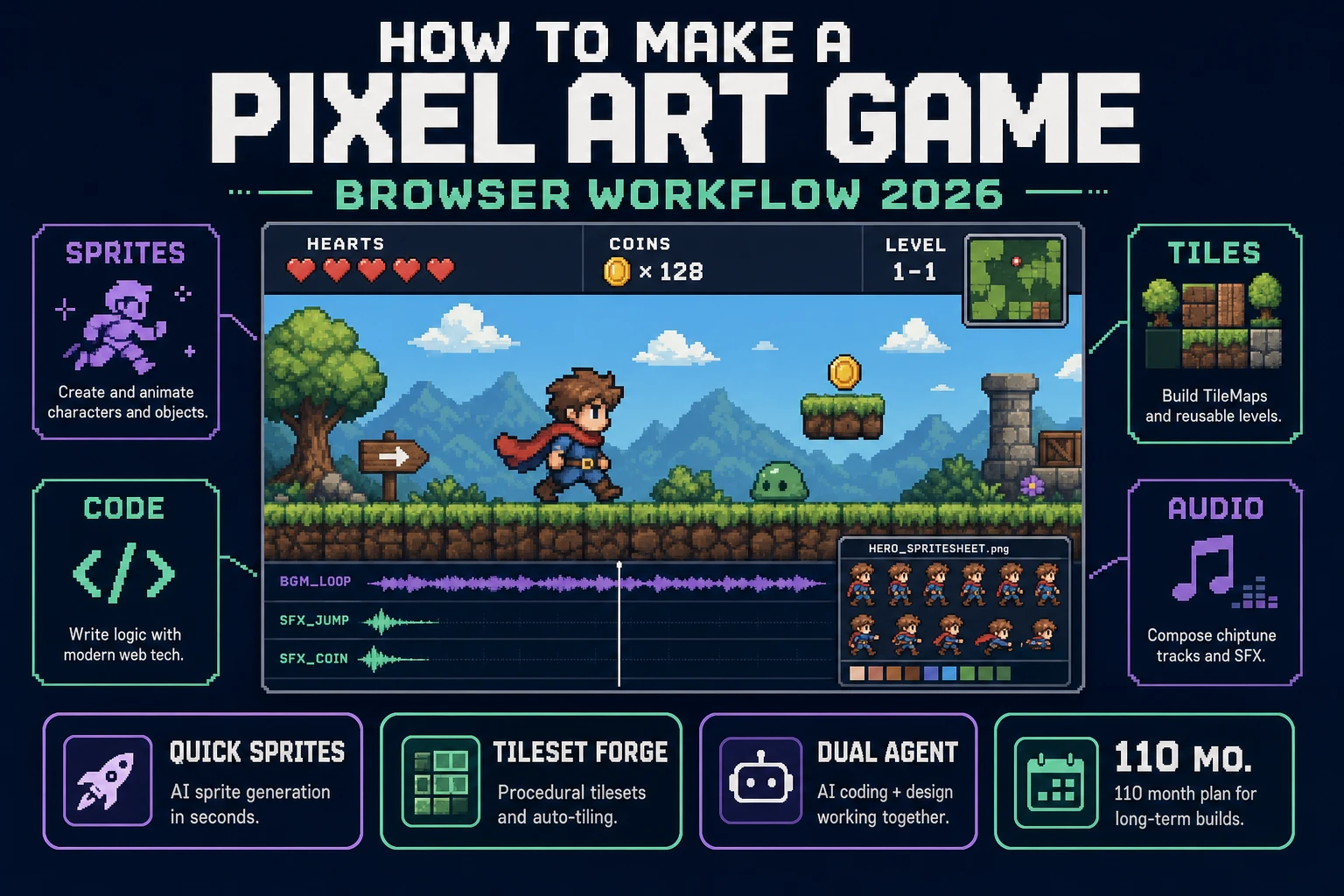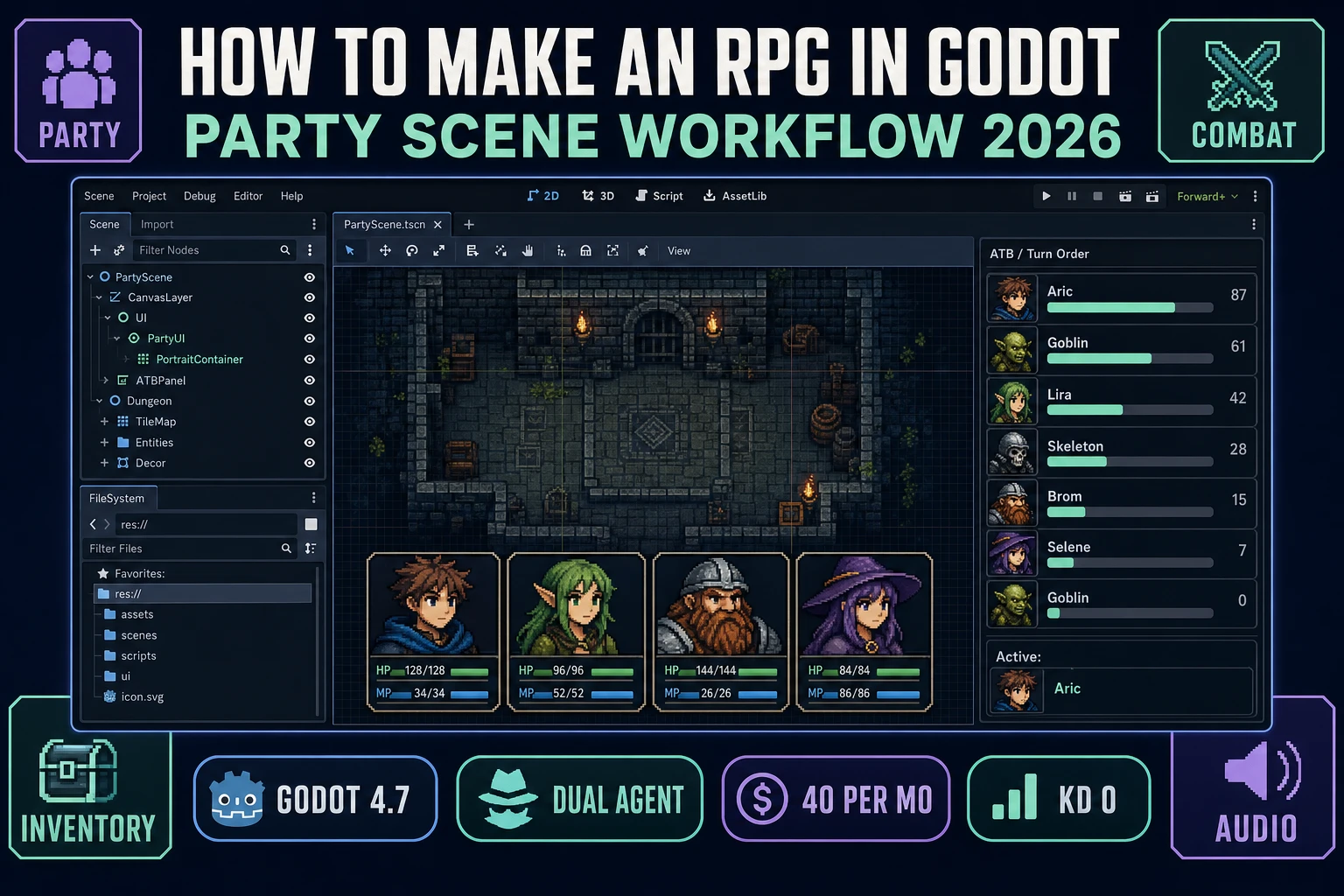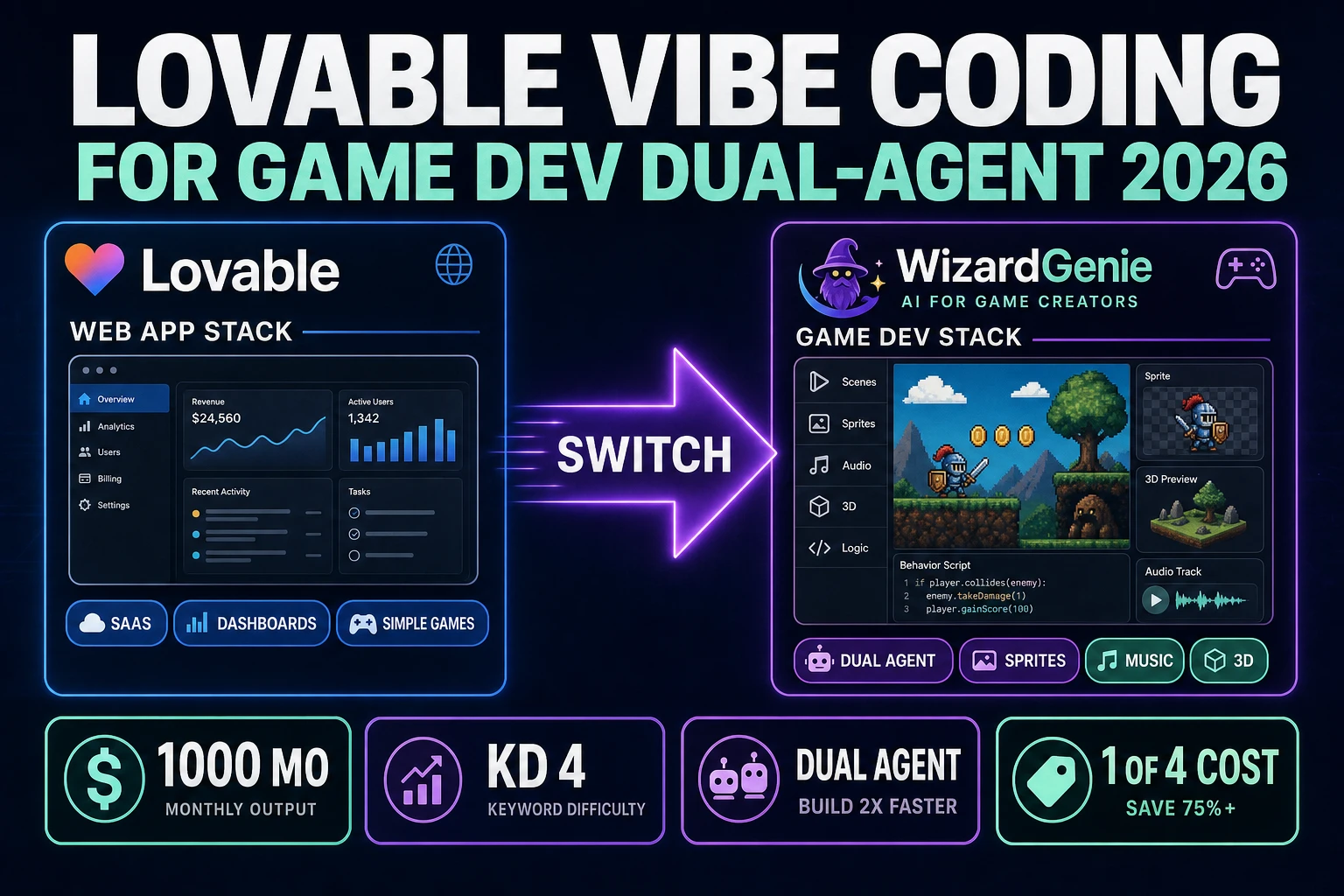
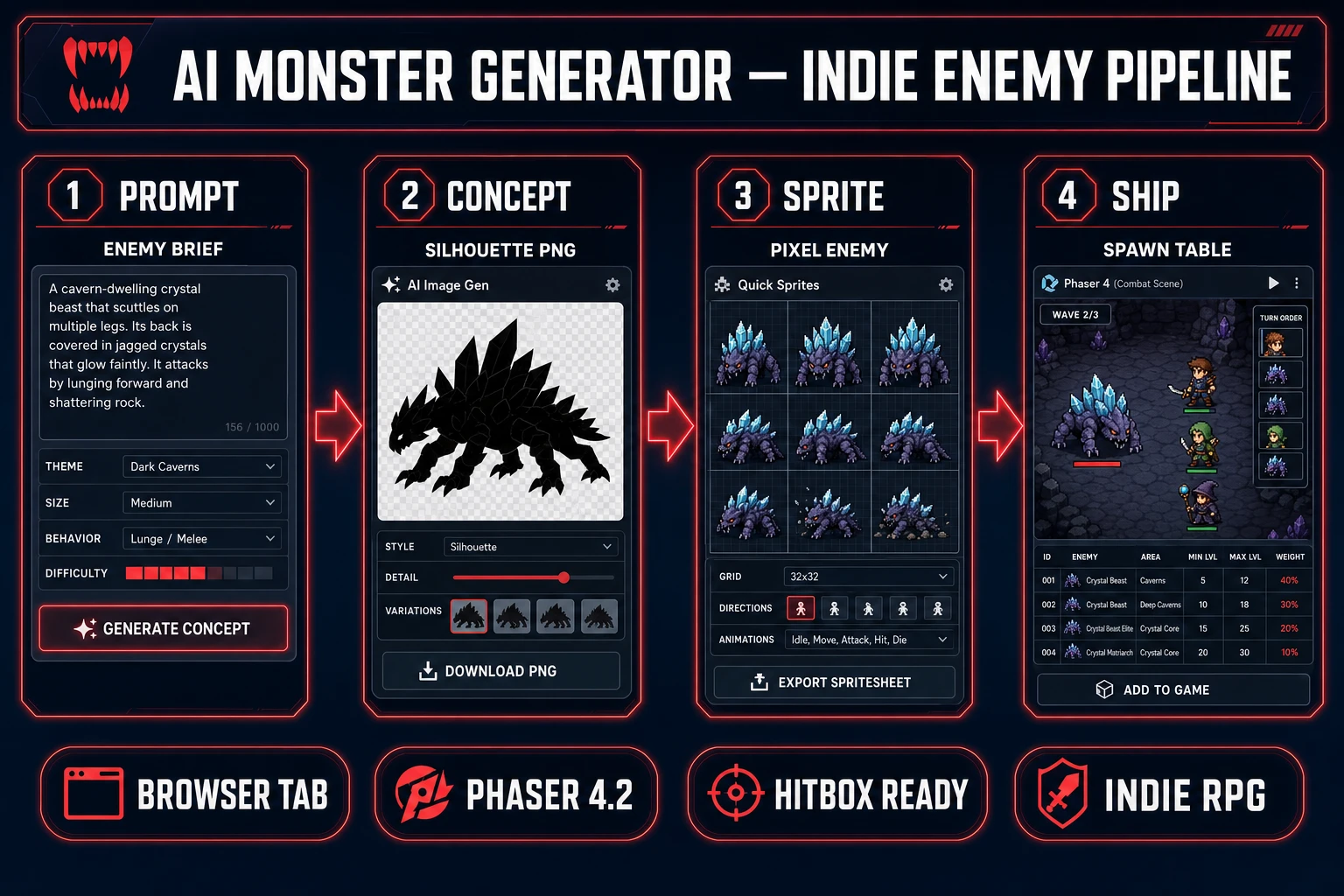
Every jam weekend hits the same wall: the player character animates cleanly, the level tiles align, and then the enemy roster is three recolored squares with identical hitboxes. A standalone ai monster generator was supposed to fix that — type “slime boss,” get a sprite sheet — but most free tools output a single illustration with no transparency grid, no size constraint, and no spawn metadata your engine can load. The 2026 answer is a browser pipeline where AI Image Gen locks enemy silhouettes, Quick Sprites converts them into pixel combat sprites, and WizardGenie scaffolds a Phaser 4.2 enemy scene with Arcade Physics bodies sized to the art. Phaser 4.2.0 (released June 19, 2026, verified against the official GitHub release tag on July 6, 2026) is the honest runtime for shipping those enemies in a browser tab. Everything below was checked against the Sorceress source on the same date.
What an ai monster generator actually outputs (and what it is not)
Searchers typing ai monster generator into Google fall into two camps. Tabletop DMs want a single illustration for a session handout. Indie devs want a roster — grunt, elite, boss — each with a readable silhouette, transparent PNG, consistent pixel height, and optional idle or attack frames their collision system can parse. The second camp is who this post serves.
A useful ai monster generator for games produces short, combat-readable units: side-view or three-quarter sprites capped at a fixed pixel height (32px or 48px for retro projects), distinct color palettes per tier, and filenames your spawn table can reference. It does not produce a 4K concept painting that will never fit a 16×16 tile grid. Free standalone generators (Perchance randomizers, generic “fantasy creature” image tools) optimize for illustration quality, not engine format. They rarely export sprite atlases, never enforce size caps, and cannot scaffold spawn logic. That is why the honest ai monster generator workflow in 2026 lives inside a game-dev stack: concept plus sprite plus runtime in one account.
Why generic image tools fail as game enemy pipelines
Opening a general image generator and asking for “game monsters” feels fast until you try to ship combat. Generic tools have no enemy-tier registry, no pixel-height constraint, no batch variant generation, and no connection to your spawn JSON. You download a PNG, manually resize it in an editor, guess the hitbox, paste three copies into your scene, and wonder why every enemy feels identical in playtests.
An integrated ai monster generator collapses those hops. AI Image Gen holds your biome and tier briefs, Quick Sprites enforces pixel dimensions and outputs transparent sprites, and WizardGenie can scaffold an EnemyGroup that reads a spawn table keyed by room ID. The difference is structural: a wallpaper tool gives you art; a game-native pipeline gives you an enemy pack — concept folder, sprite atlas, spawn JSON, physics bodies, ready to drop into assets/enemies/.
The Sorceress ai monster generator pipeline in four steps
The Sorceress answer to ai monster generator is four layers, each mapped to a real tool verified in the repository on July 6, 2026:
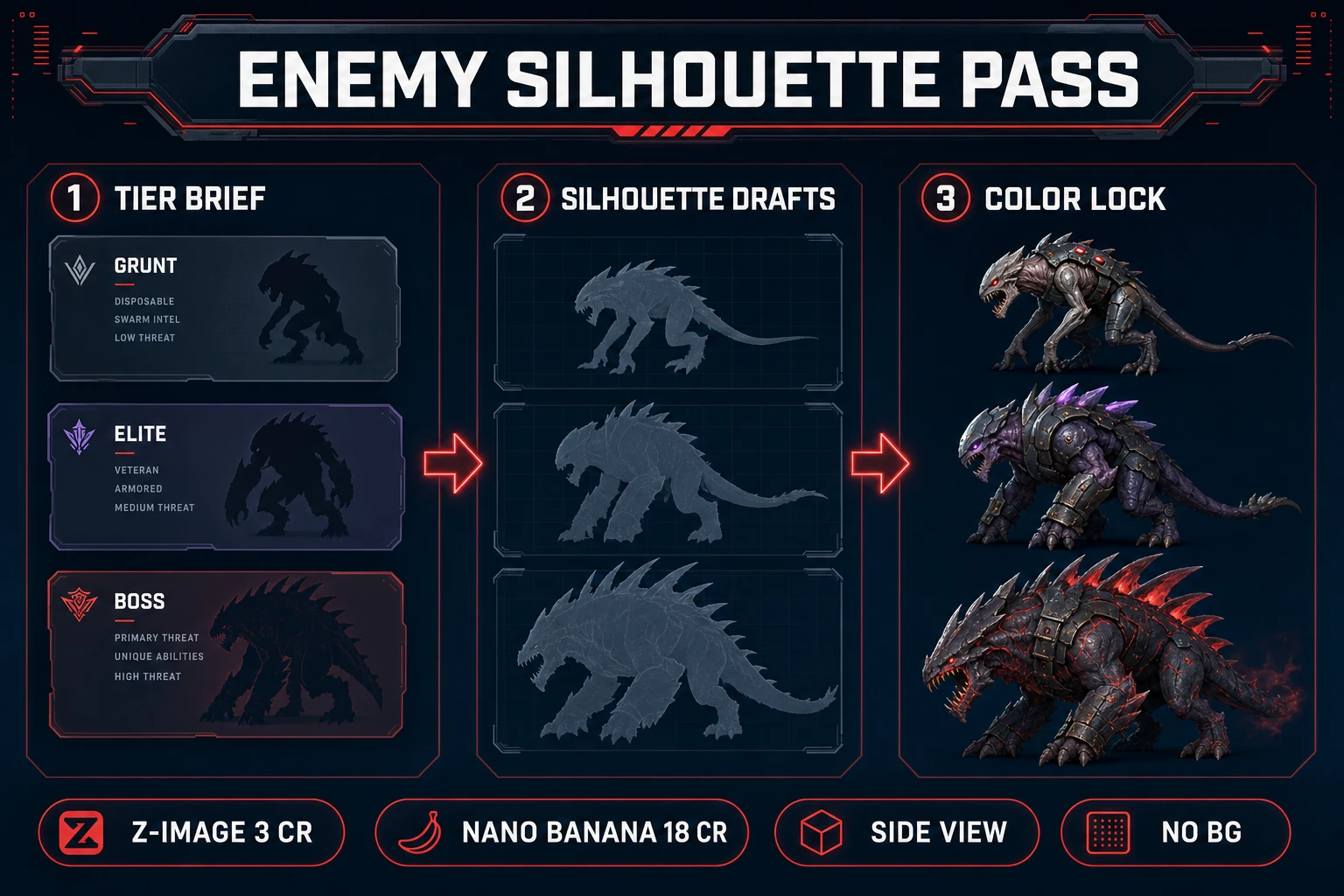
- Brief layer — define enemy tiers (grunt, elite, boss) with silhouette and palette constraints before opening any generator.
- Concept layer — paint side-view enemy silhouettes in AI Image Gen with Z-Image for fast iteration or Nano Banana Pro for hero bosses.
- Sprite layer — convert winning concepts into pixel combat sprites in Quick Sprites at 9 credits per generation.
- Ship layer — wire sprites, hitboxes, and spawn tables into a Phaser 4.2 EnemyGroup via WizardGenie.
BG Remover sits adjacent when a concept render arrives with a busy background Quick Sprites cannot strip cleanly. For walk-cycle specifics on a single hero enemy, see the ai game sprite generator post — it shares Quick Sprites but targets player animation rather than roster batching.
Step 1 — write enemy design briefs before you generate
Monster art fails when the prompt is vague. Before touching AI Image Gen, write a one-line brief per tier:
- Grunt — “32px side-view slime, single eye, green palette, no limbs, reads at 16px zoom.”
- Elite — “48px side-view armored beetle, horn silhouette, amber and charcoal, attack wind-up pose.”
- Boss — “96px three-quarter dragon head, readable jaw line, purple glow accent, idle mouth-closed.”
Store these in a text file inside your WizardGenie project folder so every regeneration pass references the same constraints. Consistency is what separates a random creature wallpaper from an ai monster generator output your players can learn to read in combat.