Search how to make a horror game on July 14, 2026 and the SERP splits into Roblox/Scratch copyathons, Unity corridor tutorials that assume a full install, and YouTube reels that treat “add fog + scream” as a design document. None of those paths answer the indie question — what is the honest toolchain from empty folder to a browser scare loop friends will actually finish tonight? This guide answers that. The 2026 answer is a four-layer browser pipeline: WizardGenie writes the Phaser 4.2 scare scaffold, AI Image Gen paints foggy rooms, SFX Gen builds dread beds and one clean jump hit, and you tune silence so the scare has a landing. Every tool cost and model name below is verified against the live Sorceress source on July 14, 2026.
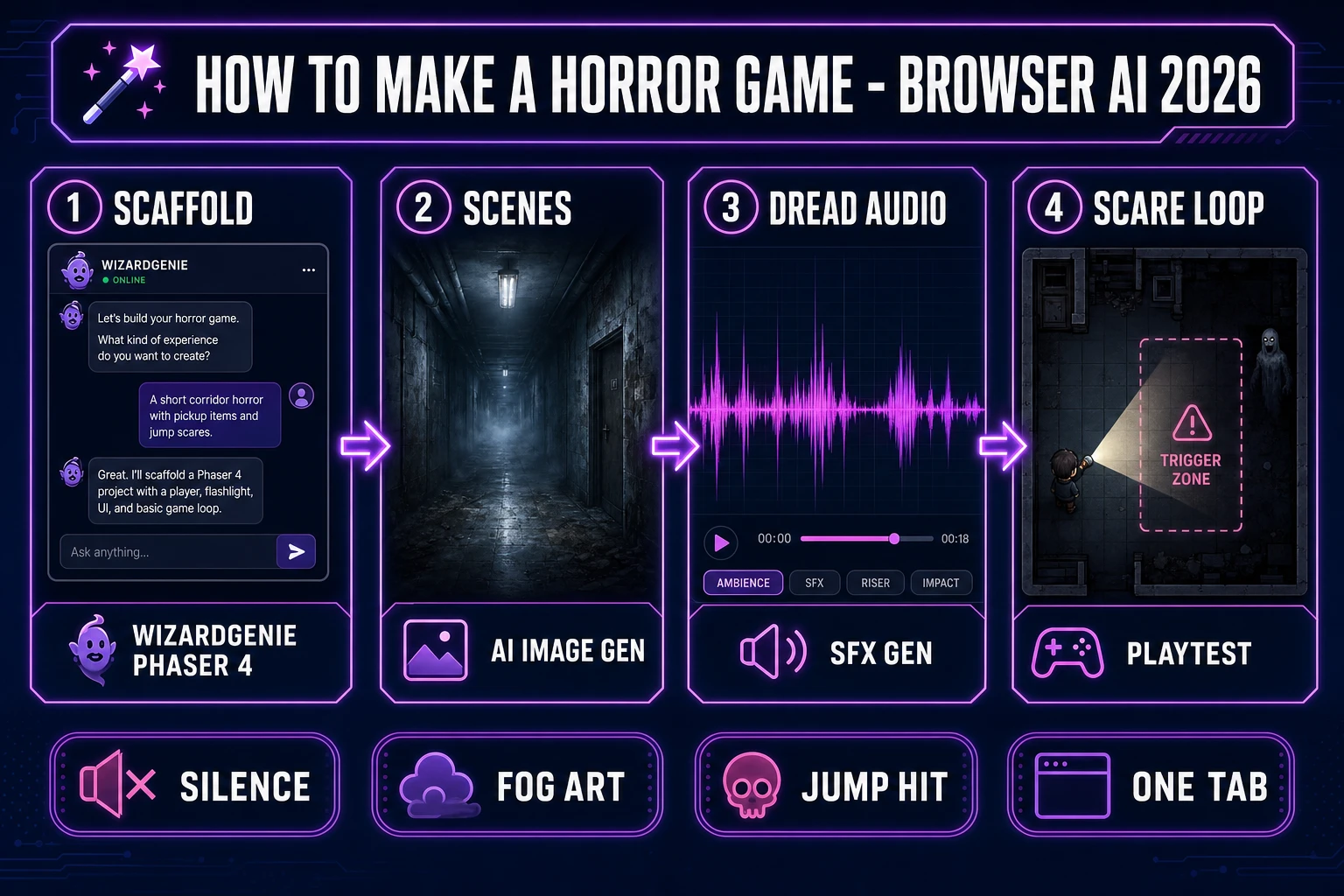
What “how to make a horror game” actually means in 2026
The phrase how to make a horror game (390/mo, KD 0 per DataForSEO probe-fresh-seeds-5.md, verified July 14, 2026) targets a reader who wants a playable fear beat — limited light, a dangerous space, audio that raises heart rate — without commissioning a studio or living inside a kids’ platform. The sibling queries confirm the cluster: how to make a horror video game (390/mo, KD 4), how to make a horror game for free (40/mo), how to make a good horror game (50/mo, KD 1), and how to make a mascot horror game (70/mo) all describe the same systems with different skins.
A browser horror loop is still a browser game: index.html, a JavaScript scene, PNG rooms, and MP3 cues. The genre vocabulary sits on two Wikipedia poles — survival horror (scarce resources, navigation under threat) and psychological horror (unreliable space, dread over gore). For a first ship, pick one pole and one building: three rooms, one threat, one flashlight or lantern mechanic. Scope is what separates a finished short scare from a never-ending “resident evil clone” folder.
Why horror is the right browser AI genre when audio does the heavy lifting
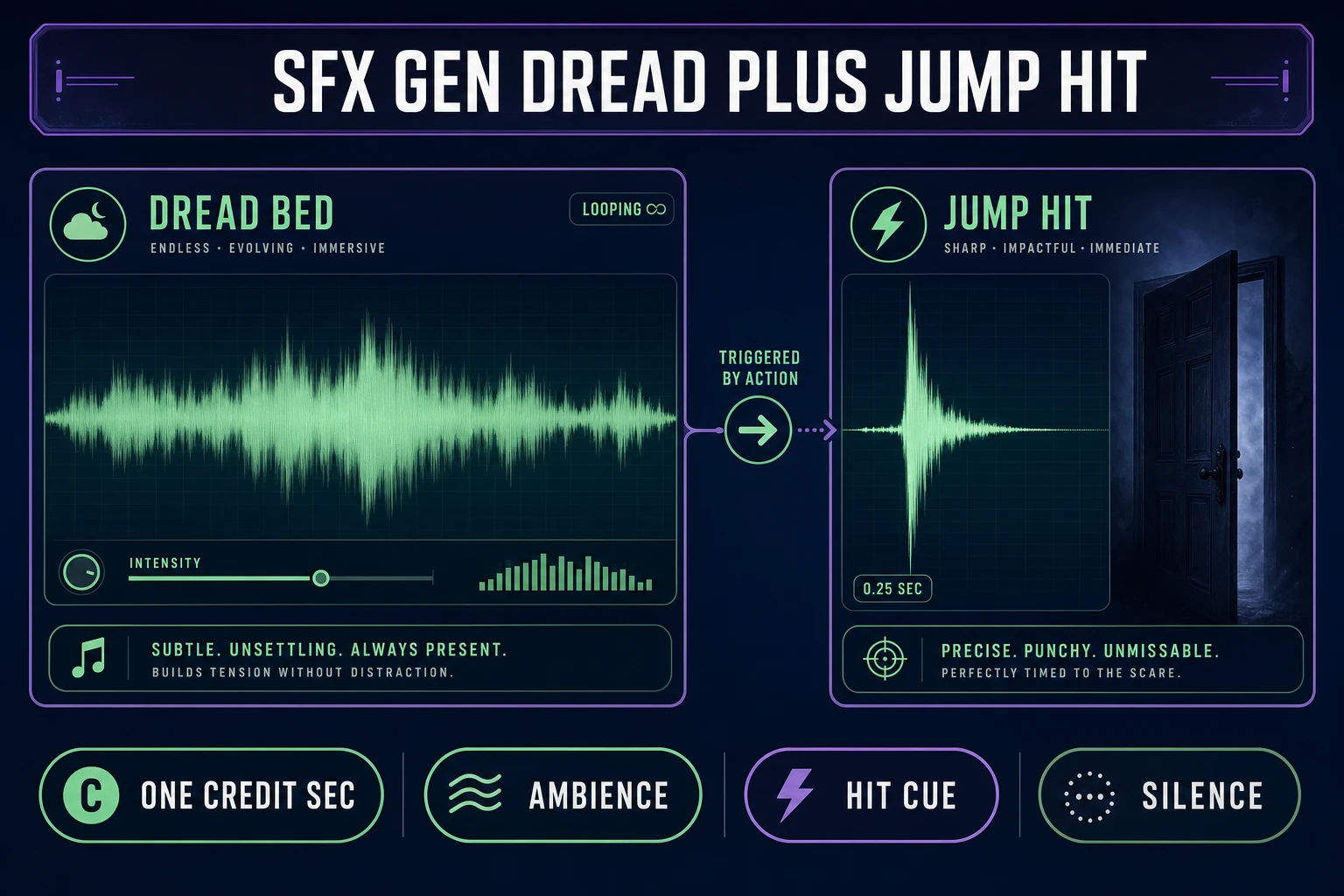
Horror fails when players see the scare coming and succeeds when the room sounds wrong before anything moves. That is why this pipeline pairs a coding agent with an SFX tool instead of leading with fancy enemy AI. WizardGenie is excellent at trigger zones, cool-down timers, and Phaser lighting state — deterministic systems. SFX Gen is excellent at low beds, metal knocks, and one hard hit at 1 credit per second of completed audio (SEED_AUDIO_CREDITS_PER_SECOND = 1 in src/app/sfx-gen/page.tsx line 24). Atmosphere art from AI Image Gen fills the middle: foggy hallway plates, cracked-door vignettes, and UI frames players stare at while nothing happens.
Compare that to a first platformer, where jump feel is the whole product, or a first RPG, where quest state sprawls across files before anyone feels fear. A horror micro-loop playtests the moment a player hesitates in a doorway because the dread bed dipped. That is the fastest honest feedback loop for a jam weekend. Cross-link the broader web path in how to make a web game and the dungeon-narrative sibling in AI dungeon story generator when you want branching text instead of lighted corridors.
The Sorceress how to make a horror game pipeline in four steps
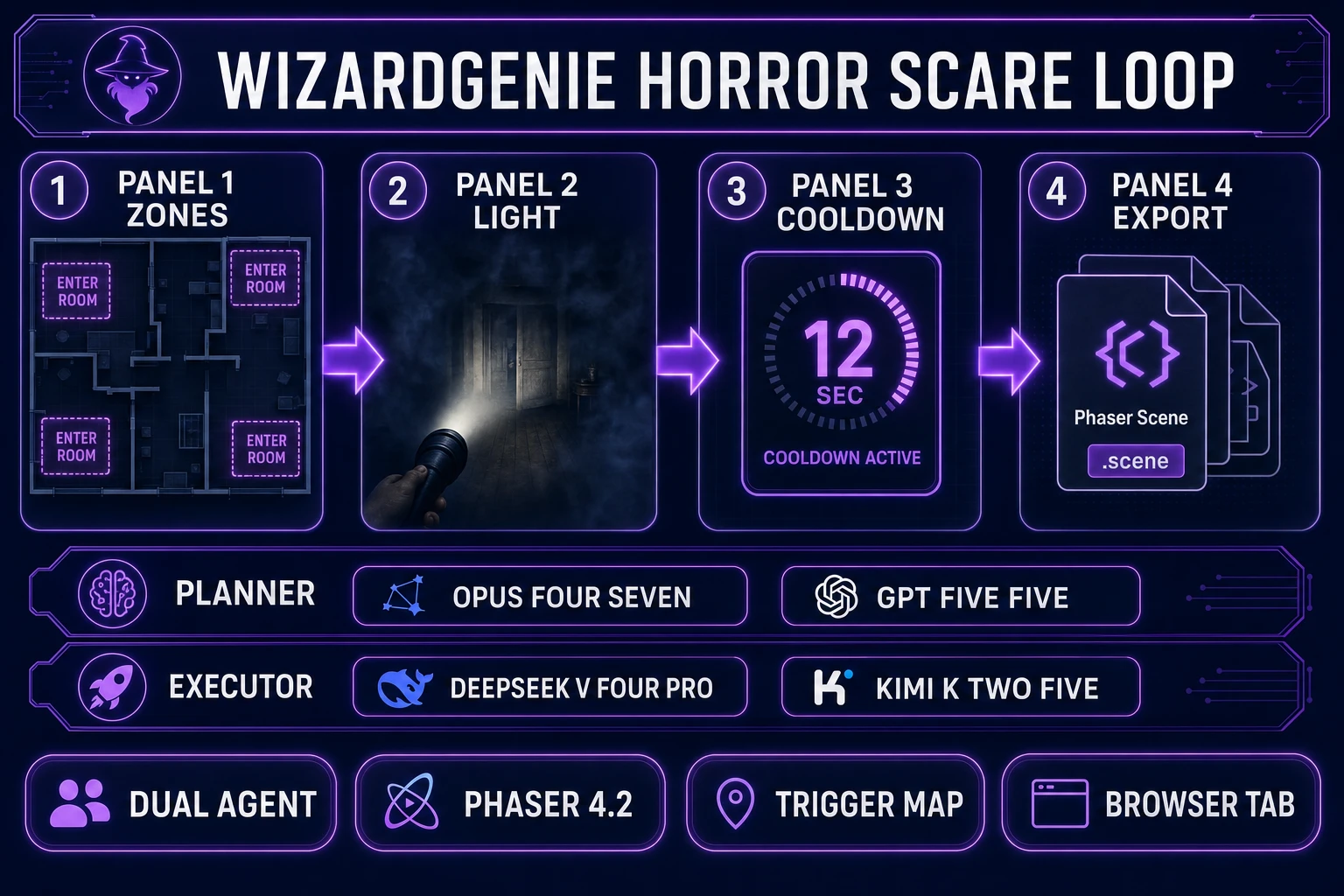
Every short horror ship needs four layers: scare code, scene art, dread audio, and playtest tuning. In 2026 each layer maps to one Sorceress tool verified against the live catalog on July 14, 2026:
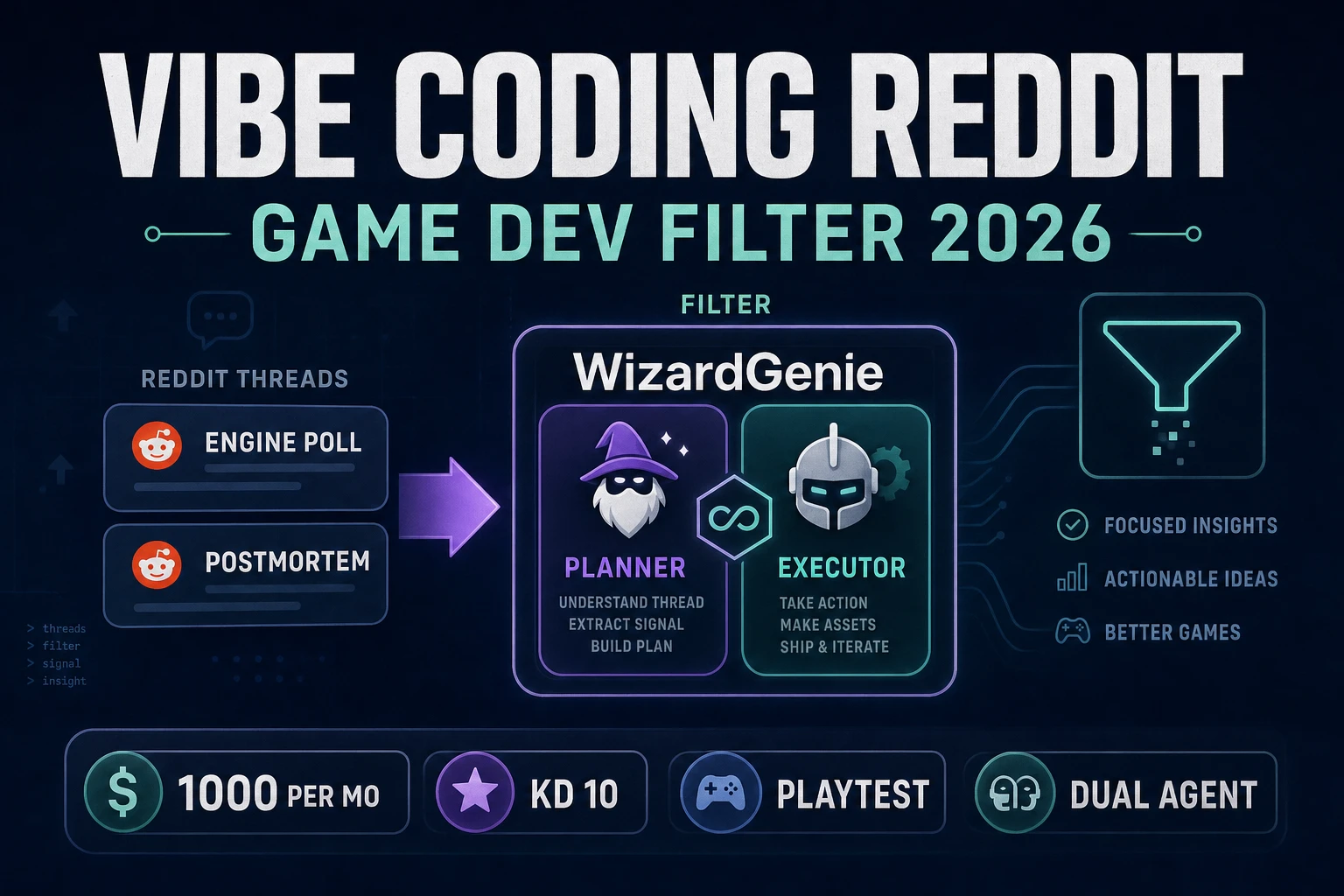
- Scare code — WizardGenie with eight CODING_MODELS (Claude Opus 4.7, Sonnet 4.6, GPT-5.5, Gemini 3.1 Pro, DeepSeek V4 Pro, Kimi K2.5, Grok 4.2, MiniMax M2.7 per
src/app/_home-v2/_data/tools.tslines 734–742). - Corridor and vignette art — AI Image Gen across the image model lineup in
src/lib/models.ts. - Dread beds and jump hits — SFX Gen at 1 credit per second; optional menu sting from Music Gen.
- Playtest tuning — silence windows, cool-downs, and flashlight radius iterated in WizardGenie until the hit still lands on the third replay.
Pricing is a $49 lifetime unlock plus pay-as-you-go credit packs — Starter $10/1,000 credits, Creator $20/2,000, Plus $50/5,000, Studio $100/10,000 — verified against src/app/plans/page.tsx lines 46 and 50. New accounts ship with 100 starter credits. The Sorceress tools guide lists every pairing; plans shows live tiers.