Every indie game dev under thirty has heard the phrase in a Discord channel, a YouTube thumbnail, or a Twitter argument in the last twelve months, and then quietly Googled the question: what does vibe coding mean? The honest 2026 answer is short. You describe the software you want in plain English, an AI agent writes the code that makes it happen, and you steer the result by reacting to it instead of by editing the source by hand. That is the whole trick. This piece unpacks the term honestly — where it came from, what the workflow actually looks like when you sit down and do it, what it is not, and which tools in 2026 make the pattern shippable for real games rather than just for demos. Every product claim below is verified against the live Sorceress source (specifically src/app/_home-v2/_data/tools.ts lines 734-742 and src/app/wizard-genie/page.tsx lines 295-297) on July 3, 2026.
The short answer to “what does vibe coding mean” in 2026
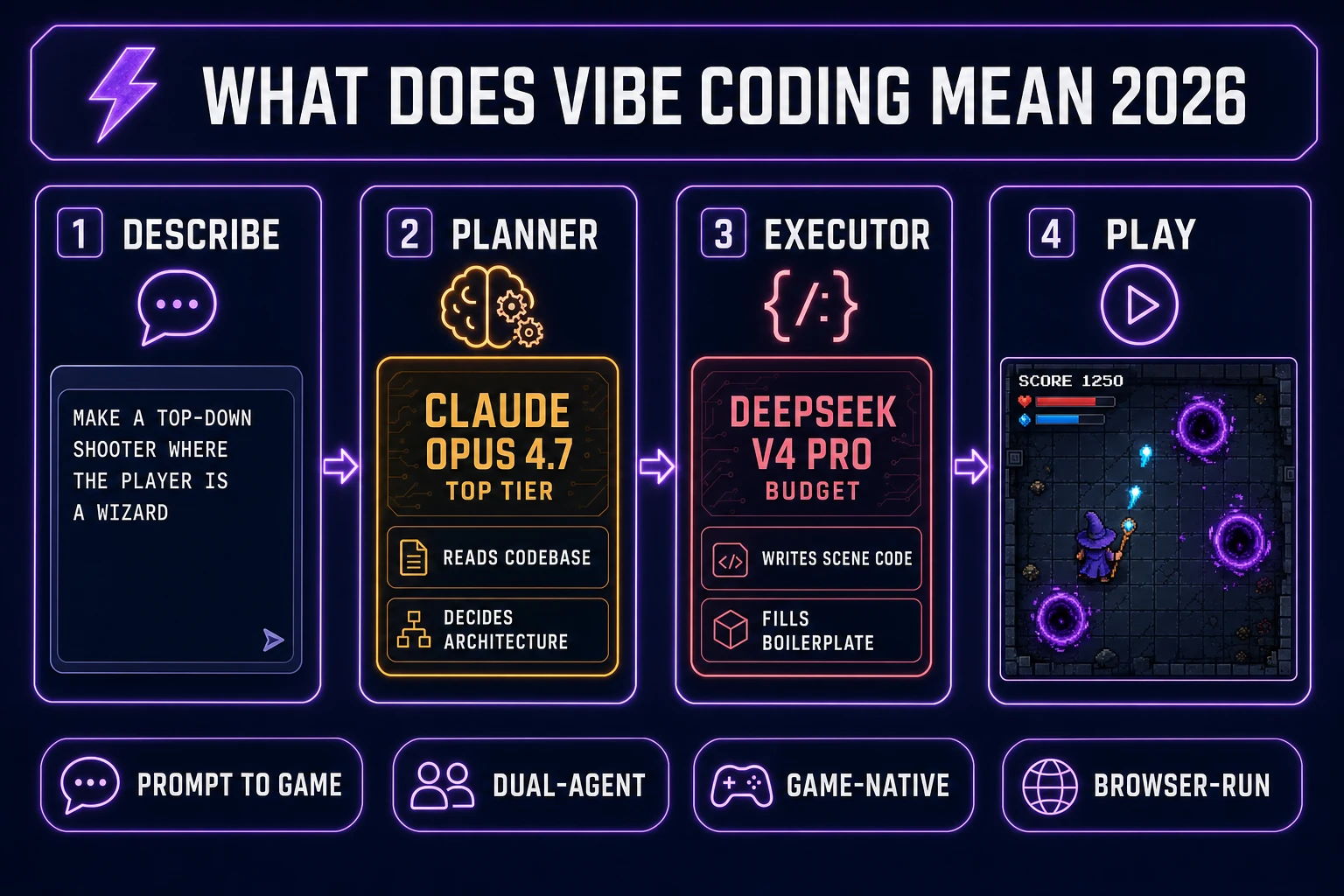
The short answer to what does vibe coding mean is that vibe coding is an AI-agent-driven programming workflow where the human writes intent in plain English and the agent emits and runs the code. The human never opens the source files unless a hard problem forces them to. Instead of typing function jump() { this.body.setVelocityY(-400); }, the human types “make the cat jump higher” and the agent edits the right line in the right file, hot-reloads the browser preview, and lets the human feel the change immediately. That feedback loop — describe, run, react, describe again — is the actual mechanism, and it is fundamentally different from writing code with an AI autocomplete peeking over your shoulder. In vibe coding, the AI is the author. The human is the director.
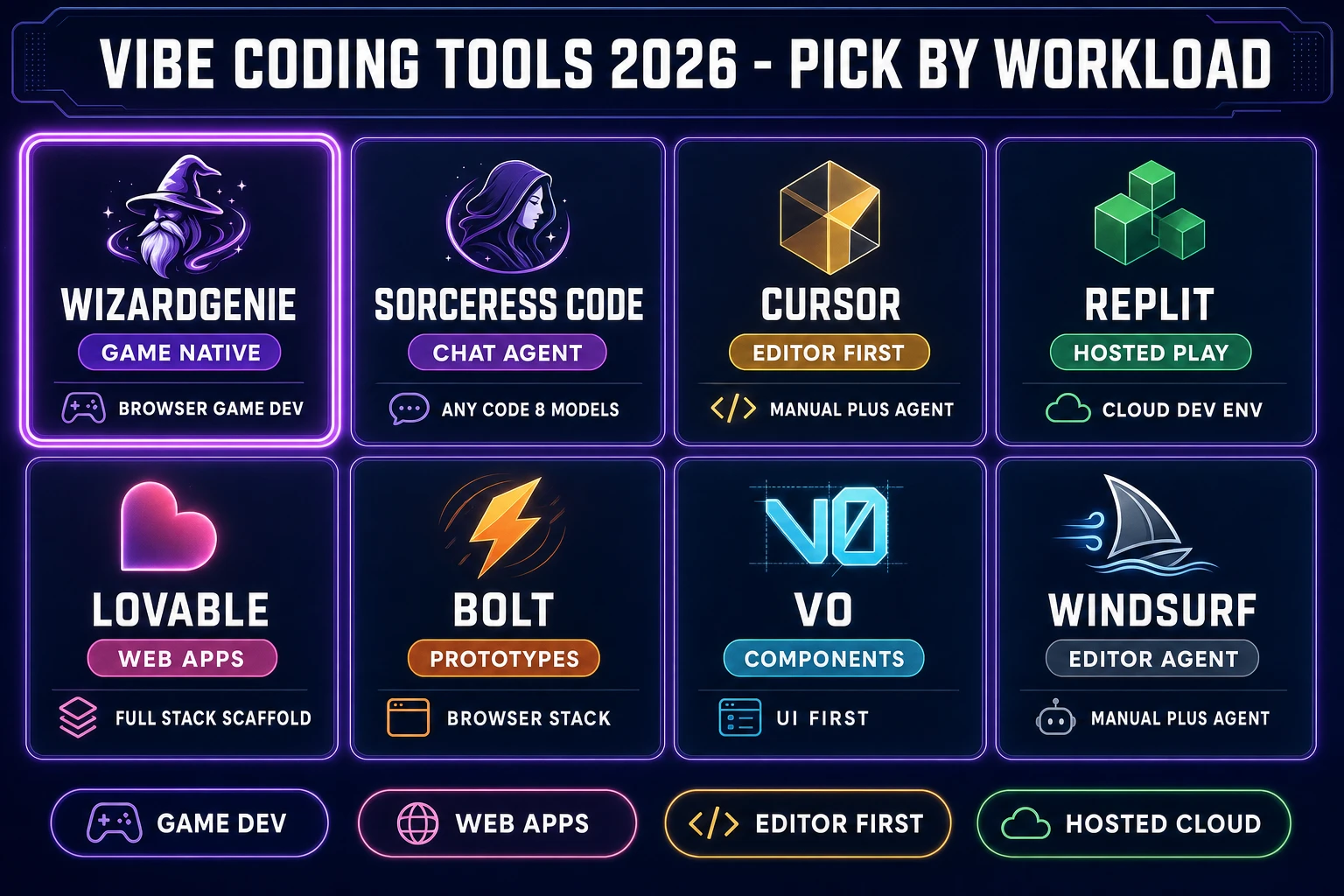
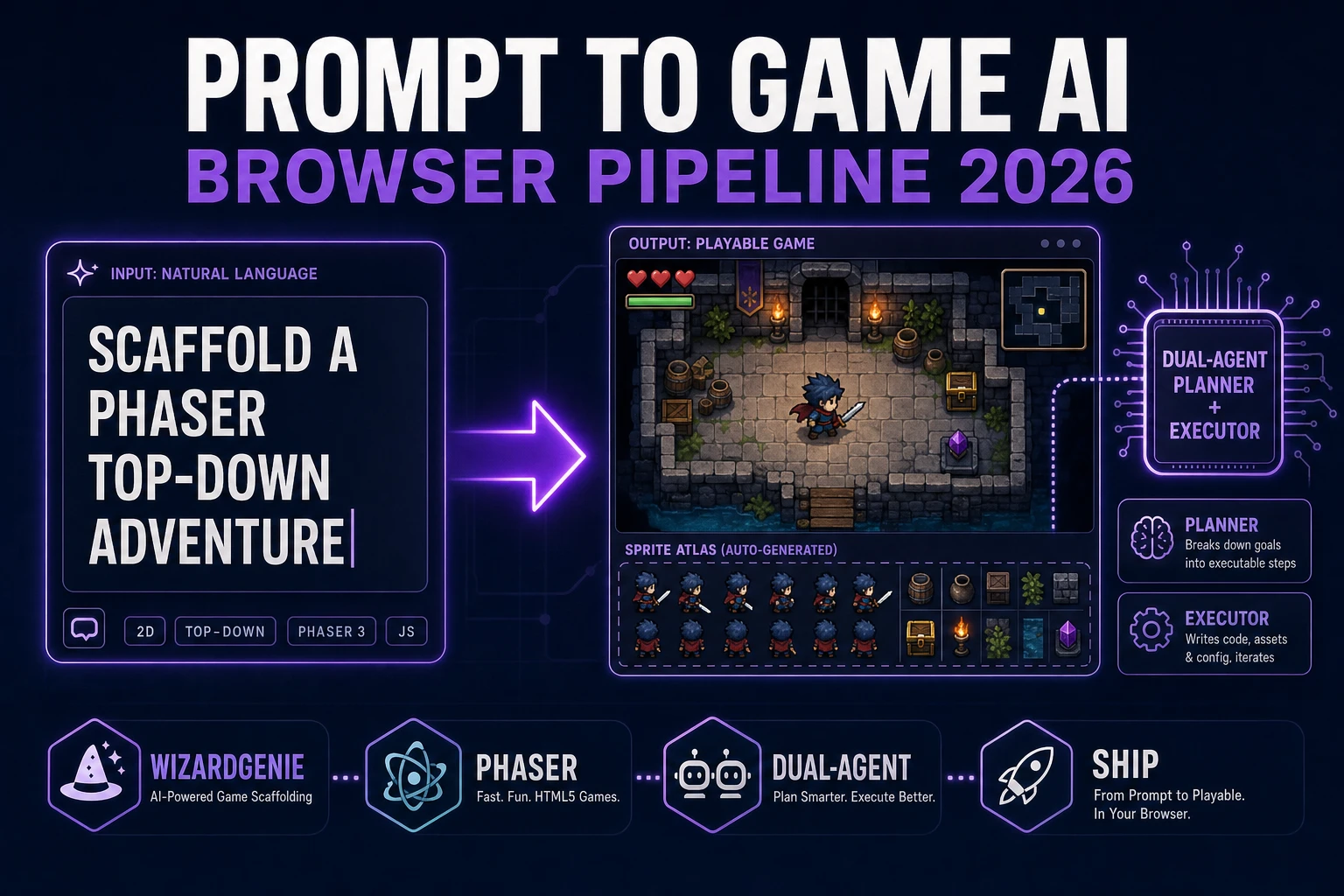
The related searches (vibe coding meaning, what is vibe coding, define vibe coding, vibe coding definition) all resolve to the same core idea in 2026, and the sub-question the reader usually cares about is which tool actually delivers the workflow honestly. For games specifically, WizardGenie is the browser-native game-native flavor and it ships the pattern as its default pillar: the marketing page states “Dual-agent Planner + Executor” on line 295 and “A smart Planner thinks; a cheap Executor codes. Same quality at roughly a quarter of the token cost.” on line 297 of src/app/wizard-genie/page.tsx, verified on July 3, 2026. For non-game workloads, the same eight-model coding dropdown surfaces inside Sorceress Code. Both tools let the reader test what vibe coding feels like in the browser without installing an editor, a compiler, or a build system.
Where the term “vibe coding” came from
The word vibe coding entered wide use after Andrej Karpathy described the workflow on Twitter in early 2025. The exact line was roughly “there’s a new kind of coding I call vibe coding, where you fully give in to the vibes, embrace exponentials, and forget that the code even exists.” The tweet was intended half-jokingly — Karpathy is a working researcher, not an evangelist — but the phrase captured something that had been quietly true for months already: on the frontier large language models, careful humans writing code with AI assistance were being outperformed on some workloads by careless humans letting the AI write everything and steering by intuition. The tweet named the thing, and within weeks the term had escaped into the wider dev community.
Two clarifications that matter for the 2026 answer to what does vibe coding mean. First, Karpathy’s original framing described a specific human posture (do not read the code, just feel whether the software works), not a specific tool. Any agentic coding workflow that respects that posture qualifies as vibe coding regardless of which editor or which agent the human uses. Second, vibe coding is not the same as no-code development. No-code tools give the user a visual drag-and-drop interface that constrains the possible outputs; vibe coding still emits real code (Phaser, Three.js, React, whatever the agent picks) and the human can drop into that code at any moment. The difference is that in vibe coding, the human chooses not to.
What vibe coding actually looks like when you sit down and do it
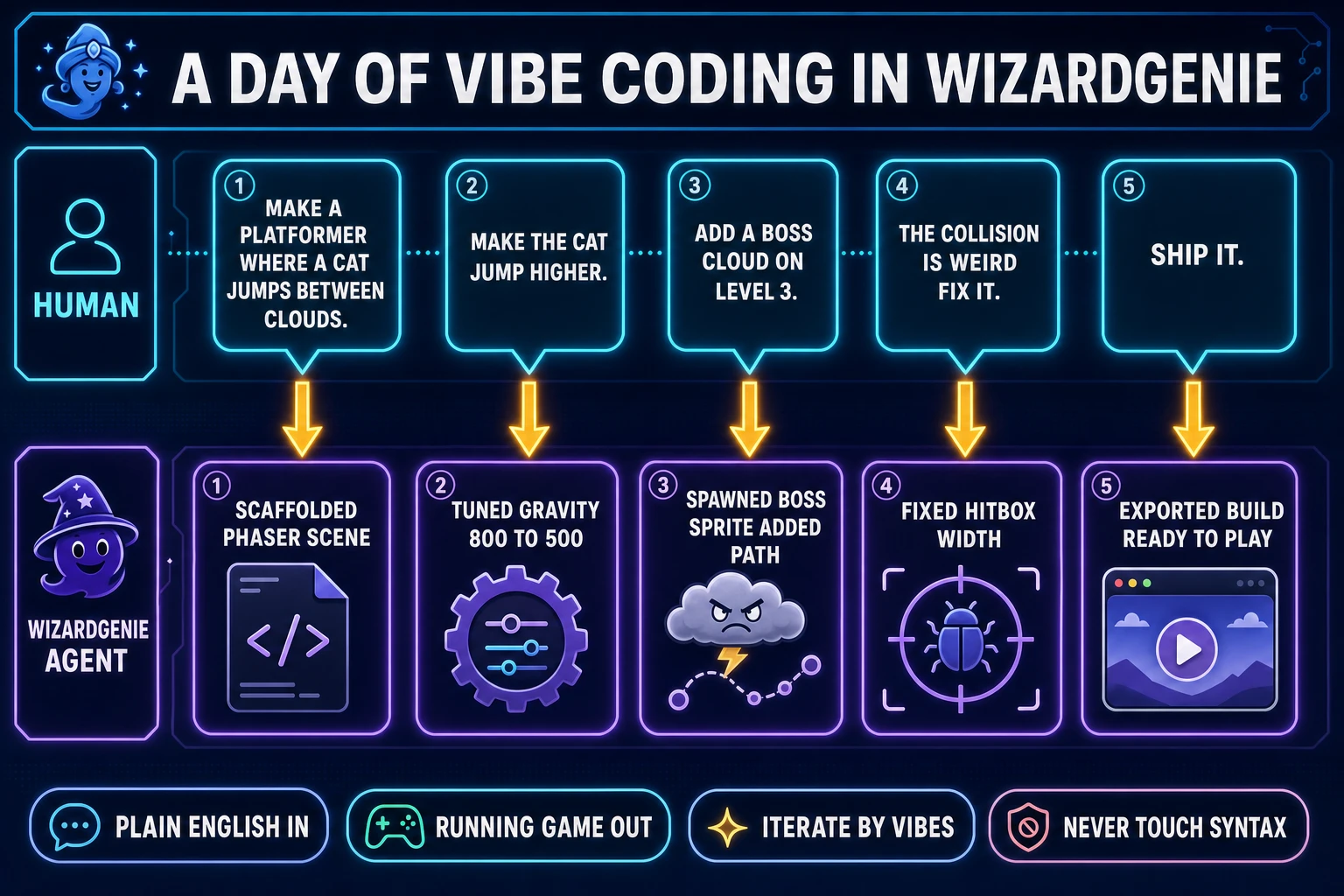
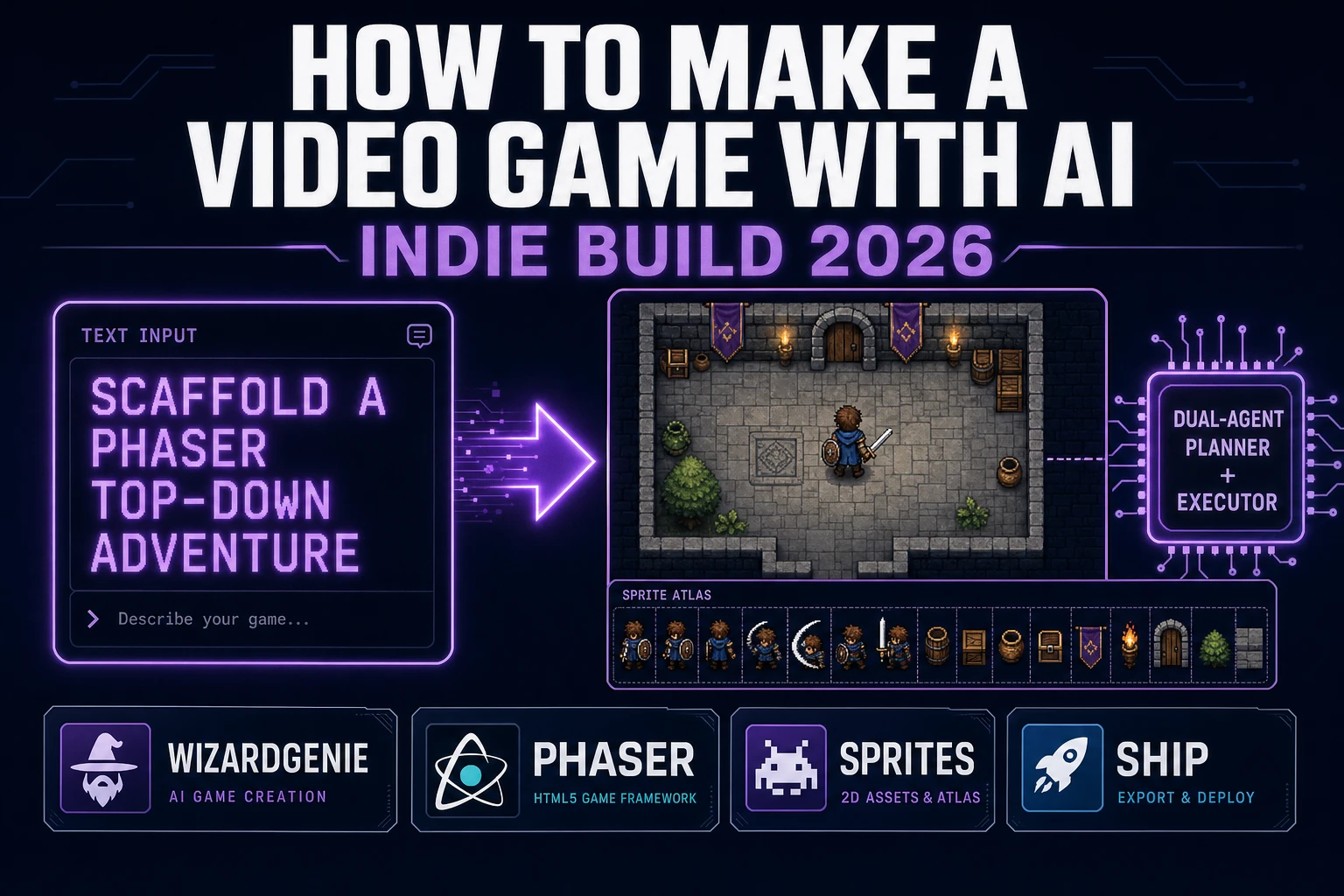
A concrete worked example is the fastest way to make what does vibe coding mean click. Open WizardGenie in a browser tab. Type the following into the prompt field: “Make a platformer where a cat jumps between clouds and collects stars. Physics should feel bouncy. The camera follows the cat. Stars respawn after ten seconds.” Press send. The Planner model (usually Claude Opus 4.7 or Gemini 3.1 Pro, both surfaced in the eight-model CODING_MODELS array at src/app/_home-v2/_data/tools.ts lines 734-742 verified July 3, 2026) reads any existing project files, decides the file structure (a Phaser scene, an asset loader, a player class, a star spawner, a camera controller), and hands the specific implementation tasks to the Executor model. The Executor (DeepSeek V4 Pro, Kimi K2.5, or MiniMax M2.7) emits the actual scene code, entity components, and asset-loading glue. Within seconds, the preview iframe on the right side of the screen shows a playable cat jumping on clouds.
Now the vibes take over. The cat feels too heavy — type “the jump feels too heavy, make it more floaty.” The agent tunes the gravity constant, hot-reloads the preview, and the cat now floats slightly longer at the apex. The clouds feel too static — type “make the clouds drift left slowly.” The agent adds a tween. A star vanishes when collected but never respawns — type “stars should respawn after ten seconds like I said.” The agent notices its own miss and fixes the timer. Twenty minutes in, the game has a boss cloud on level three, a chime that plays on star collection, and a running score in the top right. The human never opened a source file. That is what vibe coding looks like when you sit down and do it, and it is what the reader Googling what does vibe coding mean actually wants to see.