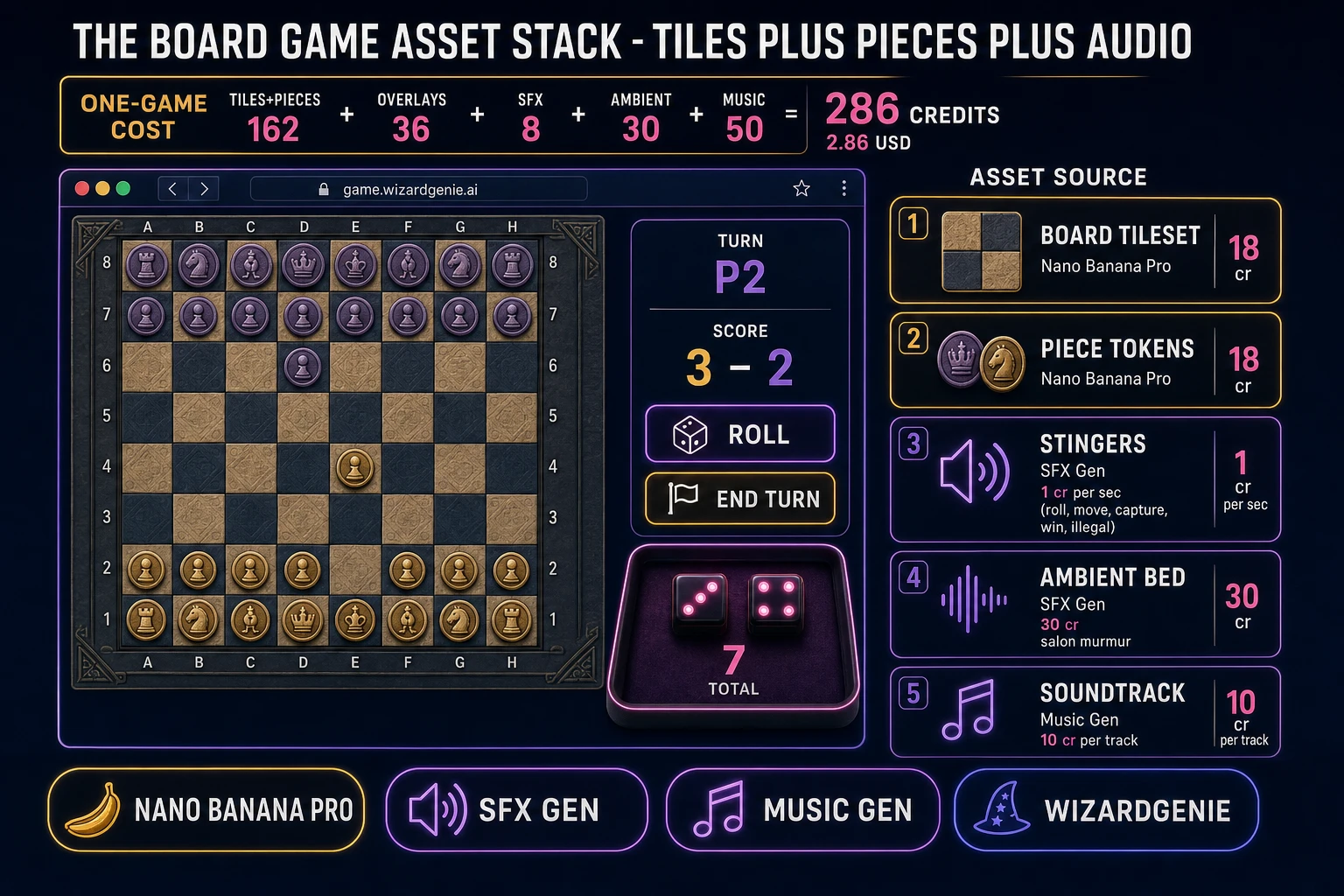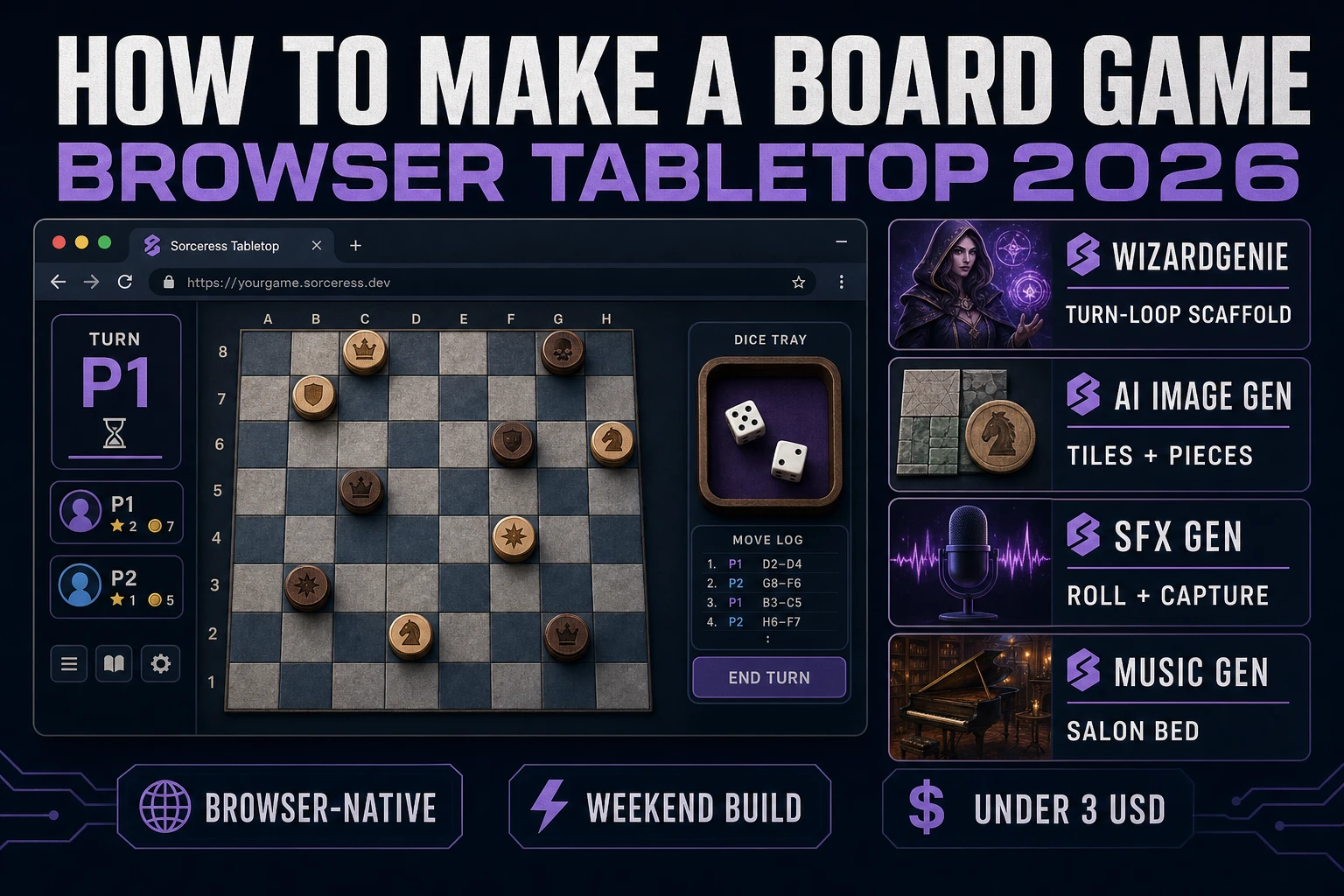
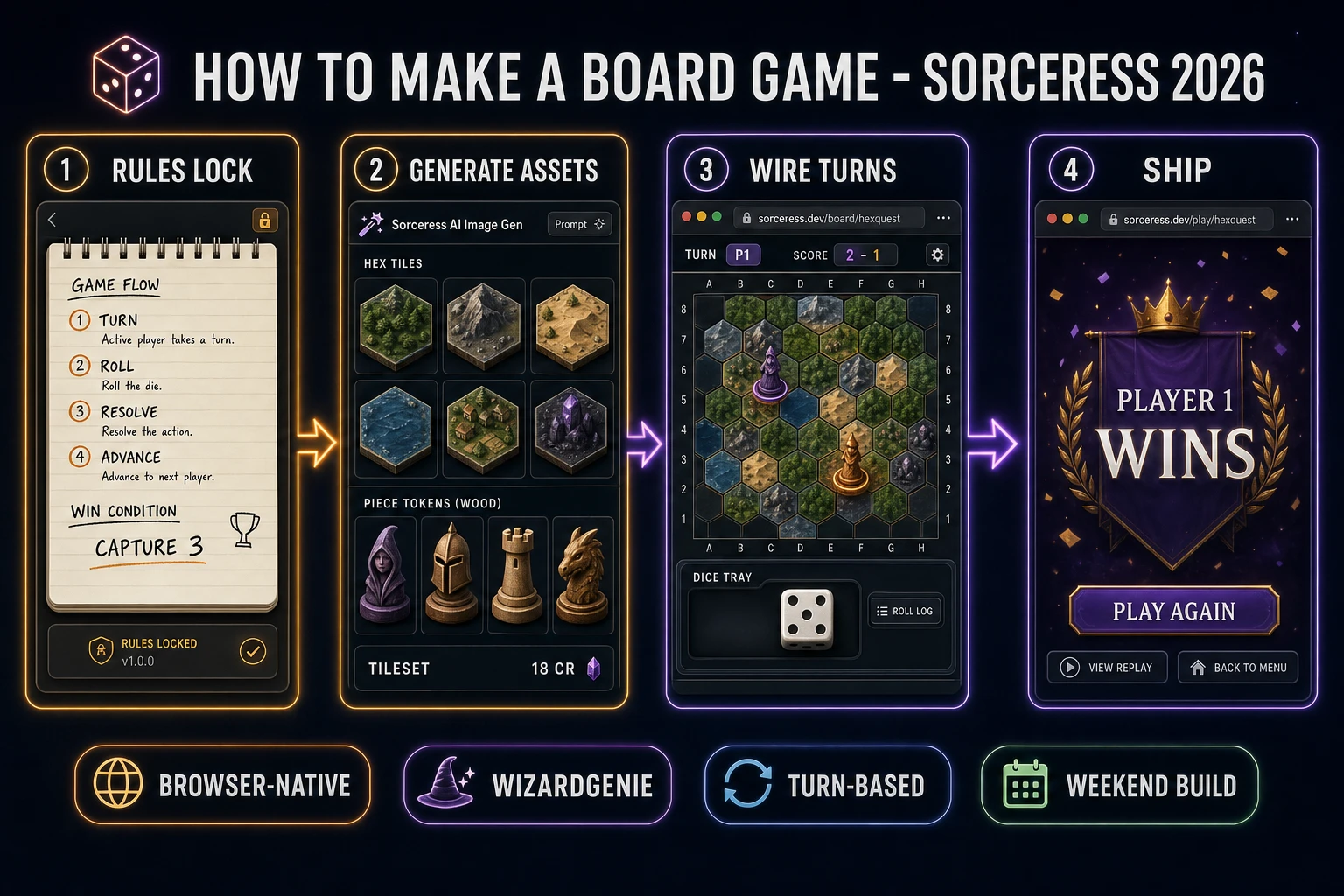
How to make a board game in 2026 no longer starts with a laser cutter and a Kickstarter stretch goal. The same turn-roll-resolve-advance loop that powers centuries of tabletop design — from race games and capture games through modern euro-style scoring, documented across the long history of the board game form (verified against Wikipedia on 2026-08-17) — now ships cleanly as a browser state machine. Almost every tutorial for how to make a board game still stops at a cardboard prototype PDF and calls it done. The 2026 pipeline is different. A coding agent scaffolds the whole turn interpreter in one prompt, CSS Grid or Phaser draws the board, and AI generation covers every tile, token, and salon stinger the table needs. In a browser, that means WizardGenie to scaffold the turn-loop interpreter, Sorceress AI Image Gen for the tileset and piece tokens, SFX Gen for roll, move, capture, and win cues, and Music Gen for the calm salon bed. This guide is the honest end-to-end for how to make a board game in 2026, in a browser, in a weekend.
What how to make a board game actually means in 2026 (digital tabletop vs cardboard)
The query “how to make a board game” hides three distinct intents. Some searchers want a physical prototype — chipboard, cardstock, Meeple silhouettes, a print-and-play PDF — and a large share of search results serve that audience. This guide is not for them. A second intent is a commercial tabletop product with manufacturing, fulfillment, and retail. That is a valid path but it needs tooling, warehousing, and months of iteration. The third intent, and the one this guide targets, is a digital tabletop: one browser window, a visible board grid, piece tokens, a dice tray or draw deck, hot-seat or solo turns, a score HUD, and a win screen. That is a weekend build, it demos the whole Sorceress toolset, and it is the format most first-time digital board-game builders actually want when they type how to make a board game.
The presentation contract for a browser board game is small and strict. A title screen shows the game name, a New Game button, a player-count selector (1–4 for hot-seat), and a rules blurb. The main view is a board (square grid, hex grid, or path of spaces) with piece tokens on cells, a side panel for the current player, dice or hand, and scores, plus Roll / Draw and End Turn buttons. On resolve, legal moves highlight; illegal clicks buzz; captures animate briefly. When a win condition trips, a results screen shows the winner, final scores, and Play Again. Every digital translation of classic race, capture, and scoring tabletop loops honours that layout, which is why the format renders so cleanly in a browser: it is fundamentally a grid UI plus a turn state machine.
The board game loop in one minute (turn, roll or draw, resolve, advance)
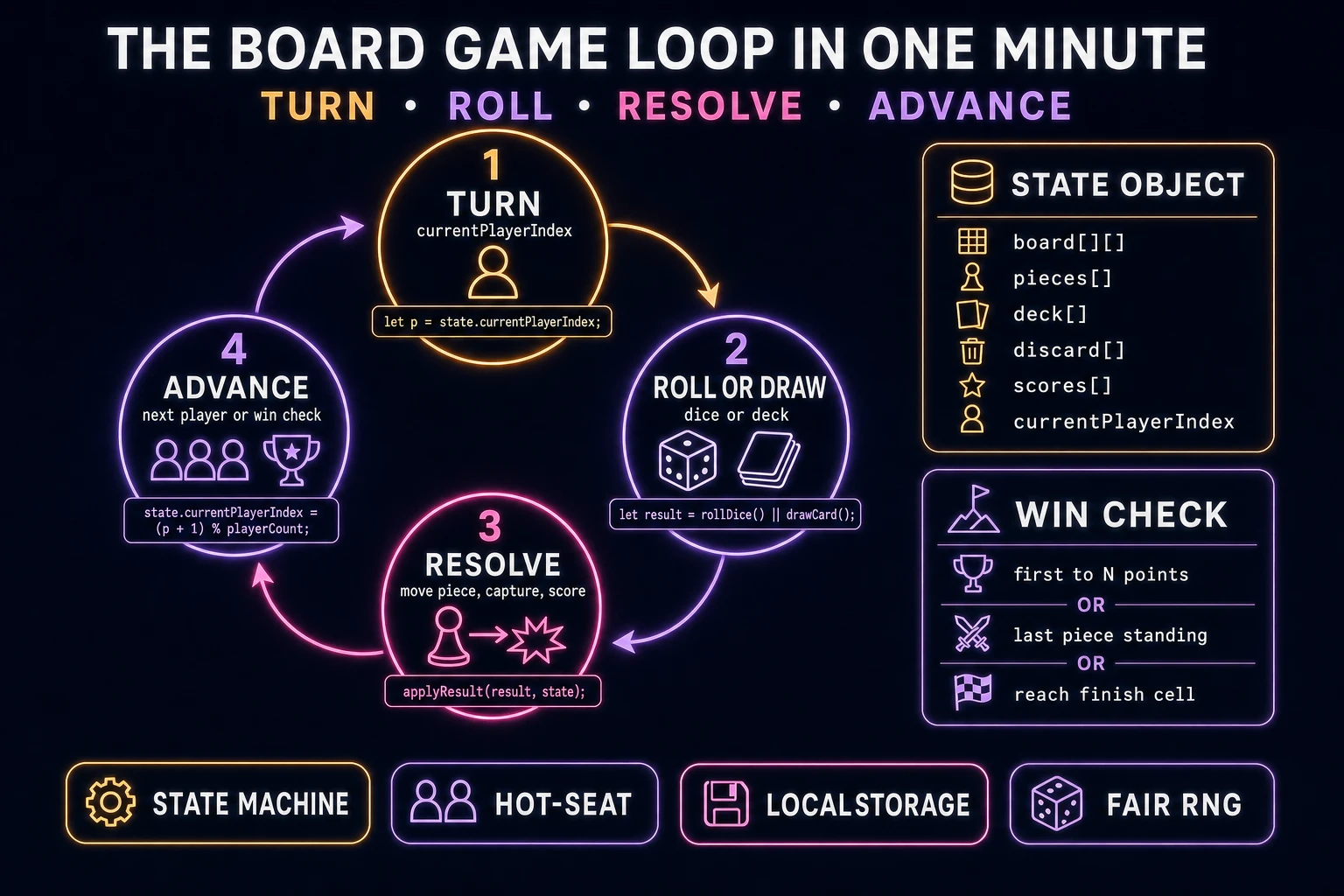
Four moving parts and nothing else, in strict order per player action. First, turn — read currentPlayerIndex, enable that player’s input, refresh any start-of-turn resources (movement points, one free draw). Second, roll or draw — either sample a fair die with crypto.getRandomValues (verified against the MDN Crypto.getRandomValues docs on 2026-08-17) or pop the top card from a shuffled deck array. Third, resolve — highlight legal destination cells, accept one piece move or card play, apply captures or scoring, write the new board into state. Fourth, advance — run the win check; if nobody won, increment currentPlayerIndex modulo player count and loop. When a win condition fires, exit to the results screen.
After every resolved action, autosave the full match to localStorage under a key like board.match: board cells, piece positions, deck and discard, scores, and currentPlayerIndex. On page load, if a match autosave exists, offer Resume next to New Game. That is the entire game. Four steps, executed per turn, driven by a plain JavaScript state machine. Everything else — animated token slides, particle bursts on capture, a fancy 3D dice tumble — is polish. Keep the core loop tight, ship one complete board game end-to-end, and only then layer polish.
Pick your engine for how to make a board game: vanilla DOM, Phaser 4, or WizardGenie
Three good browser targets in 2026, each with a different trade-off. Vanilla JavaScript with CSS Grid is the honest default and the pick this guide recommends for a first build. A browser board game is fundamentally a grid of cells: one display: grid container (see the MDN CSS Grid Layout guide, verified 2026-08-17), absolutely positioned piece tokens, and a side panel for dice, hand, and scores. Total code footprint for a working race-or-capture tabletop is under 550 lines and ships as a single static HTML file. The Web Storage API handles match persistence. No engine to install, no build step, deploys to any static host.
Phaser 4.2.1 “Giedi” (released 9 July 2026, verified against phaser.io/download/stable on 2026-08-17) becomes the right pick if you want animated piece slides along paths, particle captures, isometric boards, or integrated audio timeline management. Phaser bundles Scene management, an asset loader, and input in one file, and its Scene lifecycle maps cleanly onto title–match–results transitions.
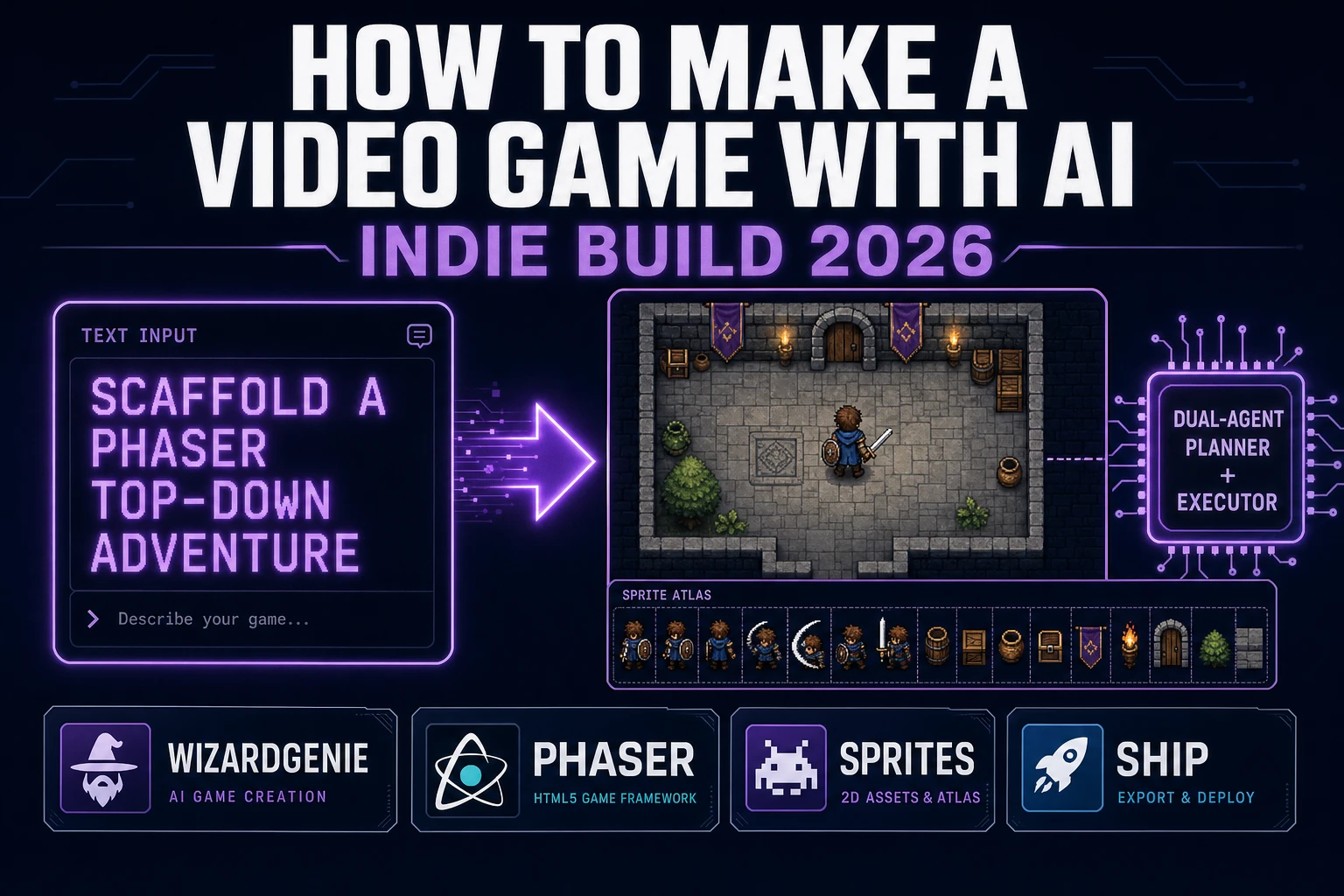
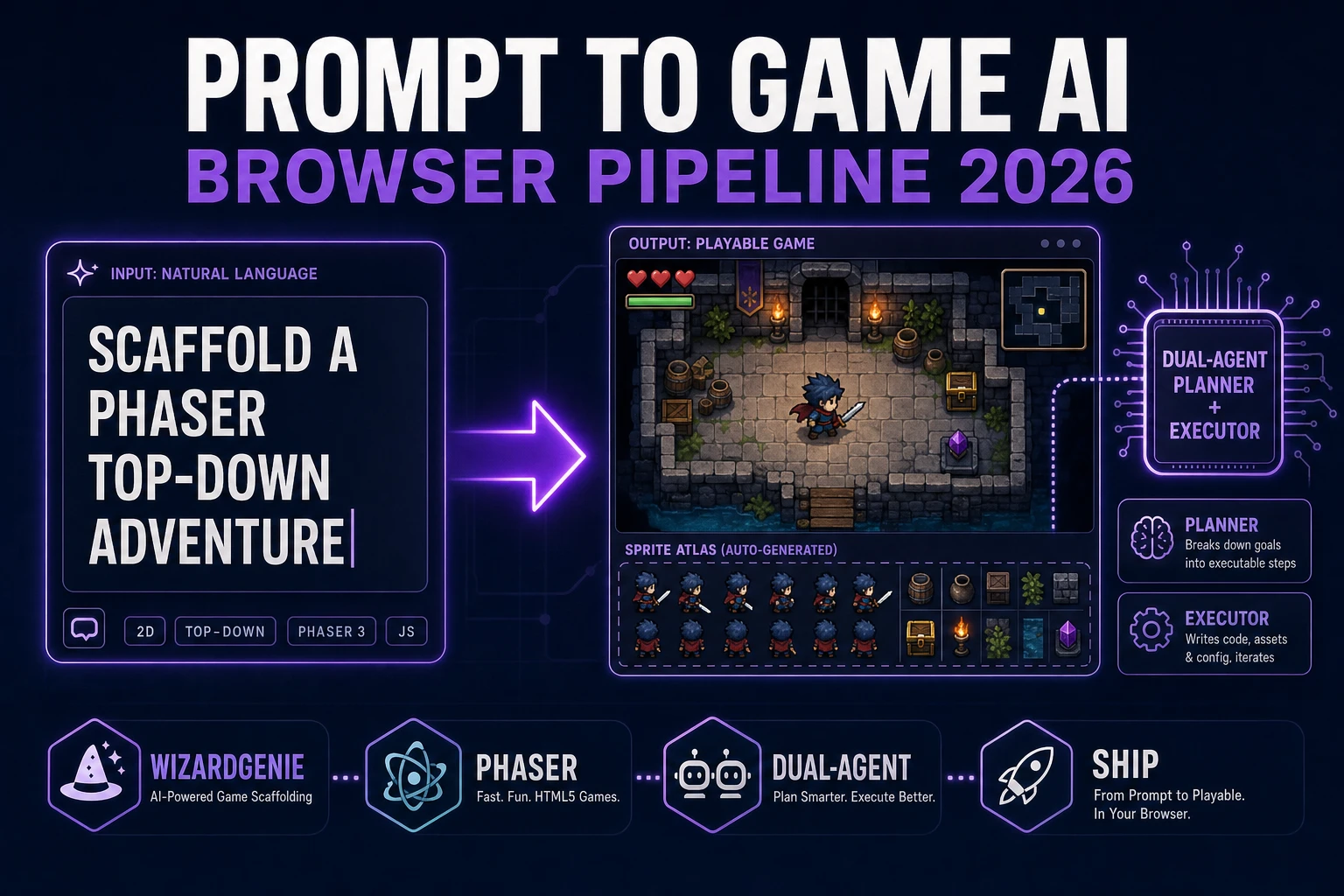
WizardGenie is not a separate rendering engine — it scaffolds whichever of the two you pick, from a single natural-language prompt. WizardGenie is the Sorceress game-native coding agent. It ships as both a desktop app (Windows installer with auto-update, available to Early Access supporters and above) and a no-install web build at the same URL. Its coding-model lineup covers Claude Opus 4.7, Claude Sonnet 4.6, GPT-5.5, Gemini 3.1 Pro, DeepSeek V4 Pro, Kimi K2.5, Grok 4.2, and MiniMax M2.7 (verified 2026-08-17 in src/app/_home-v2/_data/tools.ts). For a board game, any frontier model scaffolds the whole turn interpreter in one prompt. If you want to run cheap, pair a frontier planner (Claude Opus 4.7 or GPT-5.5) with a budget executor (DeepSeek V4 Pro or Kimi K2.5) and let the executor do the typing — the Dual-agent planner-and-executor pattern is the whole reason WizardGenie exists, and it lands most projects at roughly one-fifth the single-frontier cost.