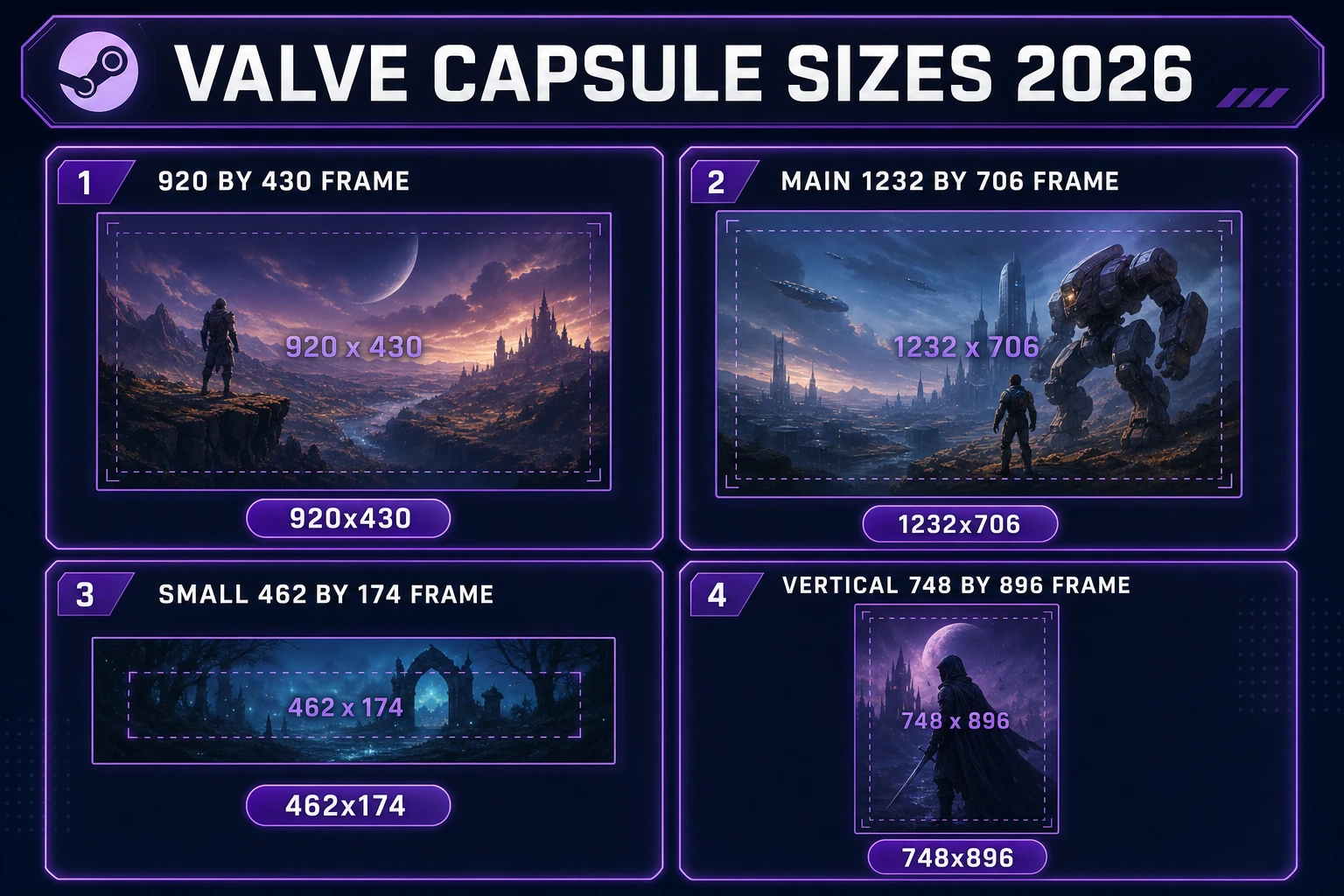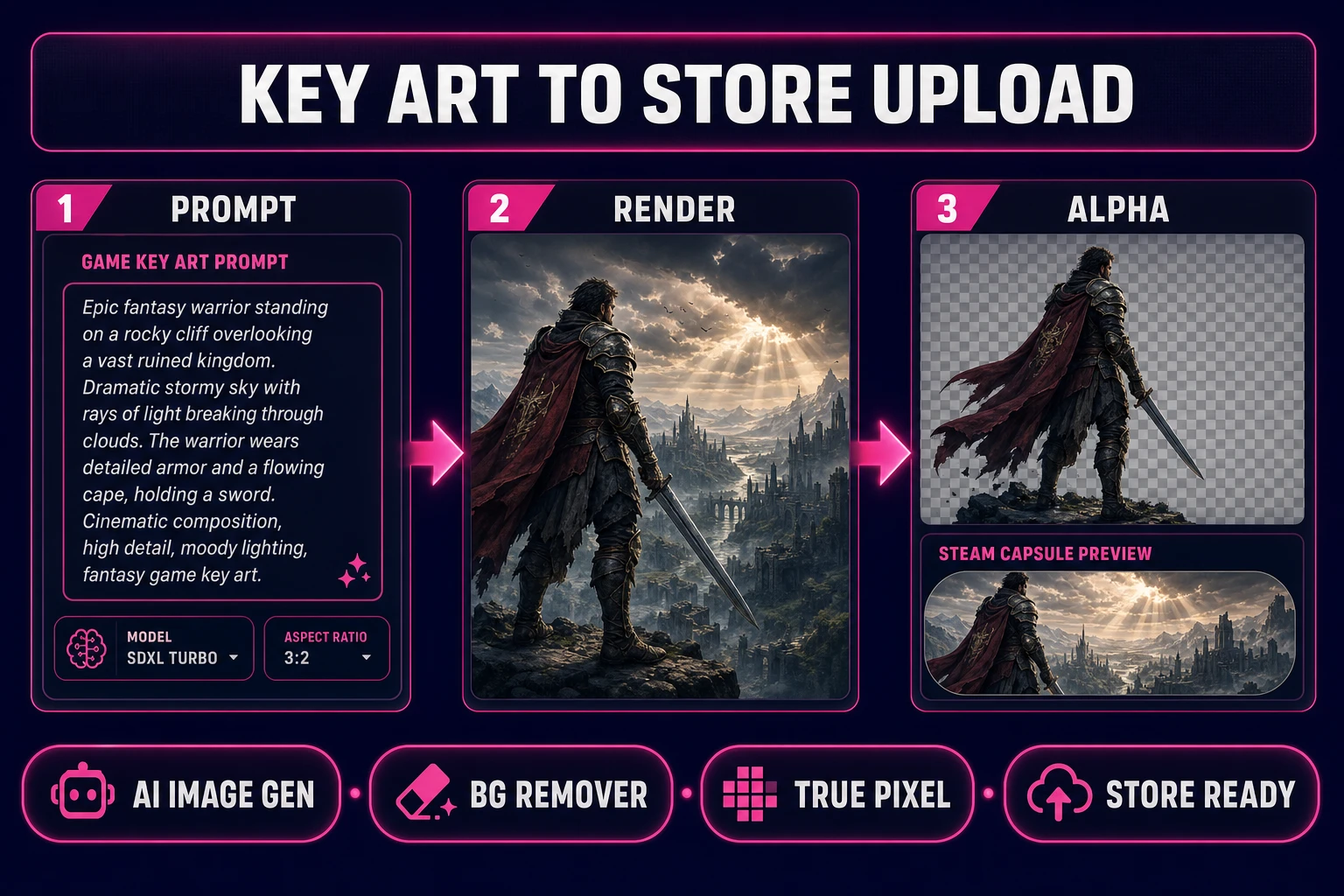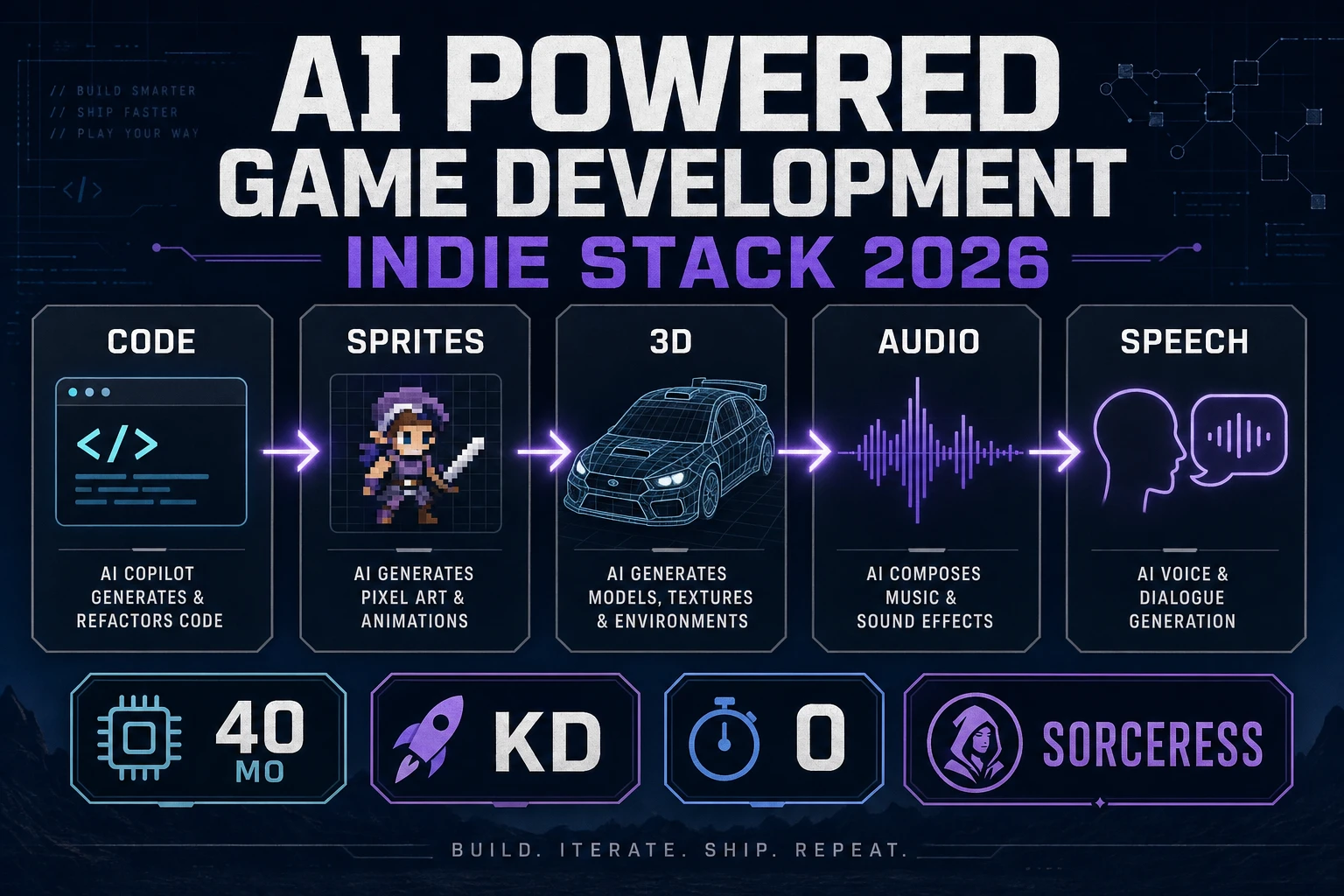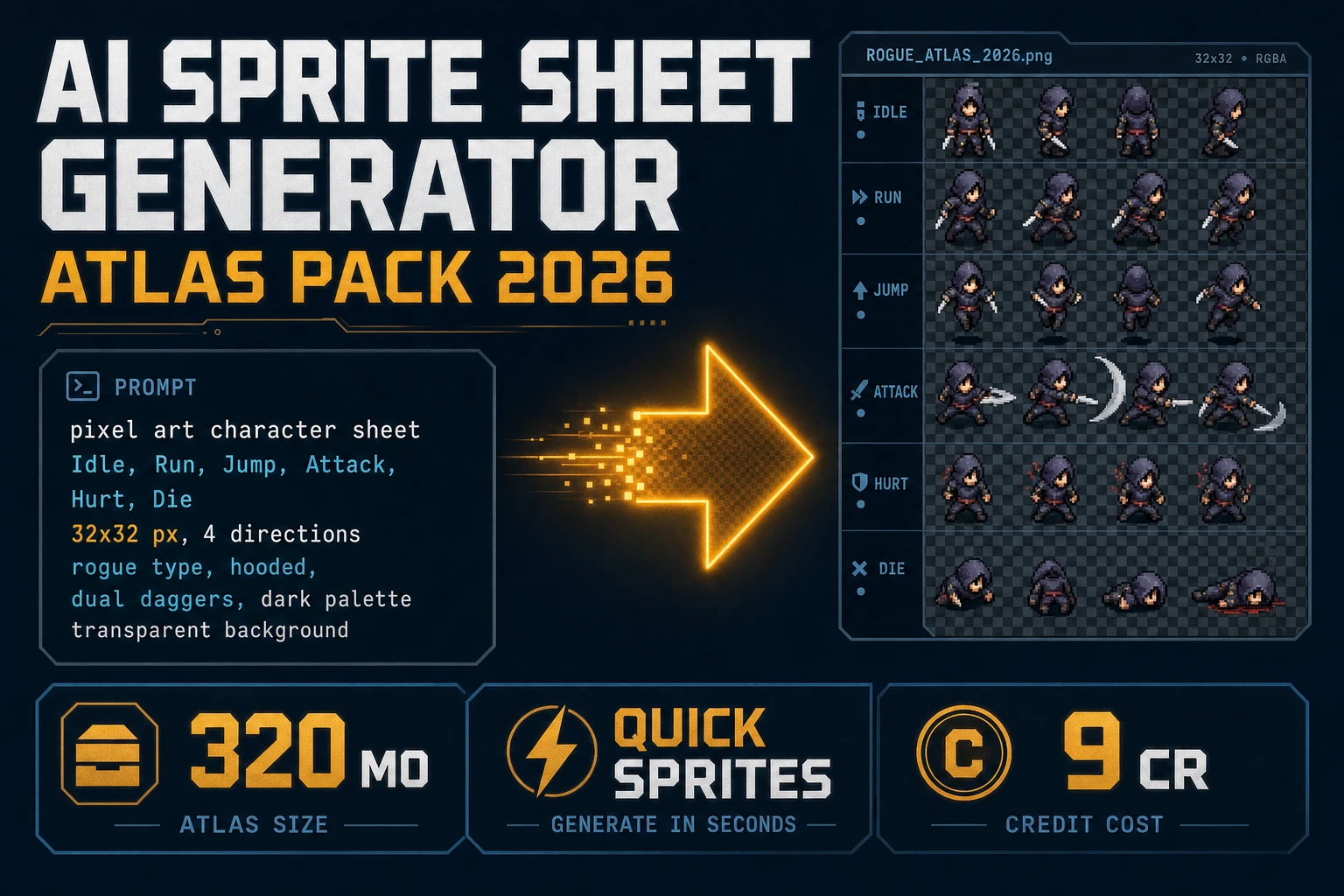
Wishlist clicks die in the browse grid long before anyone opens your trailer. Searchers typing steam capsule art on July 17, 2026 already know Valve rejects soft crops and unreadably tiny logos — they need a sized key-art pack that survives Header, Main, Small, and Vertical placements in one pass. This guide covers the 2026 pipeline: lock a silhouette brief, generate hero scenes in AI Image Gen, cut clean alpha with BG Remover, optionally snap a retro variant in True Pixel, then crop to the live Steamworks pixel boxes. Capsule dimensions and tool costs below are verified against Valve’s Partner docs and the Sorceress source on July 17, 2026.
What steam capsule art outputs for indie storefronts
The phrase steam capsule art (260/mo, KD 6 per DataForSEO probe-fresh-seeds-8.md verified July 16, 2026) targets solo publishers and tiny teams who need Valve-legal store images, not a moodboard. Sibling queries — steam capsule art size (30/mo, KD 6), capsule art steam (20/mo, KD 6), steam capsule art requirements (10/mo) — mix dimension lookups with “who can make this before Coming Soon.” This post stays on the production deliverable: a store key-art pack with readable logo placement inside every required capsule.
Production output is structured. Ship a brief card (hero silhouette, banned clutter, logo safe zone), a transparent master PNG of the character or prop stack, four store capsules at Valve’s current upload sizes, and optional library assets when the page leaves Coming Soon. Pair that pack with the game logo maker sibling when the wordmark itself is still mushy at 120×45 — Brand locks the mark; this steam capsule art session places that mark inside full key art. When you also need a boot splash separate from Steam browse, route through the title screen generator guide after the store set ships.
Why screenshot crops fail Steam browse
Dragging a 1920×1080 screenshot into Steamworks feels fast until Small Capsule auto-generates 120×45. UI chrome, tiny HUD text, and center-framed characters vanish. Valve’s store templates expect key art compositions — logo plus artwork — not raw gameplay stills. Marketing text, review scores, and award badges on base capsules are banned; Artwork Overrides exist for timed promos, not as a substitute for a clean master set.
Screenshot crops also fail the aspect test. Header (~2.14:1), Main (~1.75:1), Small (~2.66:1), and Vertical (~5:6) do not share one crop from a single 16:9 take without shearing the hero. Teams that “just letterbox” end up with empty bars Valve reviewers flag and players ignore in search lists. A purpose-built steam capsule art path designs one hero silhouette, then re-frames it into each ratio with the logo locked to a safe zone.
Generic social templates optimize for Instagram squares. They rarely reserve a logo strip that survives Steam’s smallest auto-downscales, never attach a size checklist mapped to Partner docs, and cannot hand you a transparent character layer for seasonal overrides. That is why the honest 2026 path lives inside a game-dev stack: brief plus generate plus alpha plus exact-size crop in one Sorceress account. The Steam store page remains the destination; the capsule pack is the first handshake.
The Sorceress steam capsule art pipeline in four steps
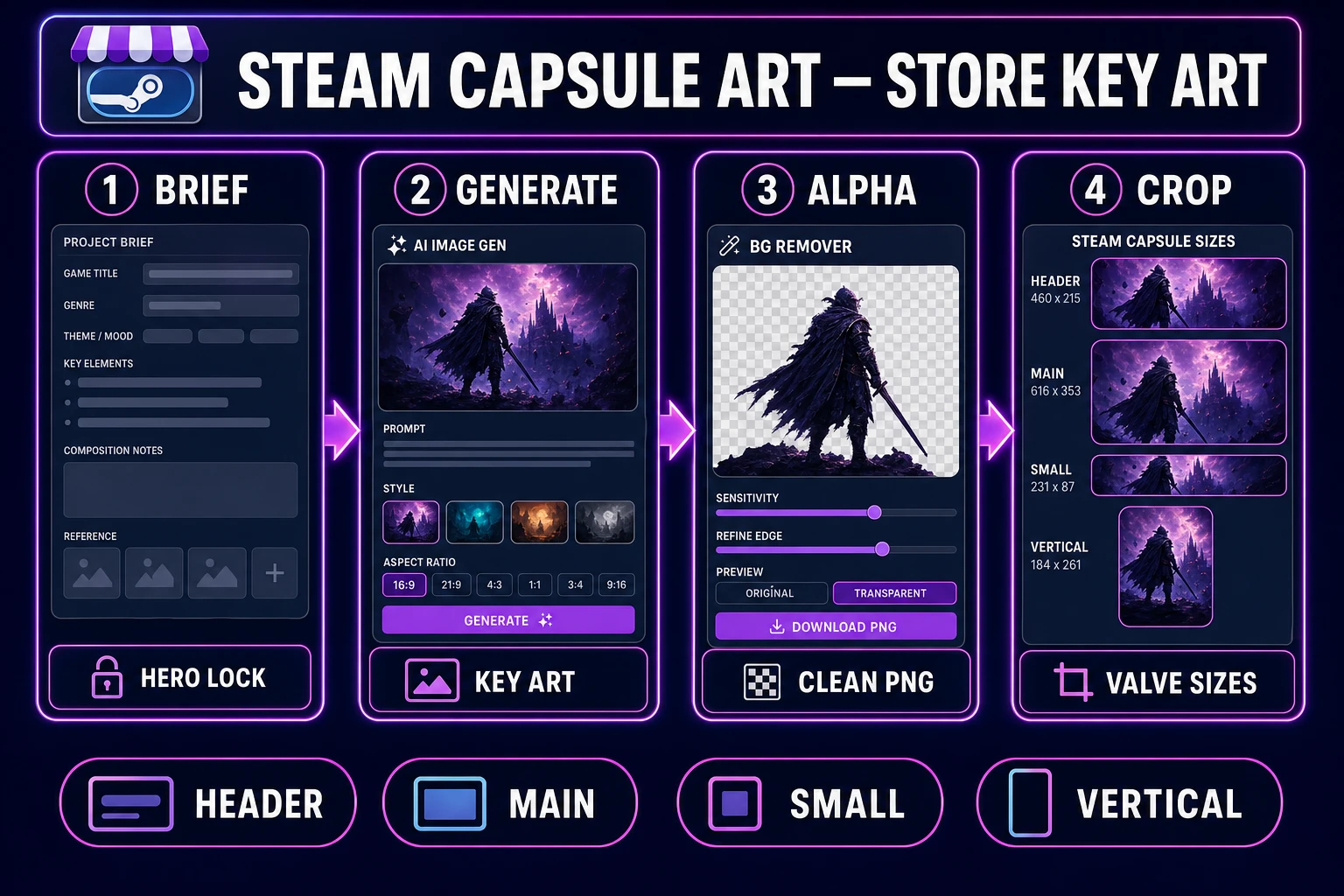
Every shippable store key-art pack ships four runtime pieces: brief card, hero render, alpha master, and Valve-size crops. In 2026 each maps to one Sorceress surface verified against the live catalog on July 17, 2026:
- Brief and logo safe zone: write the silhouette rules before you spend credits — genre, camera height, banned clutter, and where the wordmark sits on Header vs Small.
- Hero key-art generation: AI Image Gen drafts scenes across models (Z-Image at 3 credits for fast comps, GPT Image 2 at 5 credits for lettering fidelity, Flux 2 Pro at 6 credits with references —
src/lib/models.tsverified July 17, 2026). - Alpha cut: BG Remover returns transparent PNGs at 3 credits per pass (
BG_REMOVER_CREDITS = 3insrc/app/bg-remover/page.tsx). - Pixel-readable optional pass: True Pixel converts a winning render into a crisp pixel variant when your store page targets retro browse — not required for painted key art.
Pricing is a $49 lifetime unlock plus pay-as-you-go credit packs. Starter $10/1,000 credits, Creator $20/2,000, Plus $50/5,000, Studio $100/10,000. Verified against src/app/plans/page.tsx lines 51 and 56–59. New accounts ship with 100 starter credits. Keep WizardGenie on your own API key when you scaffold itch pages or trailer stills after the Steam set lands.