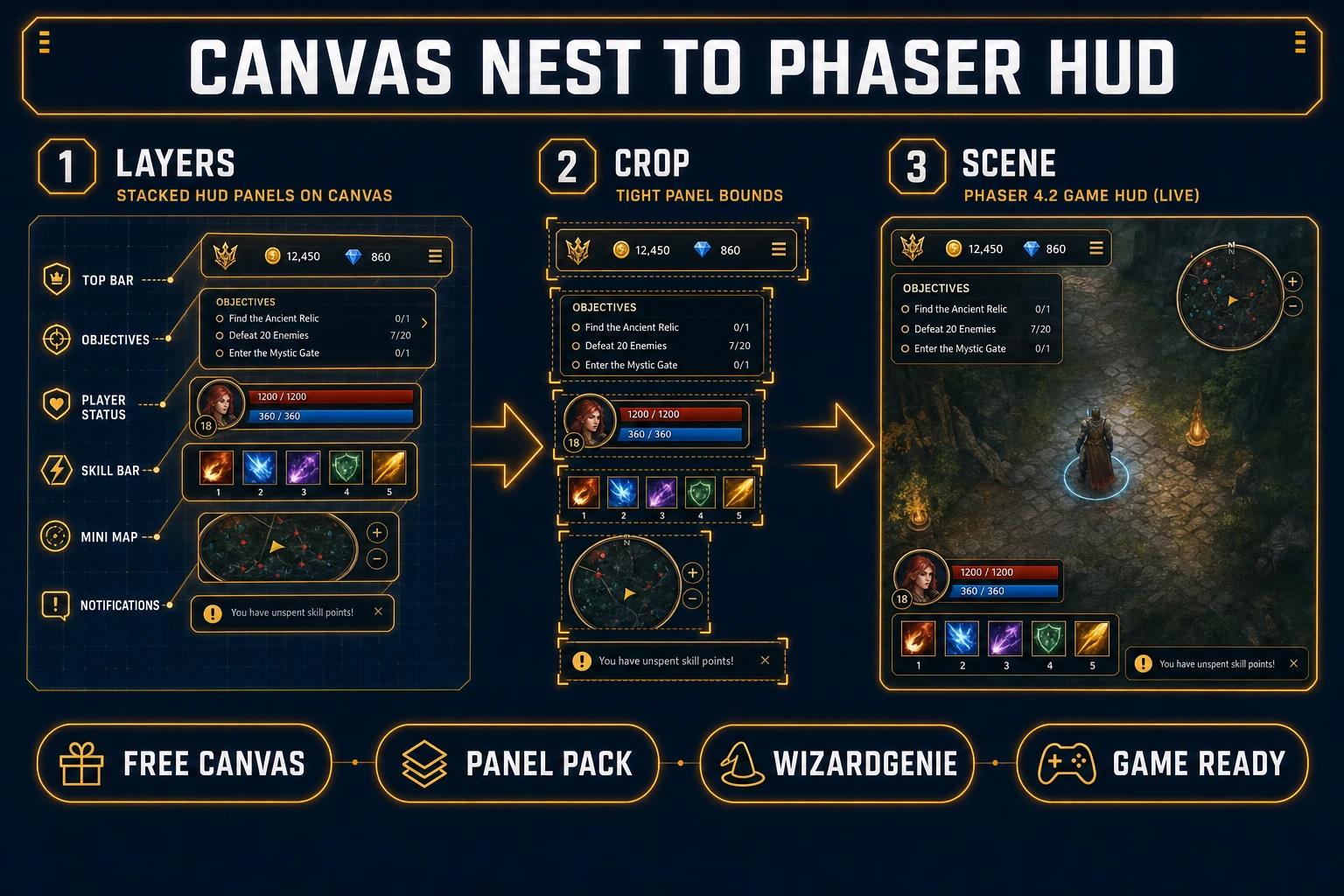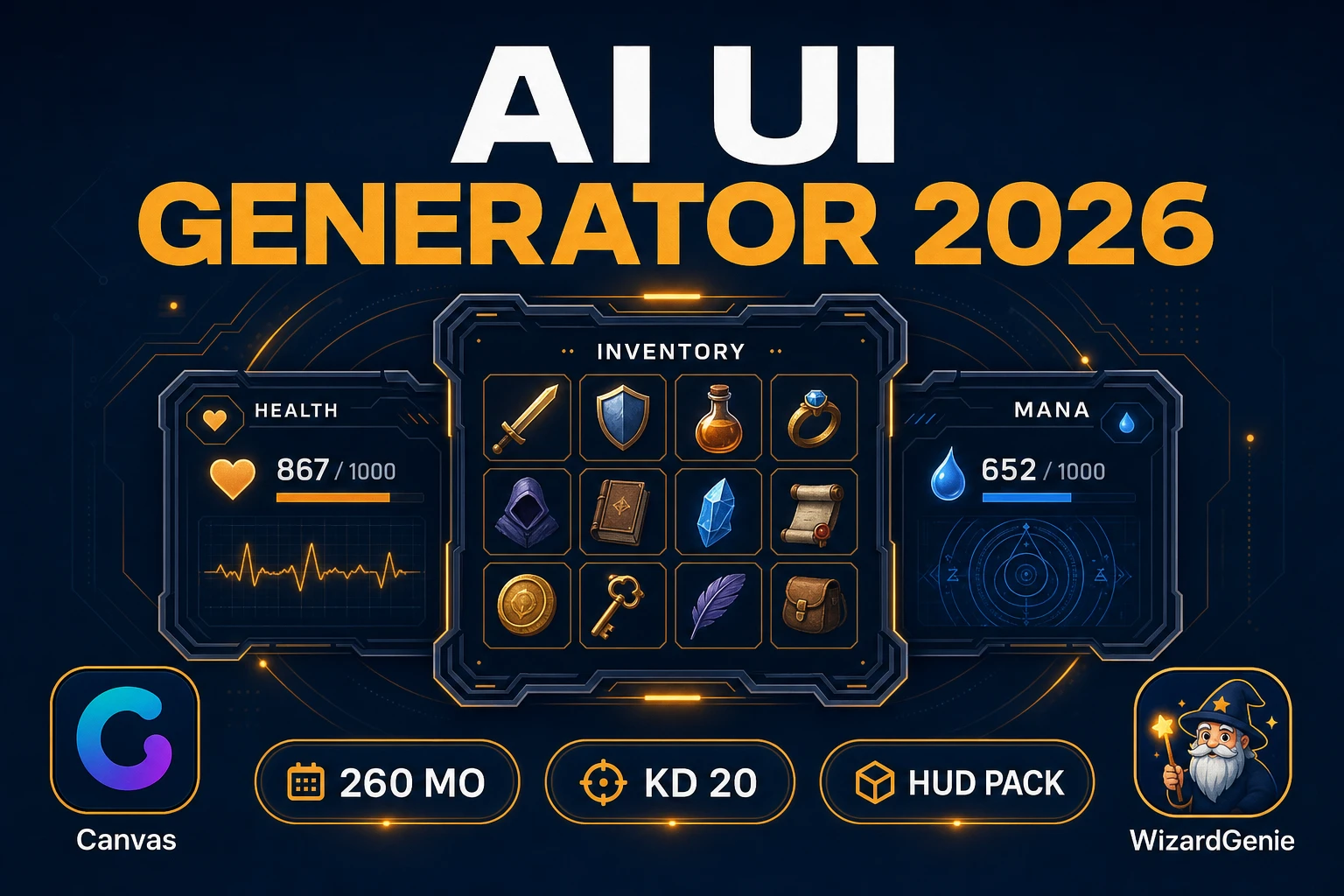
Flat mockups look finished until you try to bind a health value. Searchers typing ai ui generator on July 17, 2026 already know a pretty layout screenshot is not a shippable HUD — they need nestable panels with clean edges, matching chrome, and separate layers for meters, slots, and dialogue. This guide covers the 2026 production path: prompt a panel kit in AI Image Gen, crop and nest pieces in Canvas, then wire the pack into a Phaser 4.2 scene with WizardGenie. Model credits, Canvas presets, and Phaser versions below are verified against the Sorceress source and Phaser release notes on July 17, 2026.
What an ai ui generator outputs for indie HUD packs
The phrase ai ui generator (260/mo, KD 20 per DataForSEO probe-fresh-seeds-3.md verified July 16, 2026) targets solo and jam teams who need game chrome, not Figma app kits. Sibling queries — ui ai generator (140/mo, KD 26), ui generator ai (70/mo, KD 22), best ai ui generator (40/mo, KD 13) — mix product shopping with “who can make my health bar match my inventory.” This post stays on the production deliverable: a nestable HUD panel pack with transparent edges and a locked visual language.
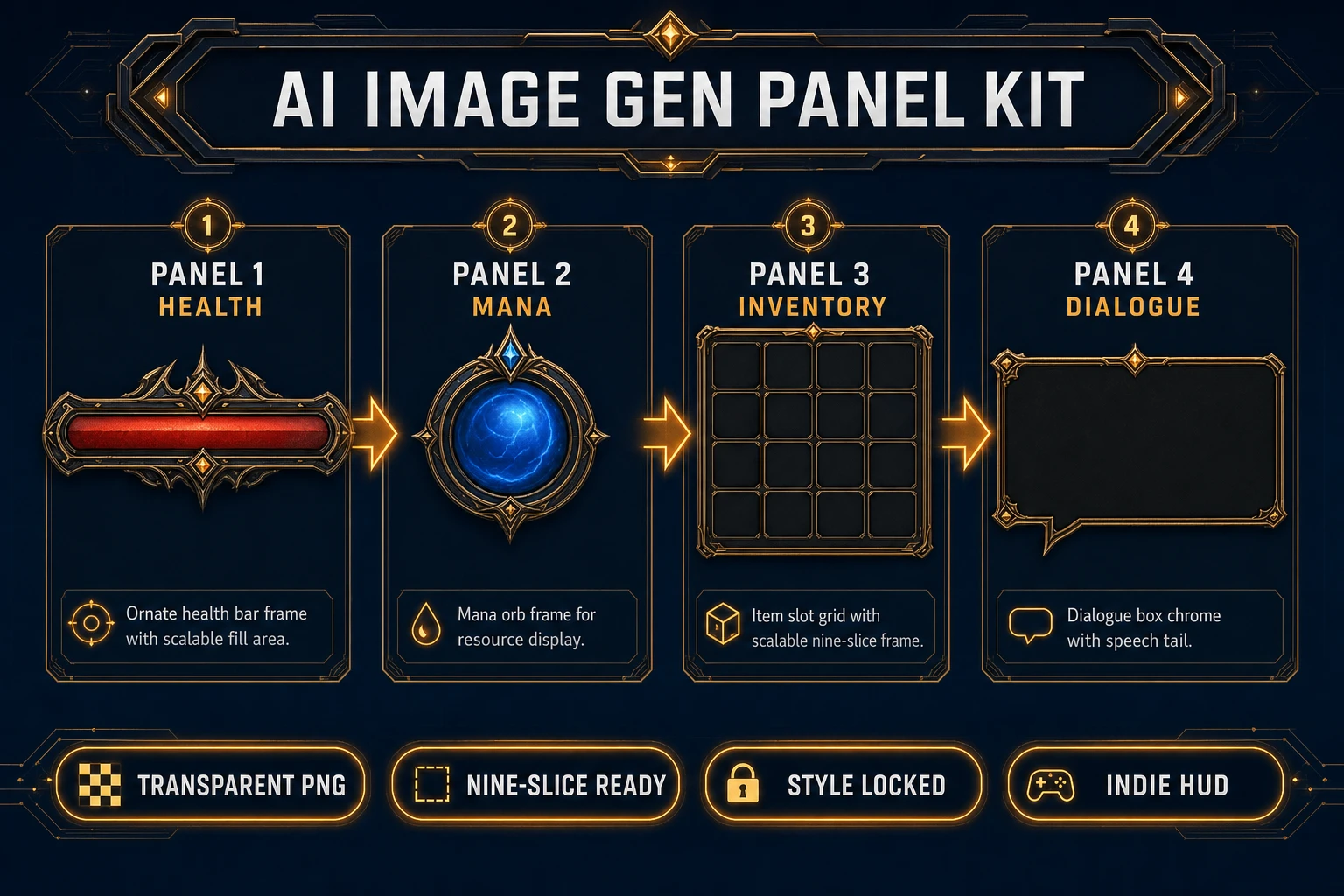
Production output is structured. Ship a style card (palette, corner radius, stroke weight, banned clutter), separate transparent PNGs for health frame, mana/orb frame, inventory slot, dialogue box chrome, and primary button shell, plus a one-page naming map so Phaser scenes load predictable assets. Pair that pack with the AI mockup generator sibling when you still need a full-screen layout exploration before you cut panels — Mock answers hierarchy; this ai ui generator session answers “what PNGs does the HUD load.” When you also need pixel-readable HUD type, route through the bitmap font generator guide after the chrome pack locks.
Why full-screen mockups stall production HUDs
A single 1920×1080 mockup with every widget baked in feels done until combat needs a depleted mana state, a poisoned health tint, or a dialogue box that grows with line count. Flattened art forces redraws for every state. A nestable heads-up display pack treats each chrome piece as a reusable shell: fill bars live behind nine-slice frames, inventory icons sit inside slot plates, and dialogue text sits inside a separate box layer.
Generic “AI UI” tools optimize for SaaS dashboards and mobile app wireframes. They rarely export transparent game panels, almost never lock a fantasy or pixel stroke language across six widgets, and cannot hand you Phaser-ready filenames. That is why the honest 2026 path lives inside a game-dev stack: generate chrome, nest panels, wire the scene in one Sorceress account. The graphical user interface still has to read under combat noise; nestable panels are how you iterate without reprinting the whole mockup.
Mockup-first workflows still matter — the sibling Mock post covers Layout Preview stress tests for phone-to-TV crops. Do that exploration once. When hierarchy is locked, switch to an ai ui generator panel pack so production art stops living inside a single JPG.
The Sorceress ai ui generator pipeline in four steps
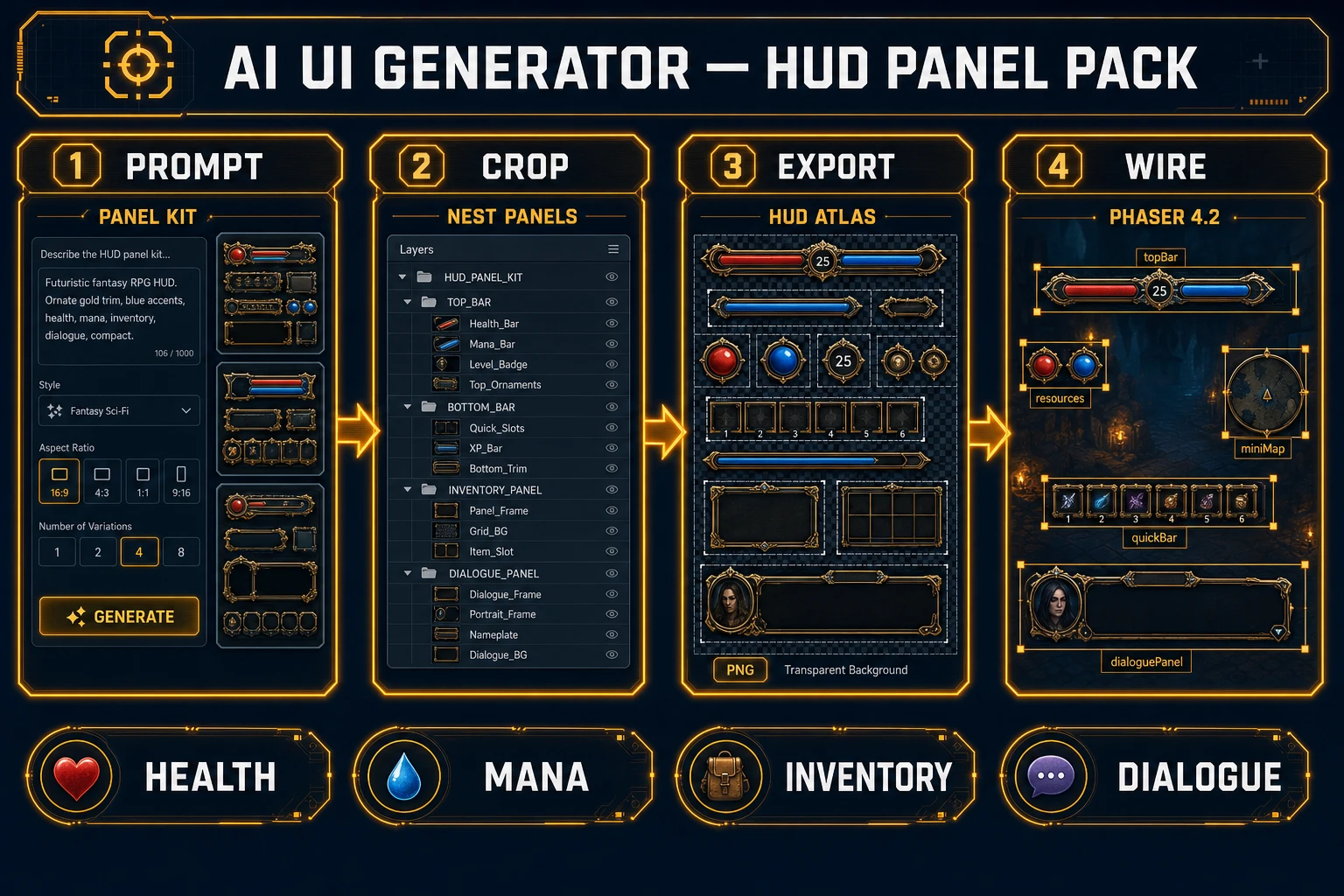
Every shippable HUD panel pack ships four runtime pieces: style card, panel renders, nested crops, and a wired scene. In 2026 each maps to one Sorceress surface verified against the live catalog on July 17, 2026:
- Style lock: write palette, stroke, corner language, and banned clutter before you spend credits.
- Panel generation: AI Image Gen drafts chrome across models (Z-Image at 3 credits for fast comps, GPT Image 2 at 5 credits for lettering fidelity, Flux 2 Pro at 6 credits with references —
src/lib/models.tsverified July 17, 2026). - Nest and crop: Canvas is Free-badge (
src/app/_home-v2/_data/tools.ts) for layer stacks, tight bounds, and transparent PNG exports on the 16:9 Landscape 1920×1080 preset. - Wire the HUD: WizardGenie scaffolds a Phaser 4.2 HUD scene on your own API keys — Phaser v4.2.0 “Giedi” shipped June 19, 2026; patch 4.2.1 landed July 9, 2026 (verified against phaser.io on July 17, 2026).
Pricing is a $49 lifetime unlock plus pay-as-you-go credit packs. Starter $10/1,000 credits, Creator $20/2,000, Plus $50/5,000, Studio $100/10,000. Verified against src/app/plans/page.tsx lines 51 and 56–59. New accounts ship with 100 starter credits. Keep WizardGenie coding on your own API key so HUD wiring never burns Sorceress image credits.