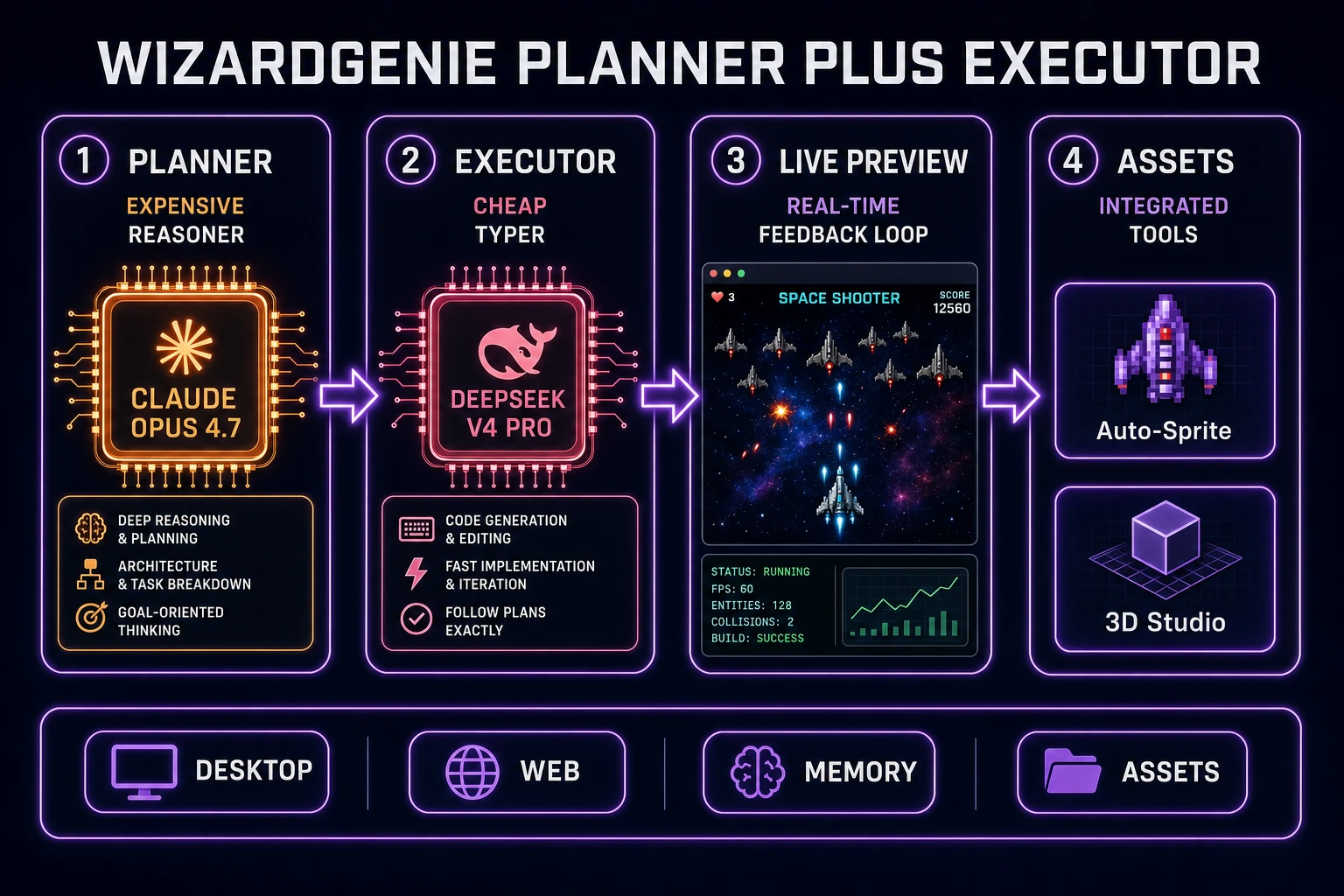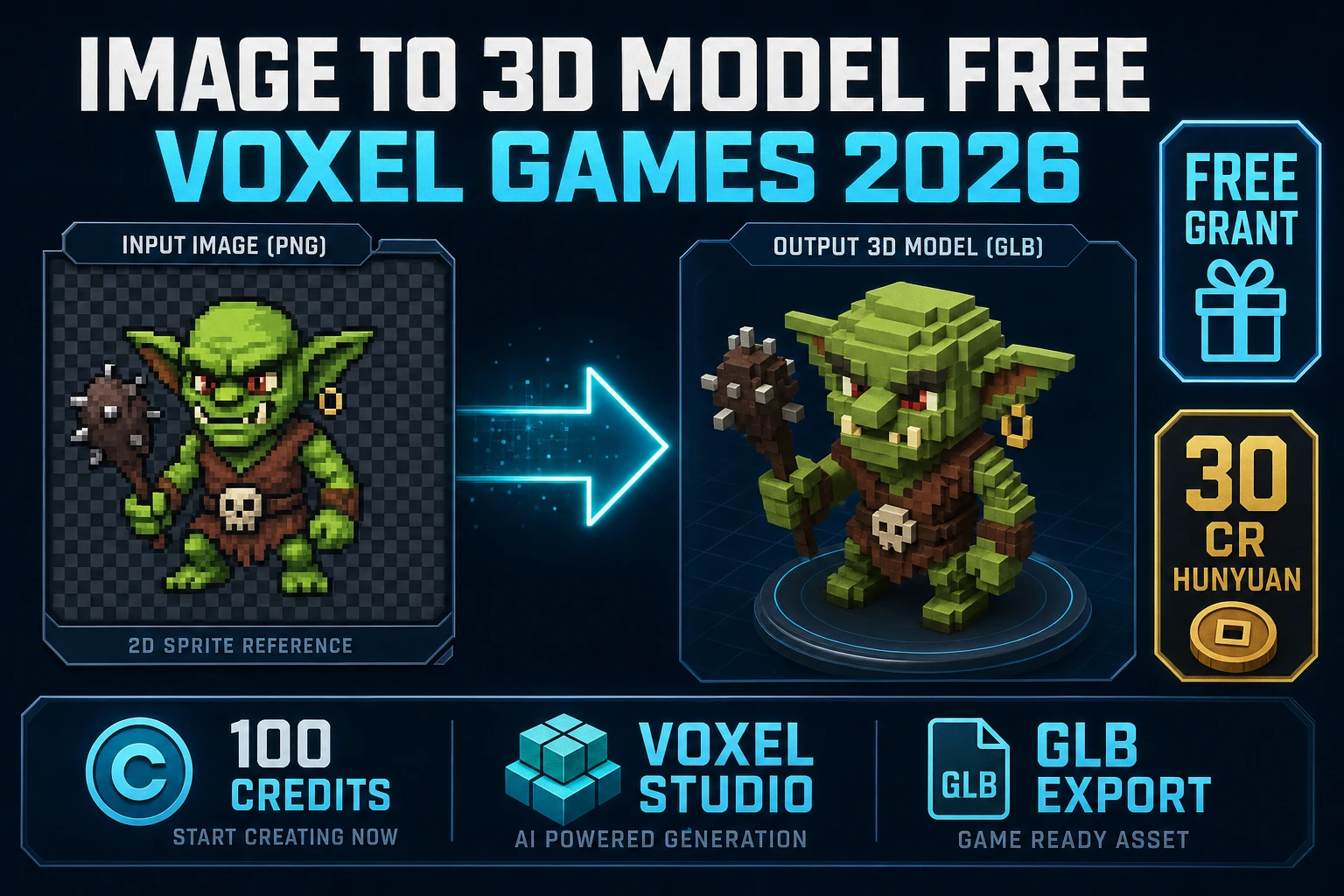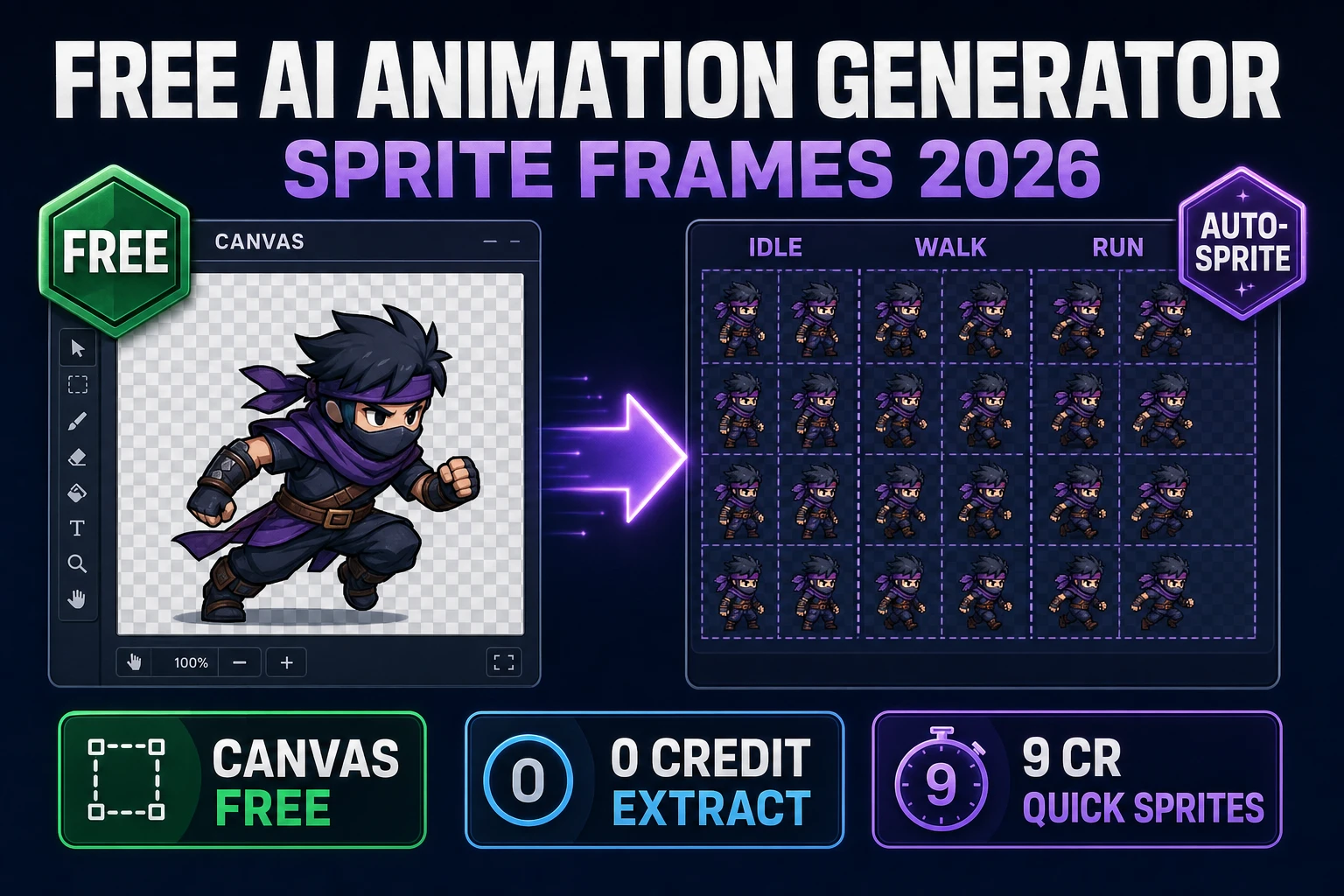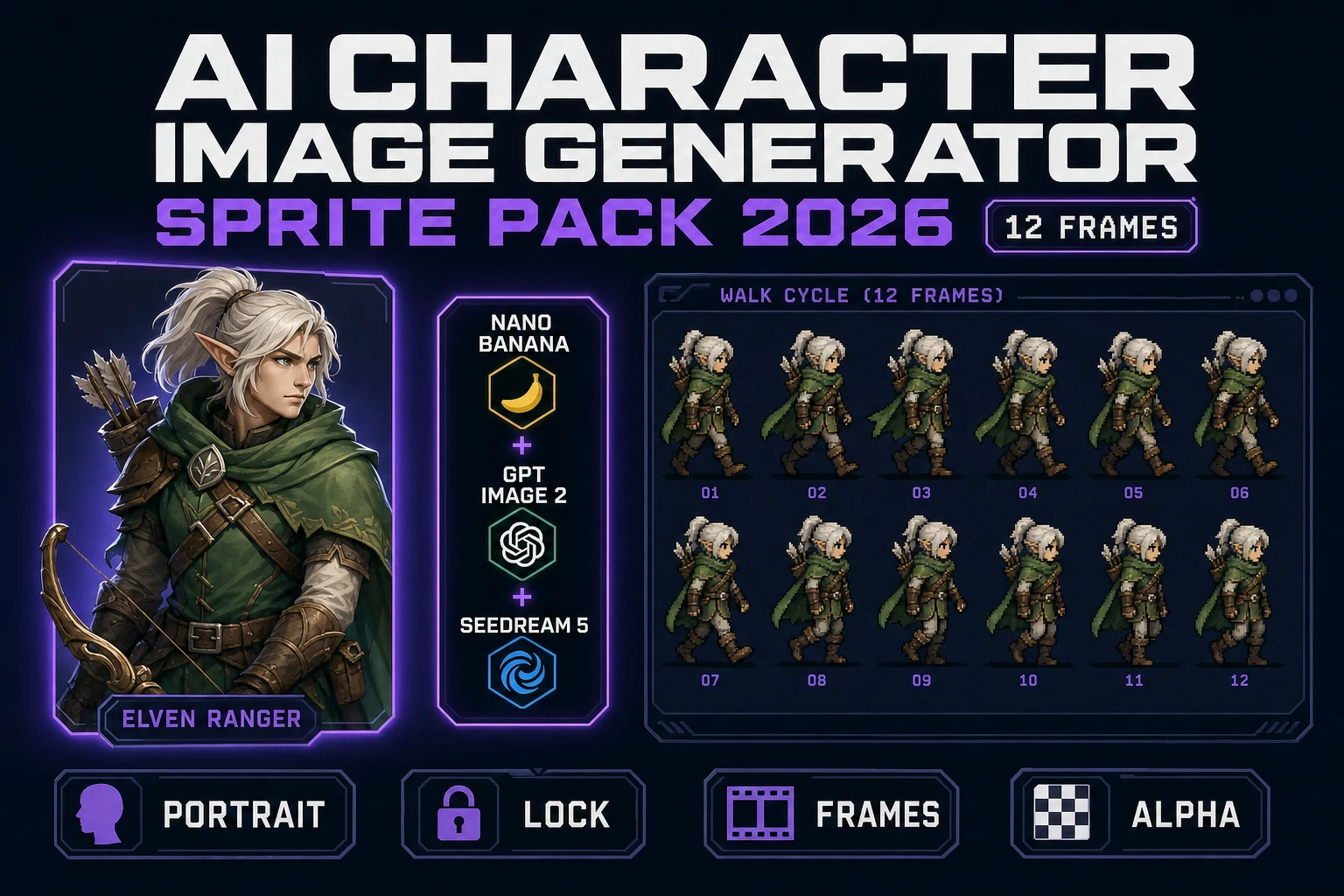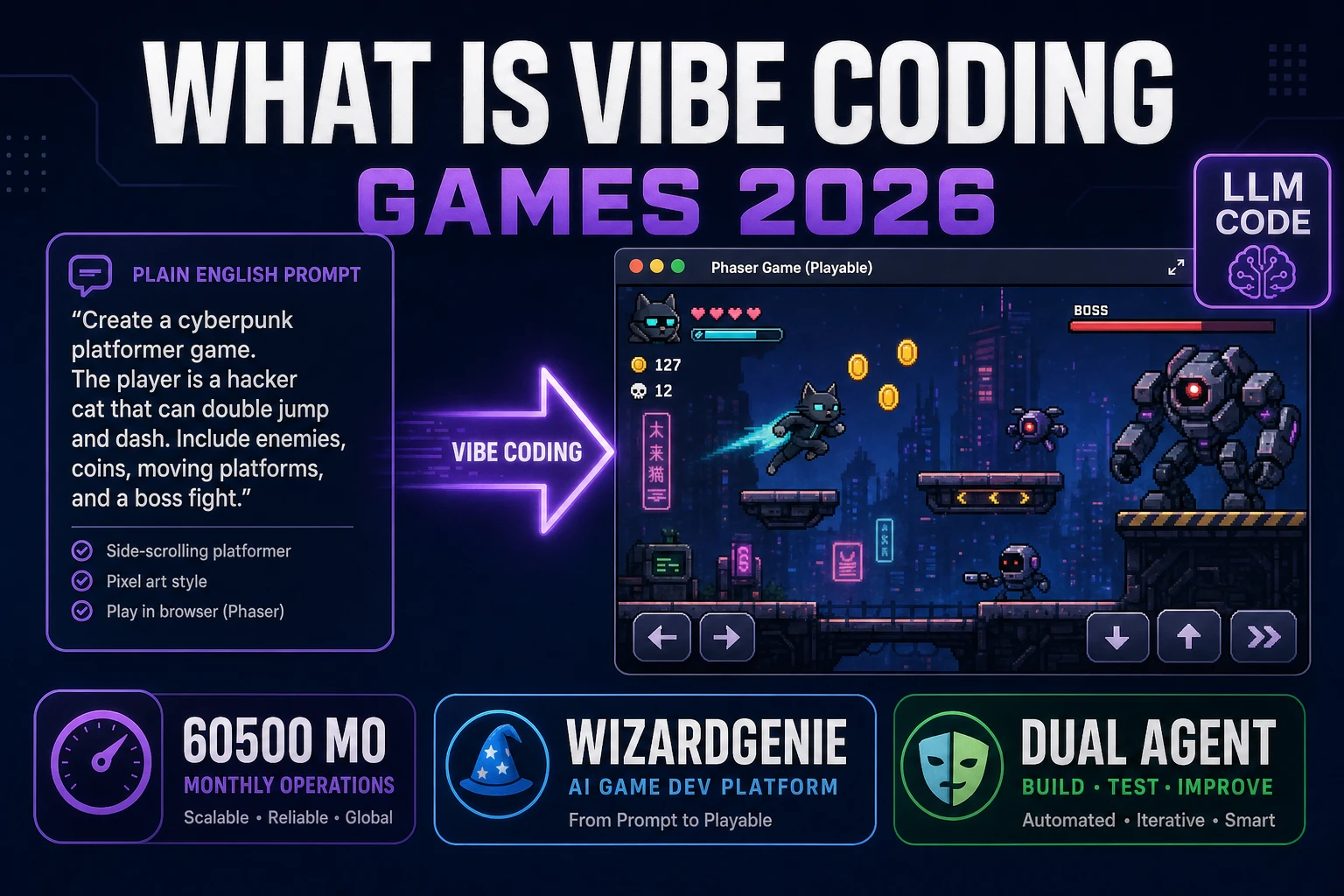
Search engines still treat what is vibe coding like a dictionary lookup, but the people typing it in September 2026 usually want a playable prototype by dinner. The practice is simple to name and easy to misuse: you speak English, a large language model emits source code, and you steer with results instead of keystrokes. This article answers what is vibe coding for indie game makers specifically — where the phrase came from, how it differs from hand-typed engine work, and how Sorceress WizardGenie turns the definition into a browser-and-desktop game loop. Every model name and product claim below was checked 2026-09-18 against src/app/_home-v2/_data/tools.ts, the WizardGenie marketing page, Wikipedia’s Vibe coding article, MDN’s game development hub, and the Phaser v4.2.1 Giedi release notes.
What is vibe coding — the 2026 definition
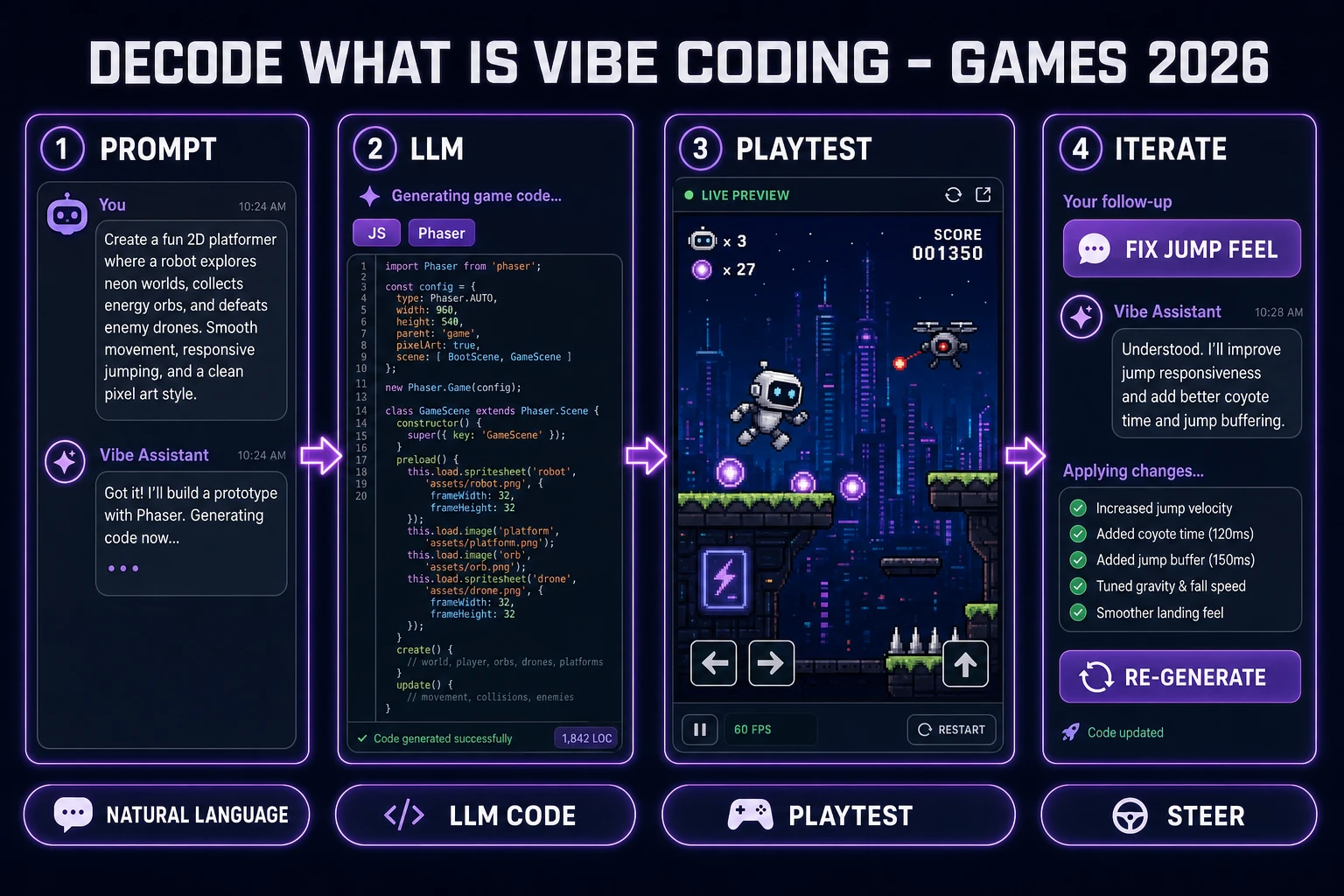
Wikipedia’s working definition (verified 2026-09-18) is the cleanest starting point: vibe coding is AI-assisted software development where the developer describes a project or task in natural language to a large language model, which generates source code automatically. The loop often includes accepting generated code without line-by-line authorship, then relying on runtime results and follow-up prompts to guide changes.
That is the vibe coding meaning in one breath. You are not dragging no-code blocks. You are not pair-programming every semicolon. You are specifying intent — “make the player jump feel snappier,” “spawn three enemy types with different HP,” “add a pause menu that resumes on Esc” — and reading the playable result as the primary feedback channel. A large language model is a neural network trained to predict token sequences; when those tokens are source files, English becomes the interface language Karpathy joked about in 2023.
DataForSEO still shows what is vibe coding at 60,500 searches per month (KD 38, verified 2026-09-18 in tools/research-supplement.md). Adjacent phrases — vibe coding meaning at 18,100/mo, what does vibe coding mean at 2,400/mo, how to vibe coding at 1,600/mo — prove the cluster is definitional first and tooling second. Answer the definition honestly; the tool recommendation only sticks if the definition was not marketing fog.
Where the term came from
Andrej Karpathy coined “vibe coding” in February 2025, describing a mode where you “fully give in to the vibes, embrace exponentials, and forget that the code even exists” (Wikipedia Vibe coding, verified 2026-09-18). Merriam-Webster listed it as slang and trending in March 2025. Collins English Dictionary named it Word of the Year for 2025. By mid-2025 the phrase had jumped from research Twitter into Y Combinator batch stats, New York Times hobby experiments, and Wall Street Journal coverage of professional adoption.
The reception split is useful context for game makers. Advocates say amateurs can ship software without a classical CS path. Critics flag accountability gaps, security debt, and “vibe slop” when generated code lands in production without review. Wikipedia summarizes Veracode and CodeRabbit findings that functional quality improved faster than security quality, and that AI-co-authored pull requests carried more major issues than human-only ones. None of that cancels the practice for a weekend jam prototype. It does mean what is vibe coding is not a license to skip playtests, version control, or a second pass on anything that touches player data.
Vibe coding vs traditional game programming
Traditional game programming starts from formal languages and engine APIs. You open a project, write update loops, wire input, and debug with breakpoints. MDN’s Anatomy of a video game still describes that architecture: a main loop that processes input, updates state, and renders a frame. That anatomy does not disappear when you vibe code — the LLM is writing the same loop, usually badly on the first try, until you steer it.
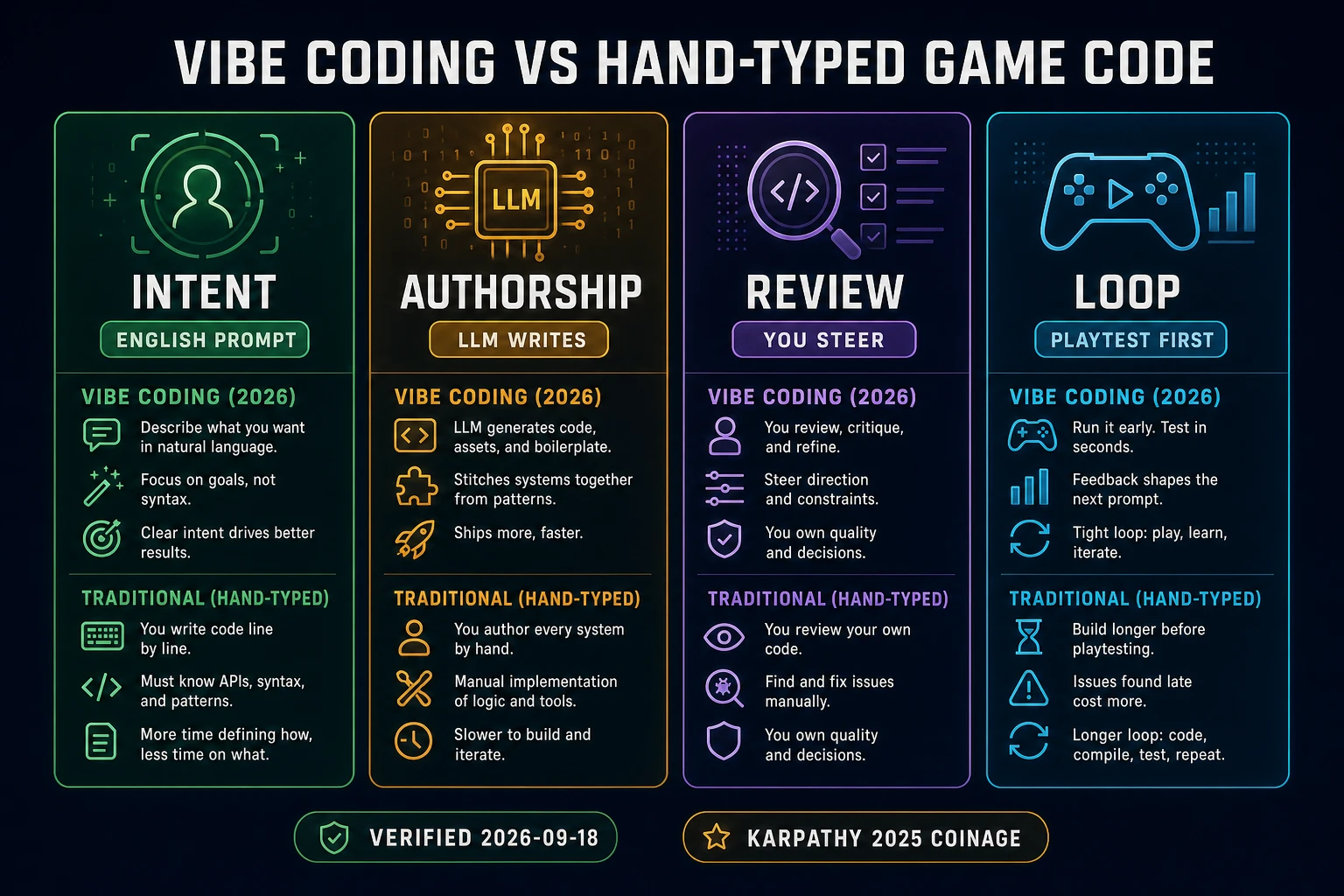
| Dimension | Traditional | What is vibe coding |
|---|---|---|
| Primary interface | Typed source in an IDE | Natural-language prompts + playtests |
| Who authors the first draft | You | An LLM |
| What you optimize for | Correctness line by line | Playable feedback as fast as possible |
| Failure mode | Compile/runtime errors you wrote | Plausible-but-wrong code you did not read |
| Best fit | Long-lived systems, security-critical paths | Prototypes, jams, vertical slices |
If you already know Phaser or Three.js, vibe coding does not replace that knowledge. It compresses the boring glue. If you do not know those APIs yet, vibe coding can still get a canvas moving — but you will hit a wall the first time the agent invents a nonexistent method. The honest answer to what is vibe coding for beginners is: it is a force multiplier on iteration speed, not a substitute for reading one engine tutorial.