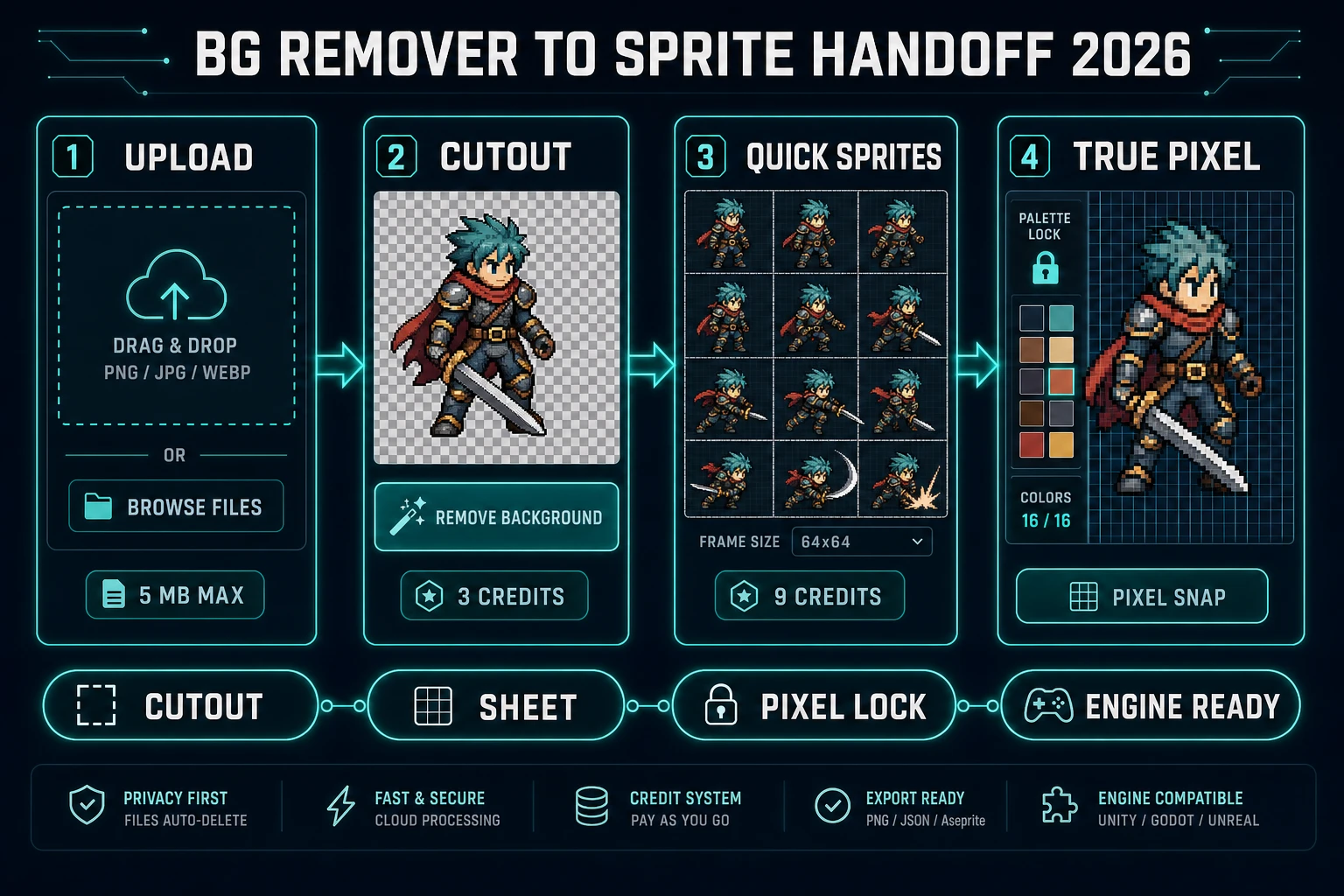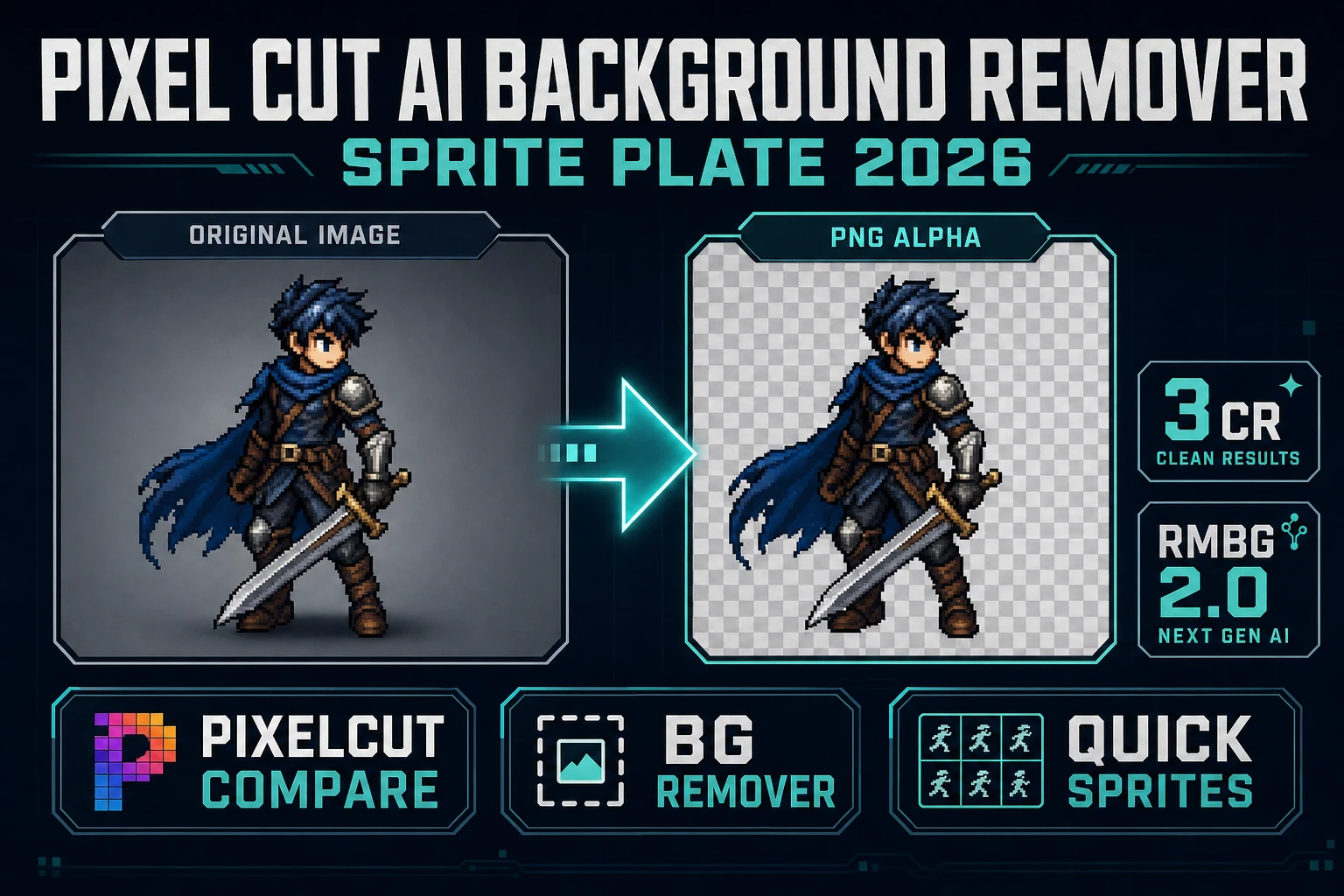
Shoppers who type pixel cut ai background remover are usually hunting for Pixelcut’s one-tap cutout flow — the mobile-first “upload a still, get a transparent PNG” path that product photos made famous. Game developers land on the same query with a different job: they need a sprite plate that composites cleanly over tiles, parallax layers, and UI chrome. This article separates those two intents, live-checks Pixelcut’s 2026 plan shelf, and maps the honest Sorceress path when the cutout has to leave as a game-ready alpha, not a lifestyle slide.
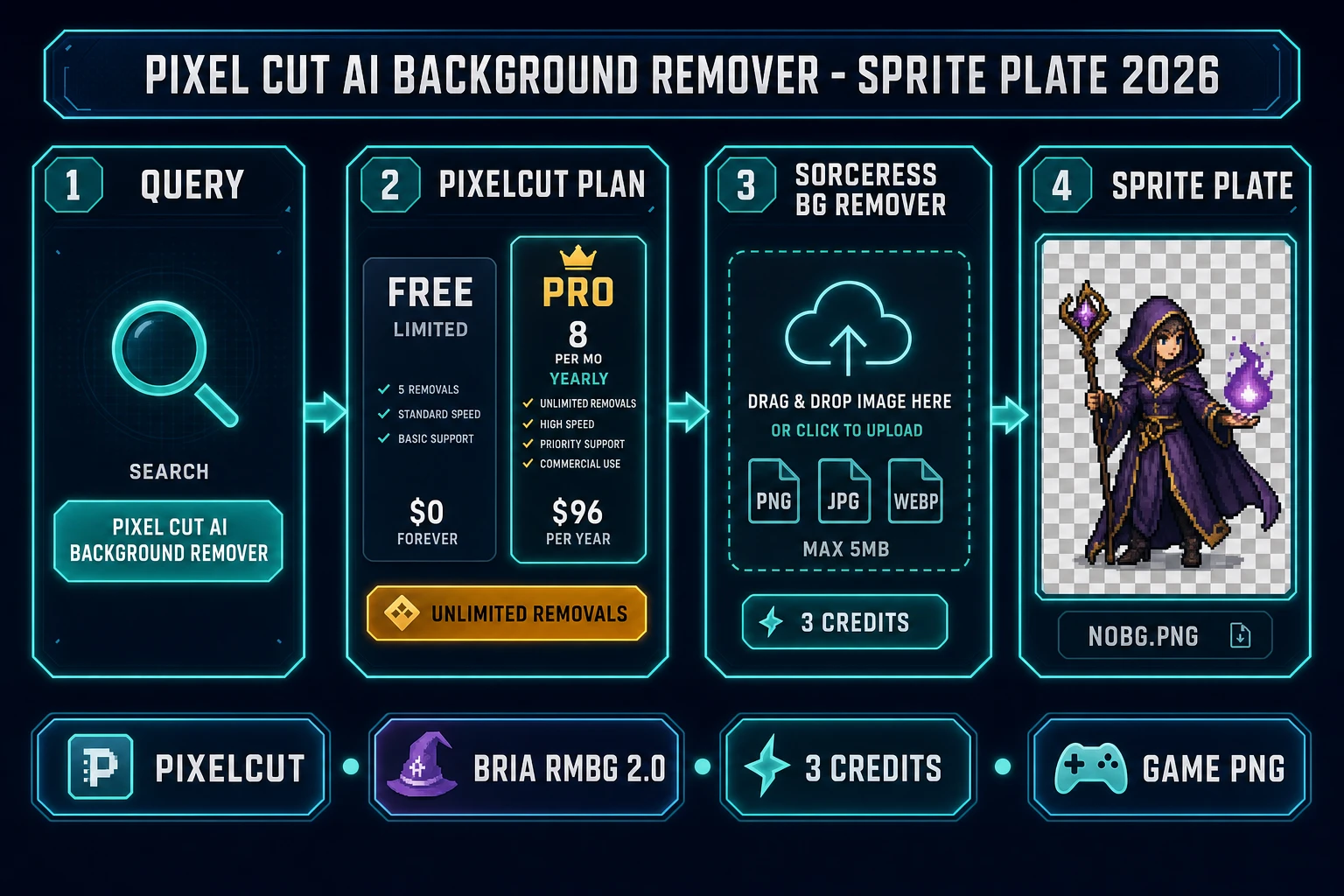
What a pixel cut AI background remover search is asking for
DataForSEO lists pixel cut ai background remover at 390 searches a month, KD 25, competition 0.01, intent transactional (verified 2026-10-12 in tools/research-supplement.md, seed ai background remover). The hyphenated sibling pixelcut ai background remover sits at the same 390/mo volume with informational intent. Both are long-tail unlocks under the head term ai background remover (18,100/mo, KD 63) — the KD-63 head is locked by remove.bg-class tools; the Pixelcut-prefix phrasing is the shopping door most people actually type after seeing the app.
Three buyer branches show up in that SERP:
- App shoppers who already know Pixelcut and want unlimited removals without counting free-tier caps.
- API builders who need a metered remove-background endpoint and a predictable per-image bill.
- Game / roster builders who need dozens of consistent character cutouts that hand off into a sprite sheet, a pixel grid, or a Phaser atlas — and who do not want a second subscription just for alpha.
The rest of this page answers all three with numbers pulled live on 2026-10-12. No competitor outbound links — only source-verified plan facts and neutral technical citations for alpha / PNG.
Slide cutouts vs sprite plate cutouts
Pixelcut built its reputation on e-commerce and social slides: softbox product shots, apparel on mannequins, lifestyle backgrounds swapped in after the subject is isolated. That workflow rewards soft hair edges, gentle shadows, and a result that still looks photographic on a storefront.
A game sprite plate is a different contract. You need:
- A real alpha channel stored in PNG, not a white or checkerboard flattened into JPEG. MDN’s image file type guide (checked 2026-10-12) is blunt: JPEG has no alpha; PNG does.
- Silhouette consistency across a roster — hero idle, run, jump, enemy A, enemy B — so the matte does not “breathe” frame to frame.
- Fringe control before you atlas. A pale halo around every cutout becomes a glowing outline once you downscale or pixel-snap.
- A handoff into sheet / pixel tools, not a one-off download that dies in a camera roll.
Alpha compositing (Wikipedia, checked 2026-10-12) is the mental model: every pixel carries coverage. The W3C PNG specification is how that coverage ships on disk. If your “transparent” export is actually a flat RGB image on a fake checkerboard, every engine import will fight you.
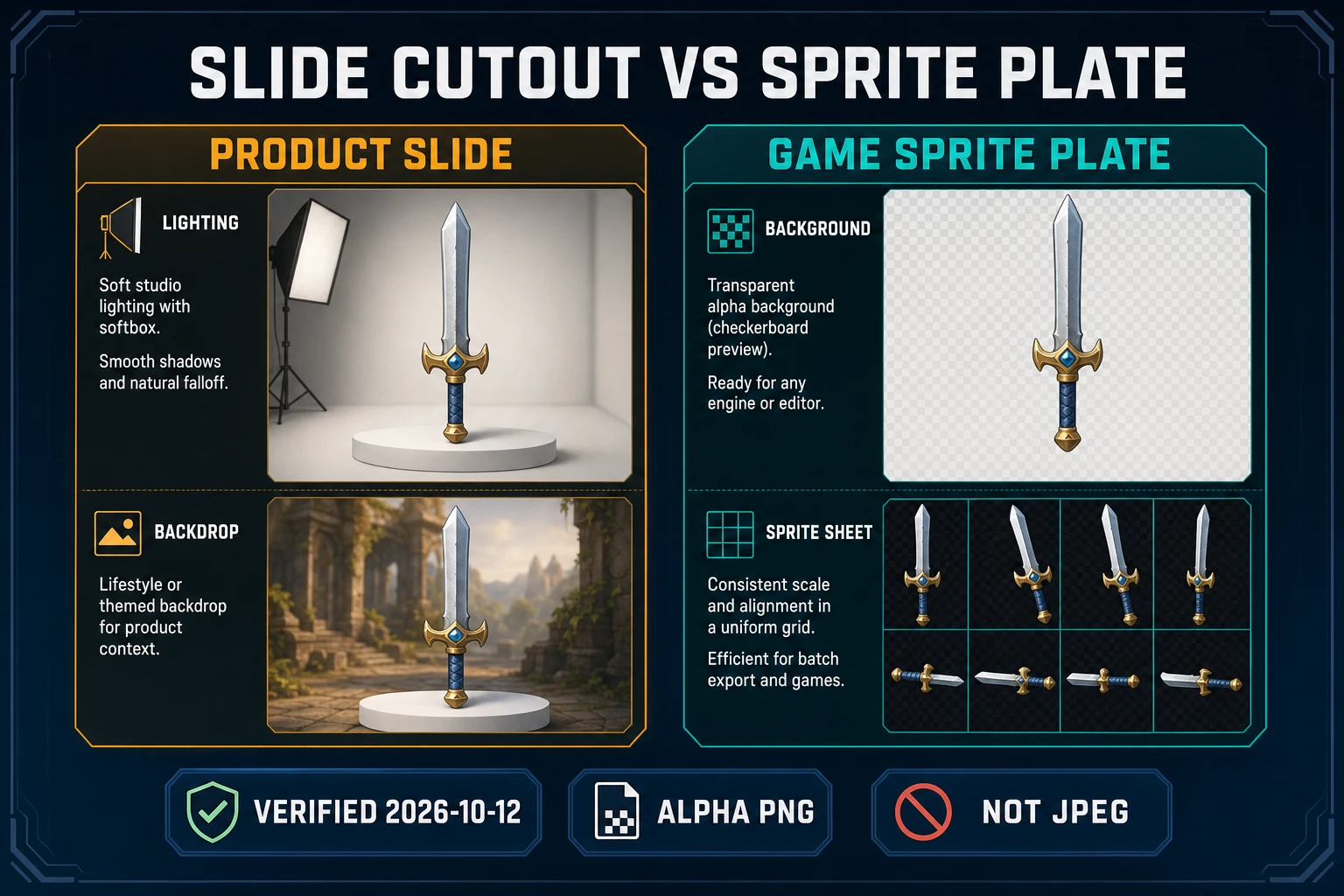
Plate rules that keep game sheets clean
Before you touch any remover — Pixelcut, Sorceress, or otherwise — fix the plate. These rules save more credits than any model swap:
- One subject, clear contrast. Crowded group shots make the matte guess which silhouette is “the character.” Crop to the hero before upload.
- Plain or softly graded backgrounds. Busy AI wallpaper behind an AI character is the hardest case for every neural remover. Regenerate the character on a solid plate when you can.
- Stay under the file cap. Sorceress BG Remover skips files above 5 MB (
MAX_FILE_SIZE_MB = 5insrc/app/bg-remover/page.tsx, verified 2026-10-12). Pre-shrink huge camera RAWs in a browser canvas first. - Export PNG after the cutout. Do not round-trip through JPEG. You will bake the matte into opaque pixels and lose the alpha you just paid for.
- Inspect edges at 200%. Hair, fur, translucent cloth, and pixel-art anti-alias fringes are where soft mattes look “good” in a thumbnail and broken in-engine.
Chroma key still wins when you control a flat green or blue plate and the subject never wears that color. Neural mattes win when the backdrop is a photograph, a gradient, or a messy AI render. Animated clips belong in a sprite-sheet / video-key pipeline, not in a one-still remover.