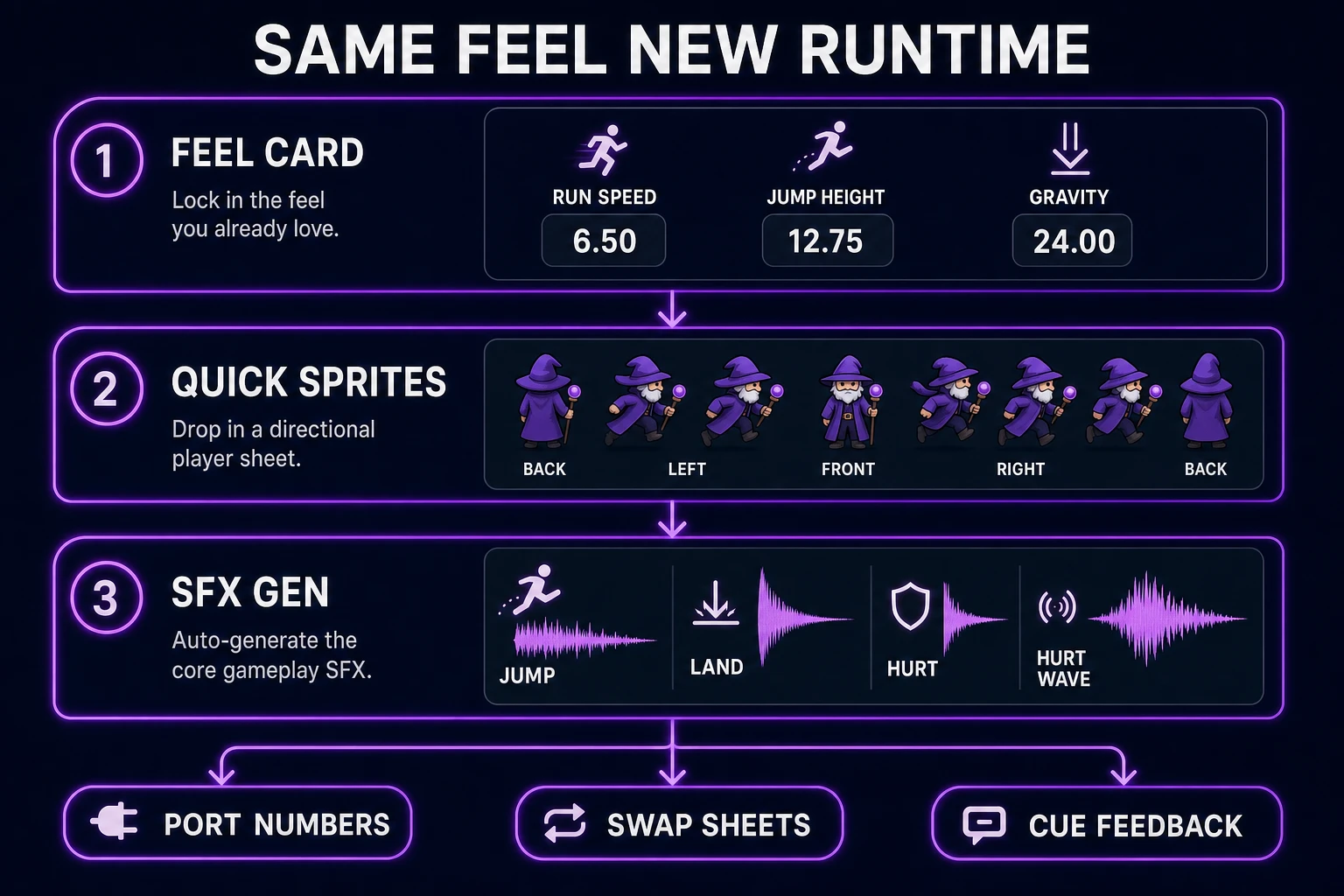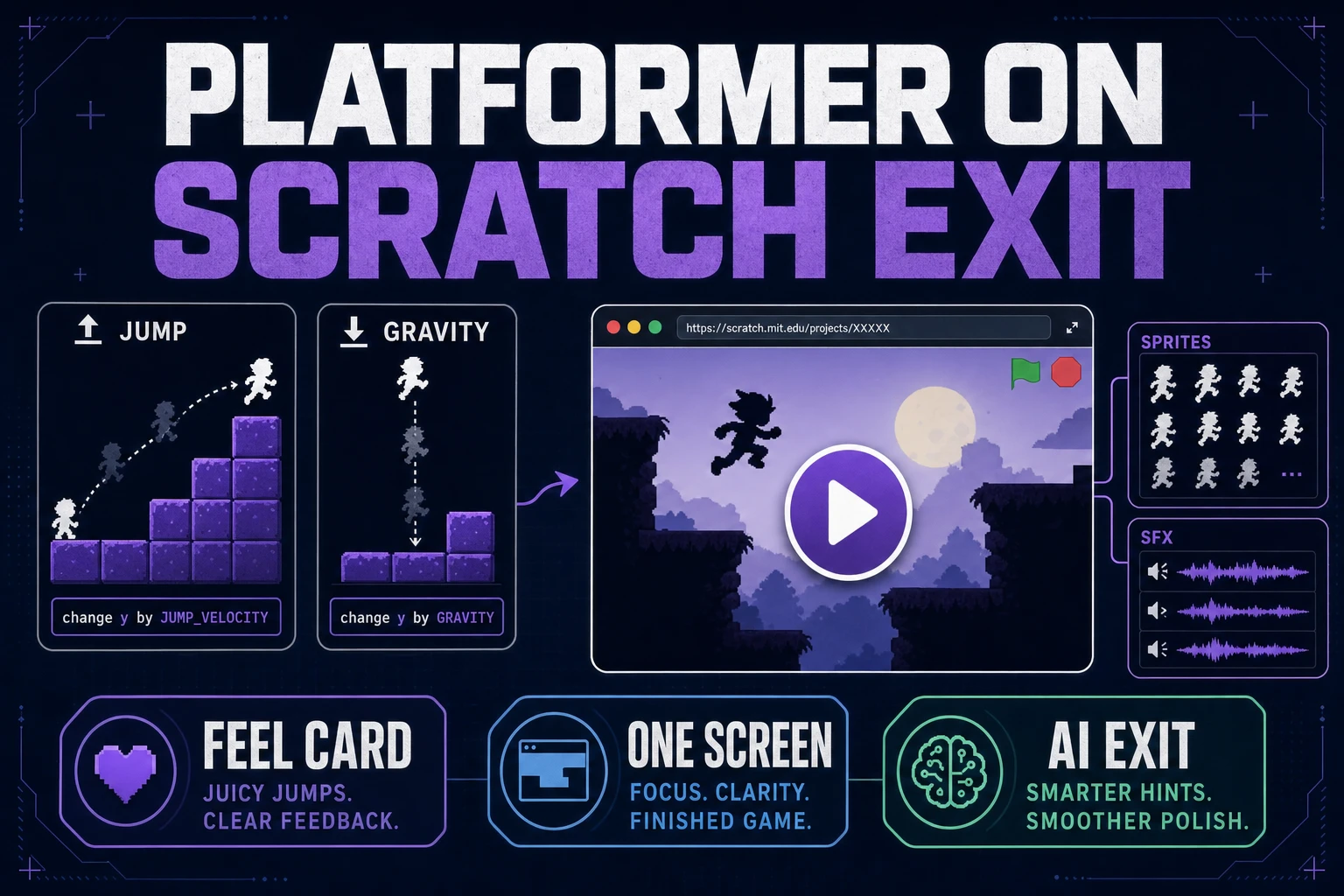
Costume packs do not fix a floaty jump. Readers searching how to make a platformer on Scratch need a written feel card, separate forever scripts for gravity, ground, and jump, and a one-screen playtest before scrolling or enemies. This exit path keeps that Scratch feel, then ports the same numbers into WizardGenie with Quick Sprites and SFX Gen when the stage stops fitting the jam. Scratch product facts were re-checked against the official About Scratch page on July 28, 2026. Phaser version facts were re-checked against phaser.io the same day.
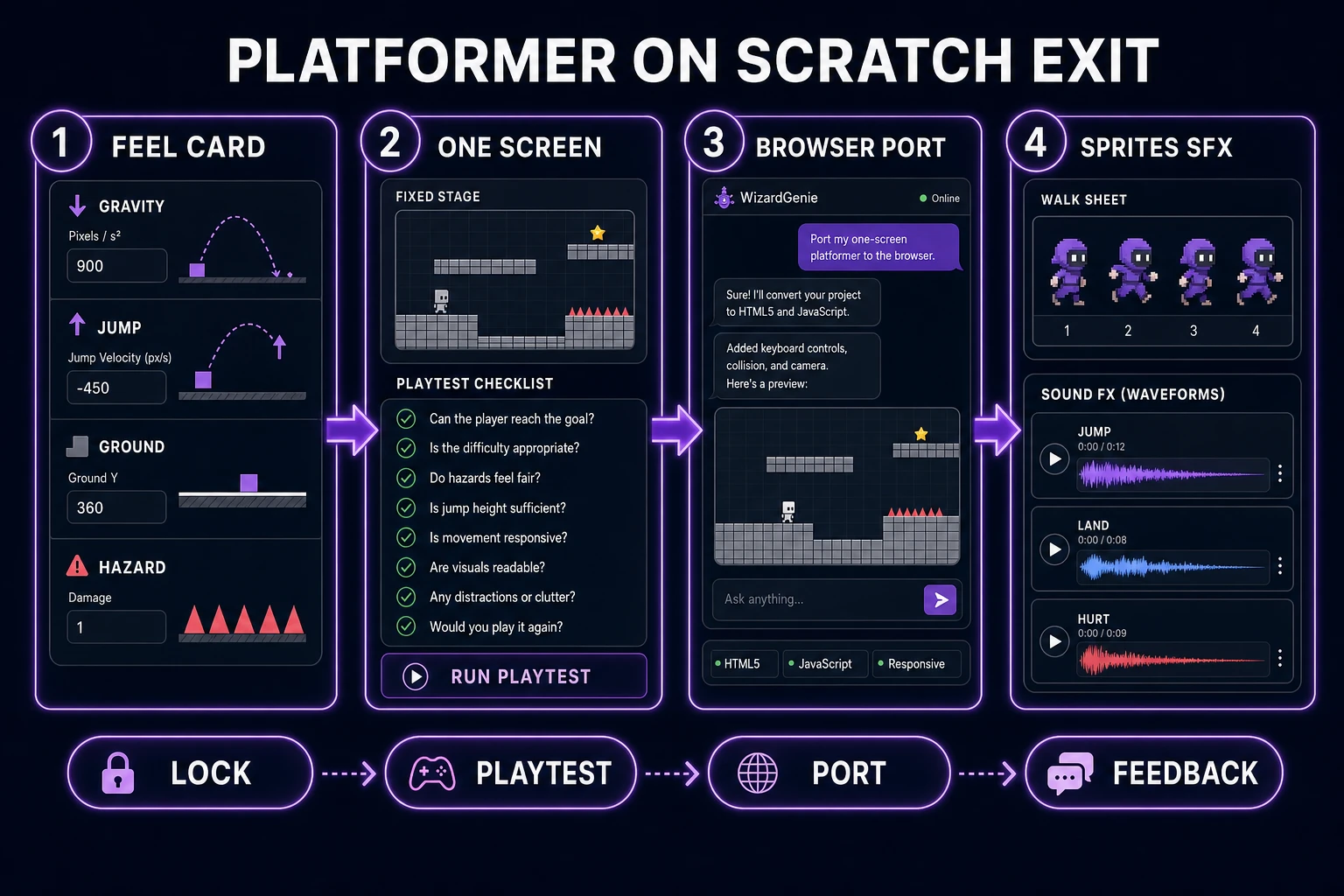
What how to make a platformer on scratch must lock first
DataForSEO lists how to make a platformer on scratch at 1,900 monthly searches with KD 0 in research-supplement.md (verified for this brief; citation re-checked July 28, 2026). Sibling phrases such as how to make a platformer in scratch, how to make a platformer scratch, and scratch how to make a platformer game sit in the same volume band. A longer "game in Scratch" sibling already covers the classroom build in depth at how to make a platformer game in Scratch. This article keeps the on Scratch wording and spends more pages on the exit when the stage blocks shipping.
Scratch is a free creative coding environment from the Lifelong Kindergarten Group at the MIT Media Lab, designed especially for ages 8 to 16 and used in more than 150 countries. A platform game is defined by traversal across suspended ground, with jumping as the central skill. Translate that into a feel card before any fancy costumes:
- Run speed: steps per frame while left or right is held.
- Jump impulse: the upward change to vertical velocity when a jump starts.
- Gravity: the downward change applied every frame while airborne.
- Grounded flag: true only when feet touch a platform color or sprite.
- Max fall speed: a clamp so long drops stay readable.
- Hazard rule: what kills the player and where respawn restores control.
If you cannot fill that card, keep designing. A project that only says "make a fun platformer" invents a different jump on every remix. How to make a platformer on Scratch starts as numbers, not as a costume wardrobe.
Split gravity ground and jump scripts
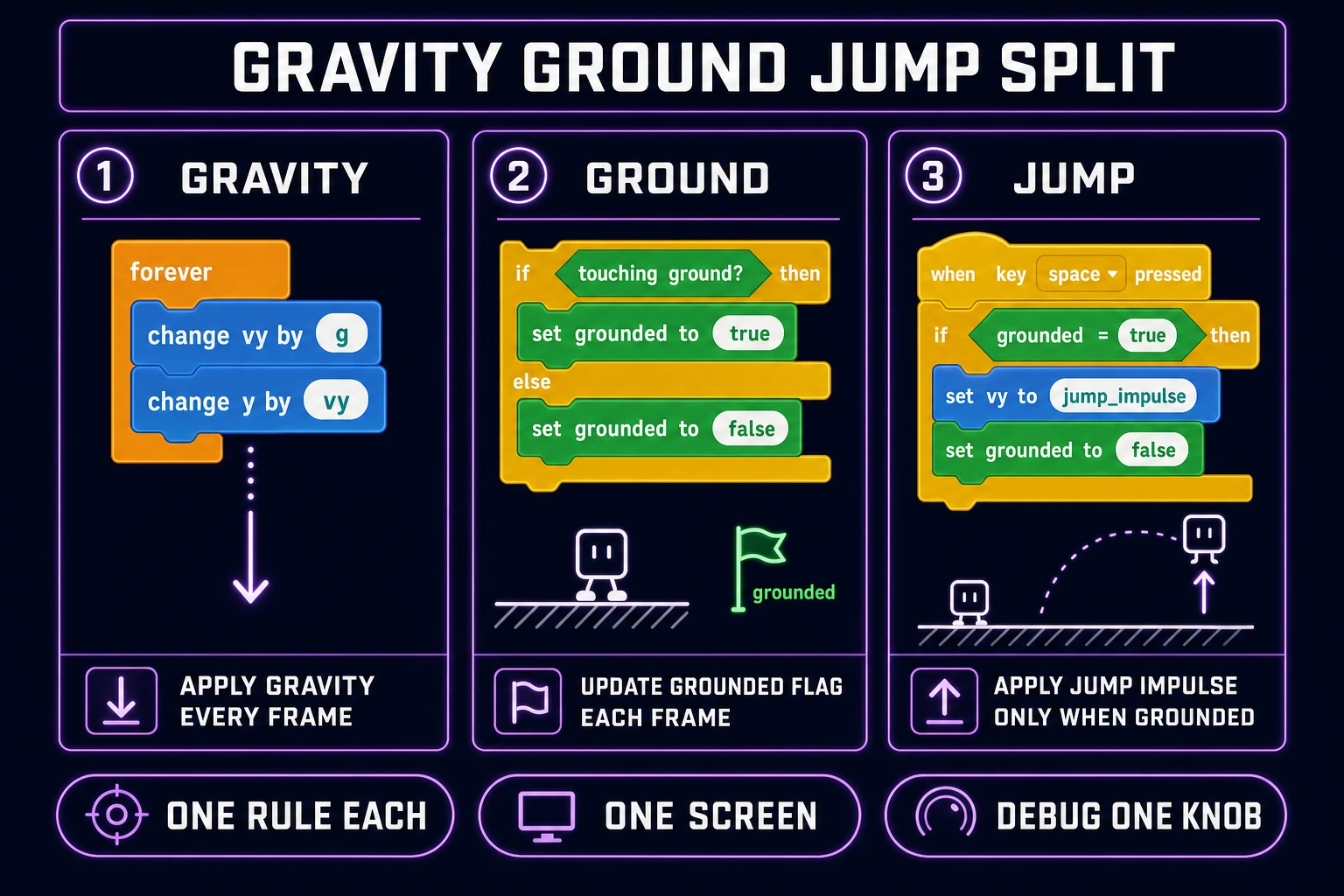
The core mistake in how to make a platformer on Scratch is stuffing move, fall, and jump into one forever stack. Split them so each forever loop owns one rule.
Gravity script: if not grounded, change vy by a small positive amount (down), clamp to max fall speed, then change y by vy. Do not apply gravity while grounded or the character will vibrate into the floor.
Ground script: sense the platform with color touching or sprite touching under the feet. When contact is true, set grounded to true, set vy to 0, and snap y up a pixel so the costume does not sink. When contact is false, set grounded to false. Keep the sensing hitbox at the feet, not the whole costume, or hair pixels will count as ground.
Jump script: when the jump key is pressed and grounded is true, set vy to a negative impulse. Optional coyote time: keep a short timer after leaving a ledge during which jump still works. Optional jump buffer: remember a premature press for a few frames and fire on the next grounded edge.
Horizontal move stays in a fourth forever loop: if right arrow, change x by run speed; if left, change x by negative run speed. Finish floor feel before wall slides. MDN's guide to 2D collision detection explains why axis-aligned boxes remain the practical default for rectangles that do not rotate—the same idea behind color-touching "feet" tests on Scratch.
One-screen playtest checklist
Do not scroll yet. Build three platforms and one pit on a fixed stage. Play for five minutes with the feel card visible. Mark each line only when it is boringly reliable:
- Walk left and right until the run speed feels dull. Dull is good.
- Jump from flat ground ten times. Peak height must match the card.
- Walk off a ledge and press jump inside coyote time — must jump.
- Walk off a ledge and press jump after coyote expires — must fail.
- Press jump slightly before landing — buffer must fire on touch.
- Fall into the pit — respawn restores position and clears velocity.
If any line fails, change one number or one script. Do not add enemies, scrolling, or double jump while the checklist is red. How to make a platformer on Scratch succeeds when the one-screen loop survives remix stress, not when the backdrop looks finished.