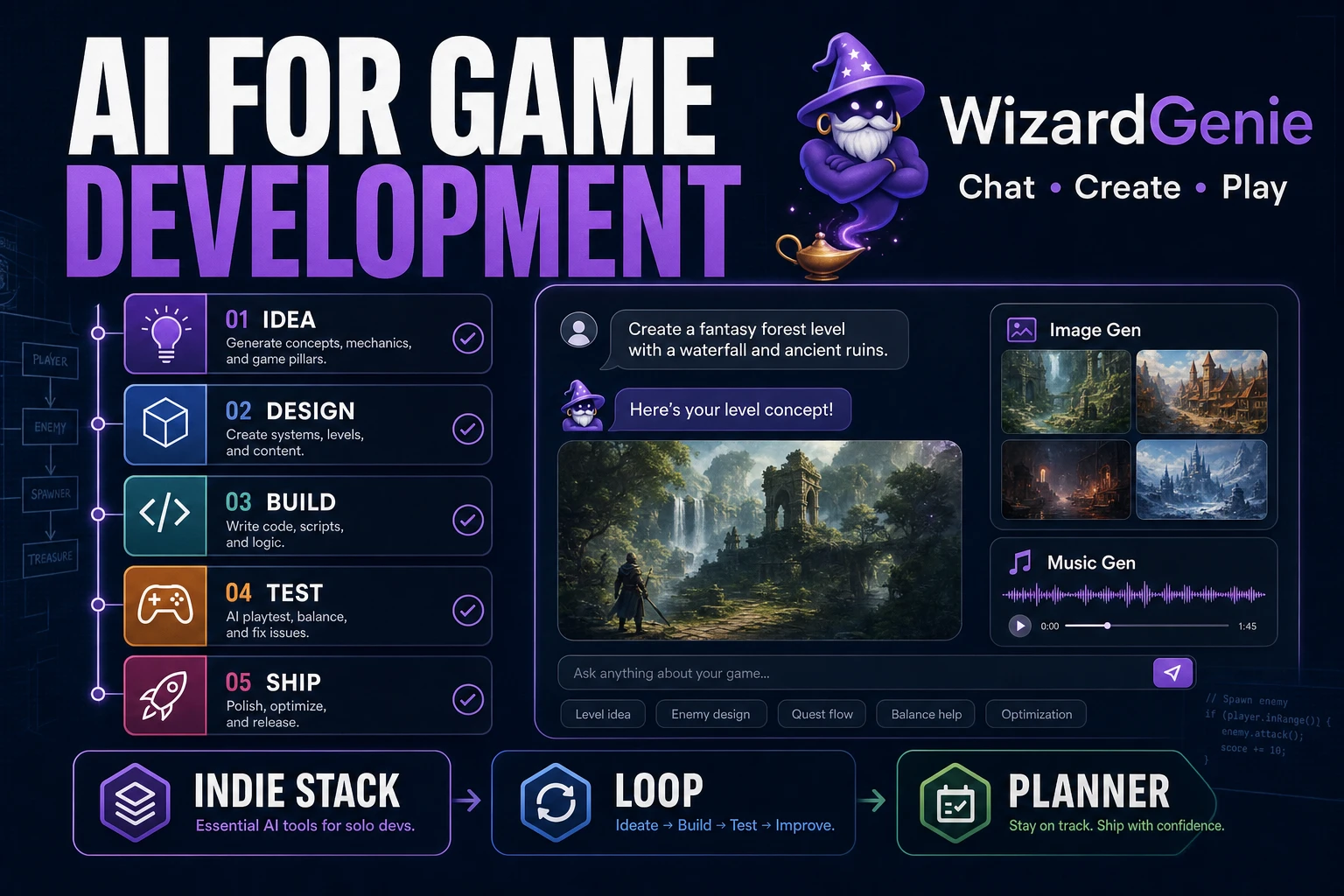
Search traffic for ai for game development usually wants a stack, not a slogan. Indies burn weekends when one chat is asked to invent systems, art, music, and shipping at once. This guide maps the jobs that actually move a playable build: a code agent that keeps a loop warm, specialist generators for assets, and a jam checklist that stops scope creep. The featured path runs through WizardGenie, with AI Image Gen and Music Gen as the art and audio lanes. Coding model names match the Sorceress CODING_MODELS catalog in src/app/_home-v2/_data/tools.ts, verified July 26, 2026. Phaser v4.2.1 “Giedi” was live-checked the same day against the official release notes.
What ai for game development covers in 2026
DataForSEO lists ai for game development at 170 monthly searches with KD 32 in research-output.md, verified July 22, 2026. Sibling umbrella terms ai game development and game ai development sit higher at about 590/mo each—useful context, but this article locks the exact primary phrase so the page answers the query readers typed.
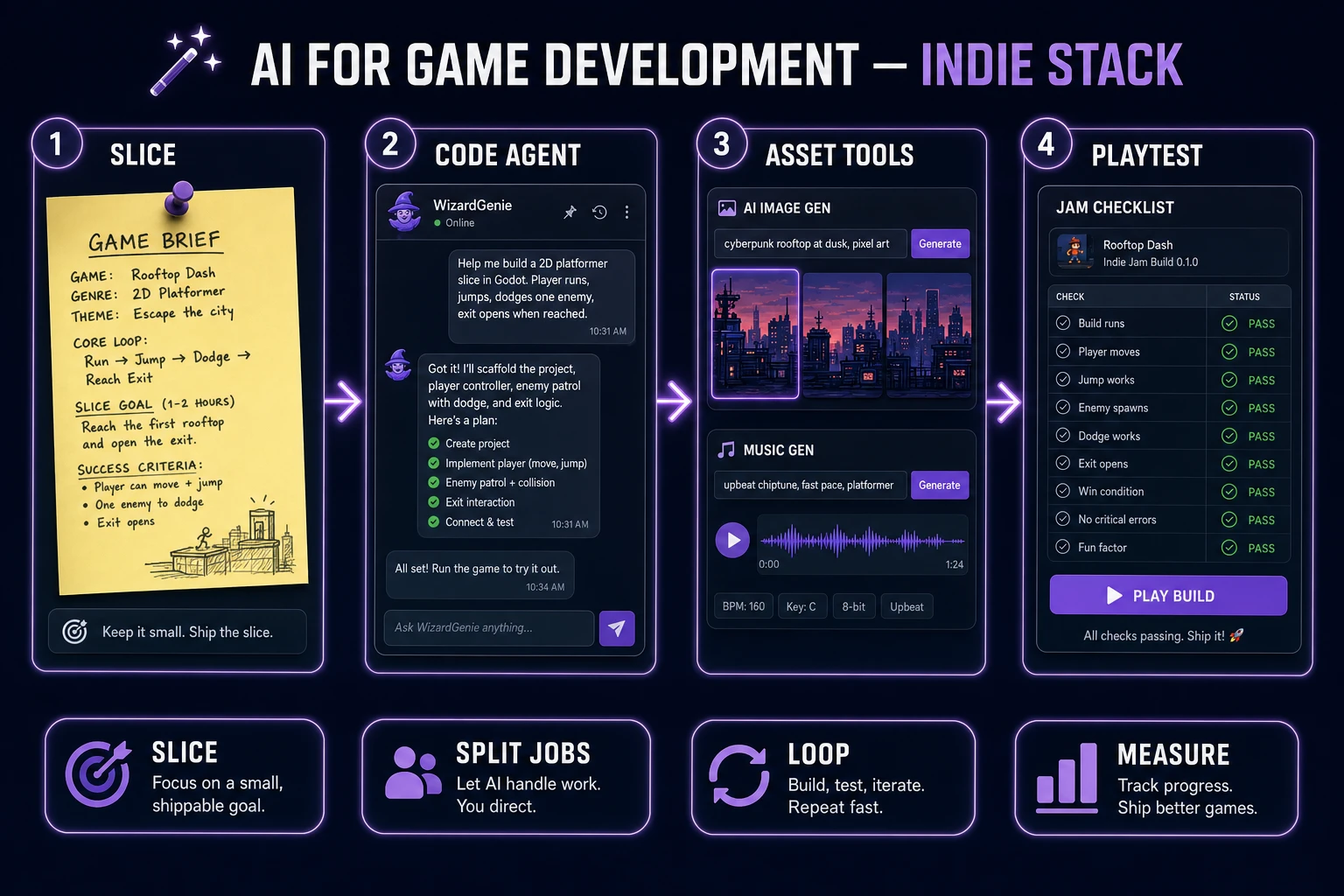
In practice, ai for game development covers two surfaces that must not collapse into one prompt:
- Code and systems — movement, collision, scoring, spawn rules, feel constants, and the playable preview that proves them.
- Assets — sprites, tiles, music beds, SFX, speech lines, and occasional 3D props.
Wikipedia’s vibe coding entry (checked July 26, 2026) traces the phrase to Andrej Karpathy in February 2025 and stresses iterative prompting from results. Martin Fowler separates “forget the code exists” vibes from agentic work where structure still matters. Indie game work lives in the second camp: you may not hand-type every line, but gravity, hitboxes, and score rules must survive the next prompt.
MDN’s overview of web games still centers on a running loop, input, and assets. Your stack should center on the same surfaces. If a tool only emits a chat transcript or a static HTML mock, it is not guiding ai for game development—it is guiding a demo reel.
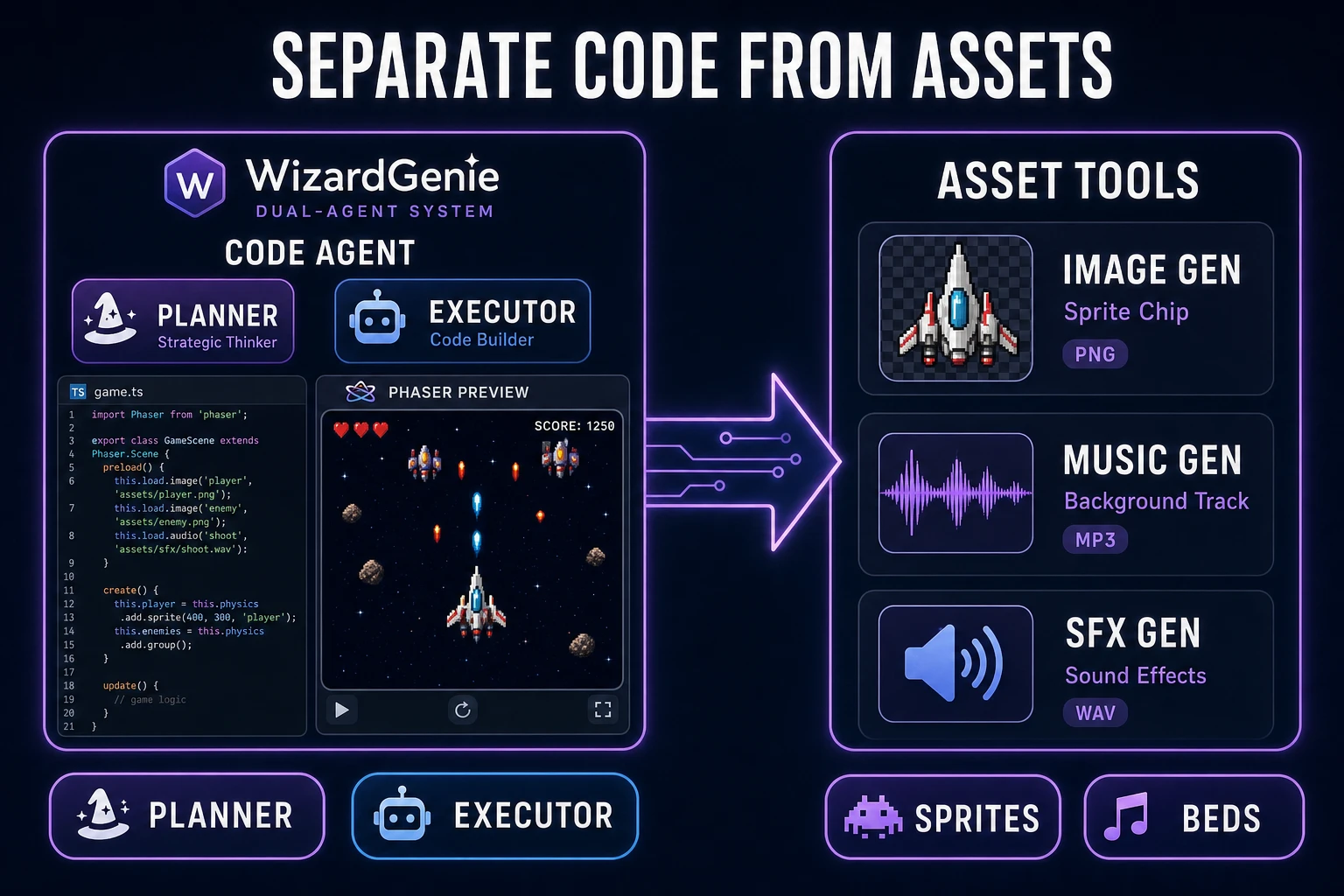
Separate code agents from asset generators
The fastest failure mode is asking one agent to “make the whole game with nice art.” Code agents optimize for coherent systems. Image and audio models optimize for a single artifact. Mixing them in one request produces pretty scenes with soft physics and unusable sheet layouts.
Assign surfaces explicitly:
| Job | Owner | Success looks like |
|---|---|---|
| Playable loop | WizardGenie | Move, collide, score, restart on one screen |
| Character / prop stills | AI Image Gen | Consistent front views, plain backdrop |
| Loopable bed | Music Gen | Fixed BPM, clean loop points |
| Hit / jump / pickup SFX | SFX Gen | Short one-shots under the bed |
WizardGenie is the Sorceress AI-native game engine: describe the game, watch it run, iterate in real time. It ships as a Windows desktop app and as a web entry at /wizard-genie/app. Web wins for zero install; desktop wins for native filesystem depth and longer agent sessions. Neither path auto-publishes to an arcade—treat “ship” as export and host where you want, or skip distribution until the slice is fun.
For a ranking-focused sibling on vibe-coding selection, see Rank Best Vibe Coding Tool (Game Agent Path). This guide stays on the full indie stack: code plus assets, not the comparison frame alone.
Pick a vertical slice
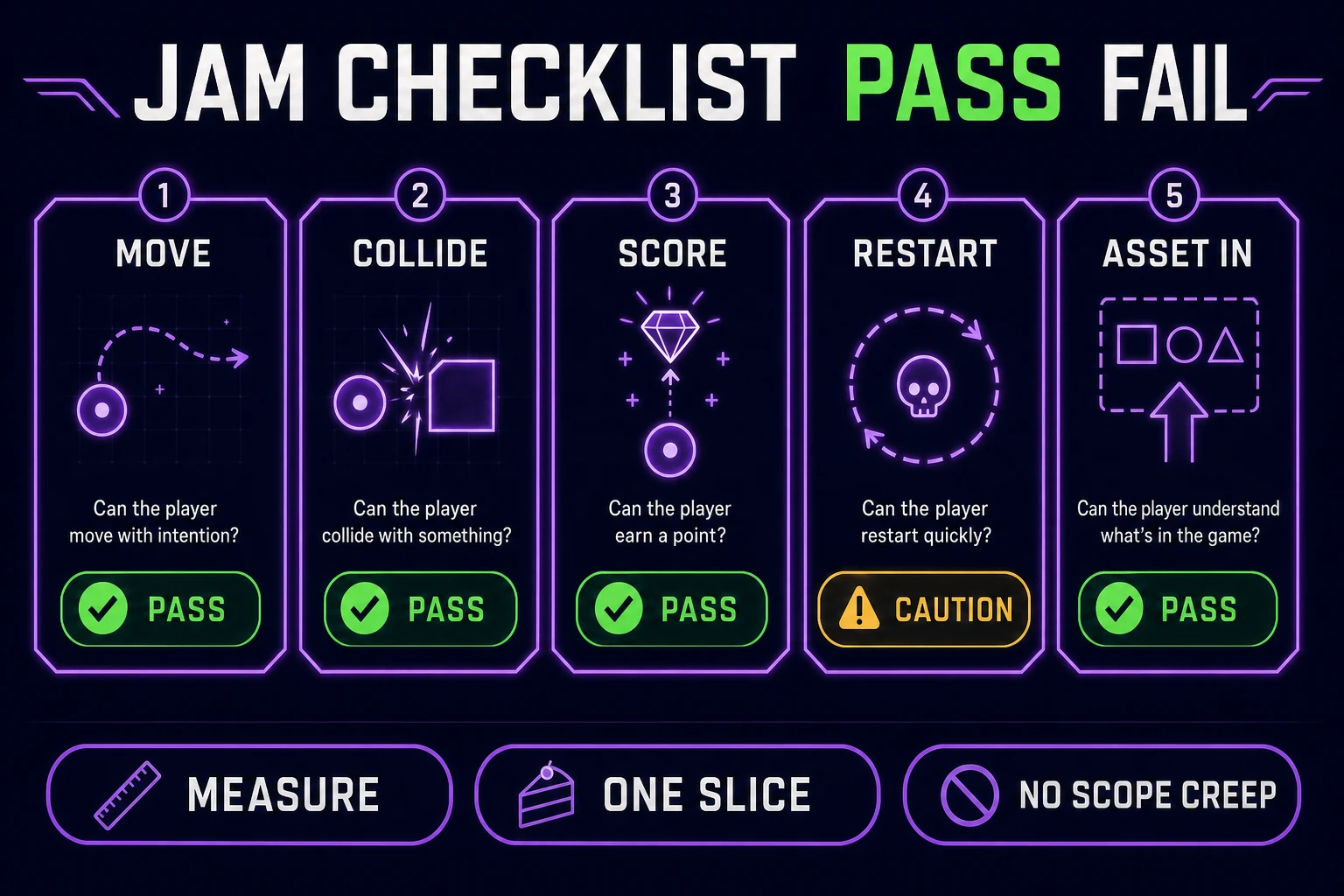
Before you open any model picker, write a one-screen contract. A vertical slice is not a feature list. It is the smallest path a player can finish that proves the fantasy:
- Verb — move and jump, or aim and shoot (pick one primary verb).
- Obstacle — one enemy type or one hazard class.
- Reward — score, pickup count, or clear flag.
- Fail — restart or soft reset on the same screen.
- Out of scope — inventory, dialogue trees, crafting, meta-progression.
Pin a real browser runtime when physics behavior matters. As of July 26, 2026, the stable Phaser release on phaser.io/download/stable is Phaser v4.2.1 “Giedi” (released July 9, 2026 per the GitHub release notes). Name that version in the scaffold prompt so Arcade Physics calls do not drift between sessions.
Example slice prompt that any serious code agent should survive:
Build a one-screen browser action prototype on Phaser v4.2.1. Side-view. Player moves and collides with platforms. Collect three pickups to raise score. Touching an enemy restarts the run. Colored rectangles only. No inventory, no dialogue. Expose moveSpeed and enemySpeed as named constants. Do not invent extra systems.
If the first playable build includes a shop, a skill tree, and a cutscene, you did not pick a slice—you picked a wishlist. Cut until the five bullets above fit on one sticky note.