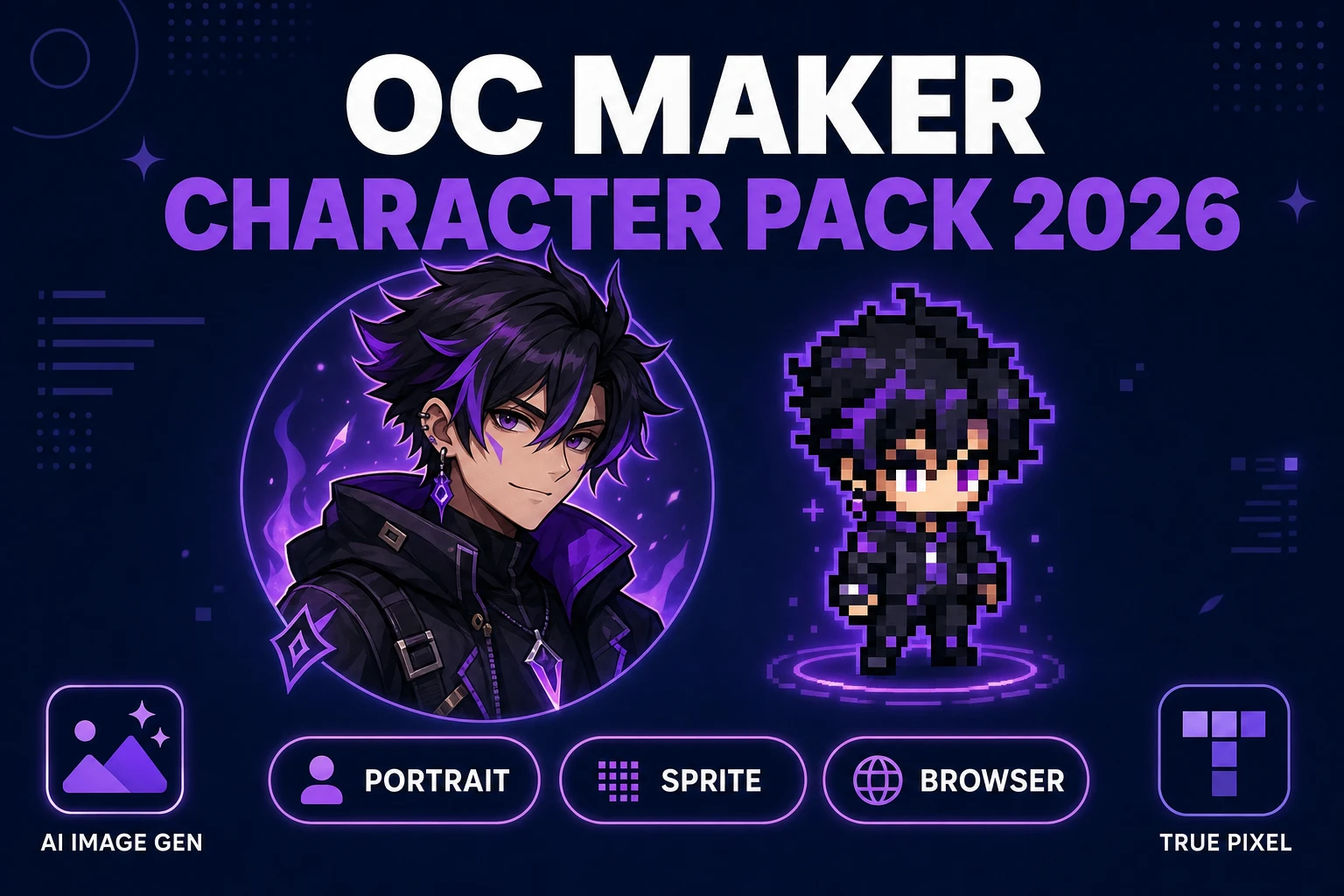
Fan dress-up dolls are fun for Discord avatars — then you open your jam build and realize the hero has three different noses across the title screen, dialogue box, and walk cycle. Searchers typing oc maker on July 11, 2026 want an original-character pack that survives production: locked silhouette, transparent cutouts, and pixel sprites that match the same card. This guide covers the 2026 browser pipeline: AI Image Gen drafts portraits from a character card, BG Remover cuts clean PNGs, True Pixel snaps game-ready sprites, and WizardGenie wires the pack into Phaser 4.2. Tool costs below are verified against the live Sorceress source on July 11, 2026.
What an oc maker outputs for indie game characters
The phrase oc maker (27,100/mo, KD 17 per DataForSEO probe-fresh-seeds-8.md verified July 11, 2026) targets creators who need an original character they can reuse — not a one-off novelty selfie. Sibling queries confirm the cluster: picrew oc maker (18,100/mo, KD 19), ai character maker (880/mo, KD 43), and character maker ai (320/mo, KD 43) all describe the same hunger: a face and body that stay consistent when you move from concept art into a playable roster.
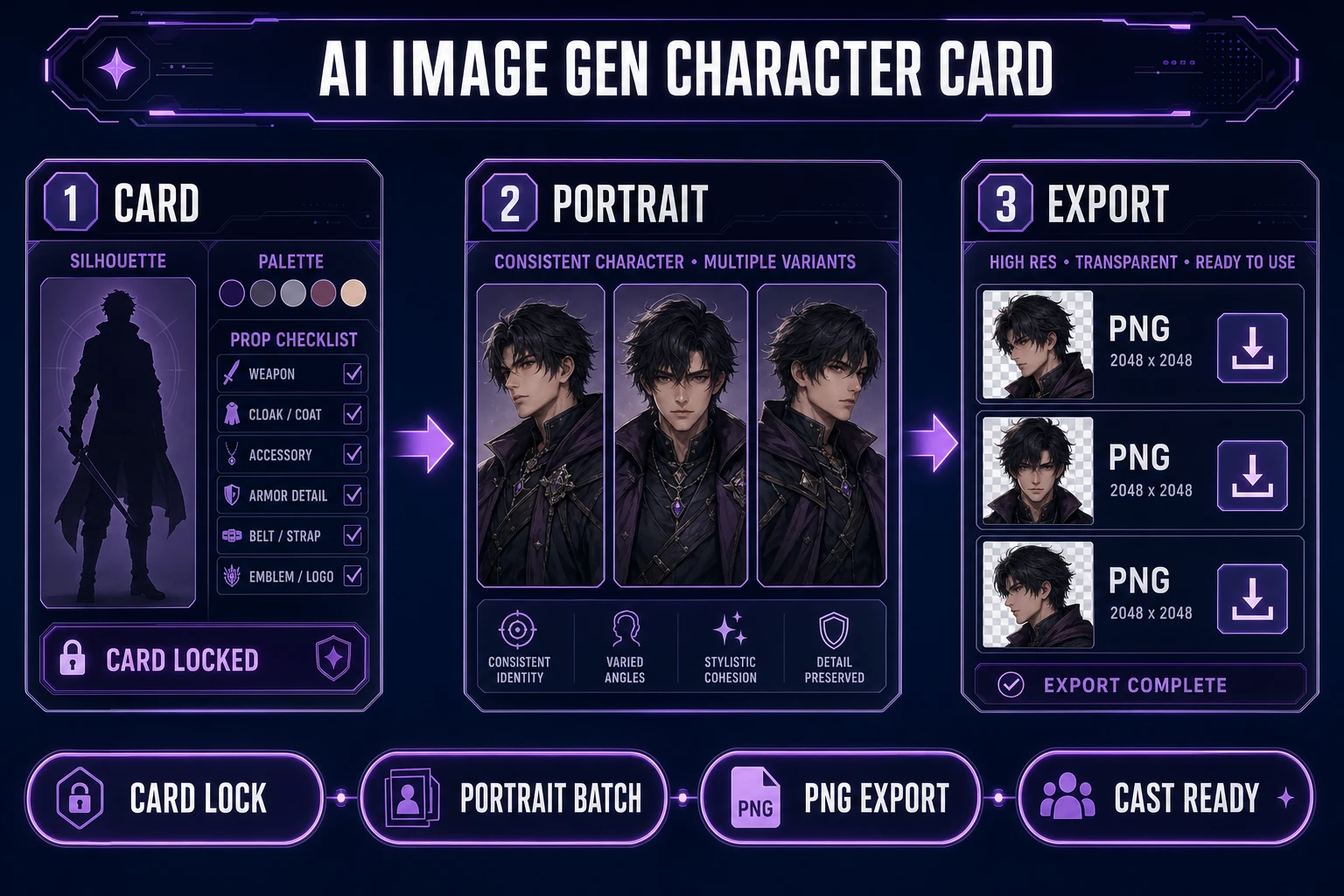
For game developers that deliverable is a production pack: menu portrait, dialogue bust, idle sprite, and optionally a walk strip that share silhouette, palette, and signature prop. Fashion-doll layers without a character card look cute in a browser and then fight your sprite sheet the moment you need a second angle. Pair name consistency from the fantasy name generator post when you batch a full cast, and keep enemy silhouettes in the AI monster generator pipeline so heroes and foes do not share the same coat of paint.
Why dress-up dolls stall production sprites
Layered doll makers optimize for combinatorial outfits, not for character design constraints that survive animation. Hair that clips through a cloak looks fine as a still portrait and then shreds when you need a side view. Palettes that drift between renders force you to re-author every UI thumbnail. Soft photo-real lighting that sells a headshot fights pixel grids the moment you run True Pixel.
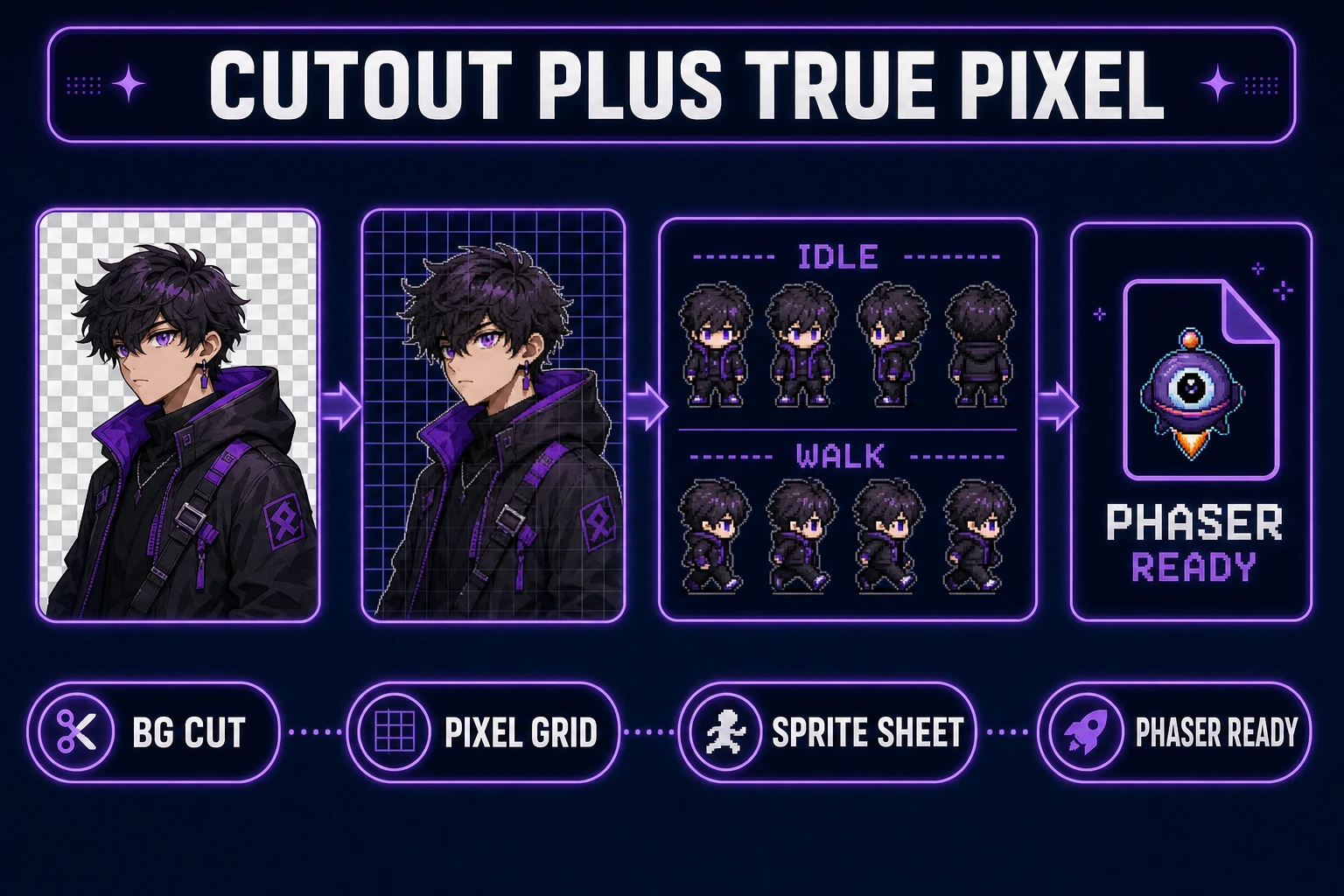
The traditional bottleneck was never Phaser’s image loader. It was locking a readable silhouette, cutting transparent edges without leftover backdrop crumbs, and converting the same hero into a sprite sheet that matches the portrait’s proportions. AI Image Gen closes the portrait layer; BG Remover closes the cutout layer; True Pixel closes the pixel grid. Cross-link sheet layouts in the AI character sheet generator post when you need stats art that matches the same face.
The Sorceress oc maker pipeline in four steps
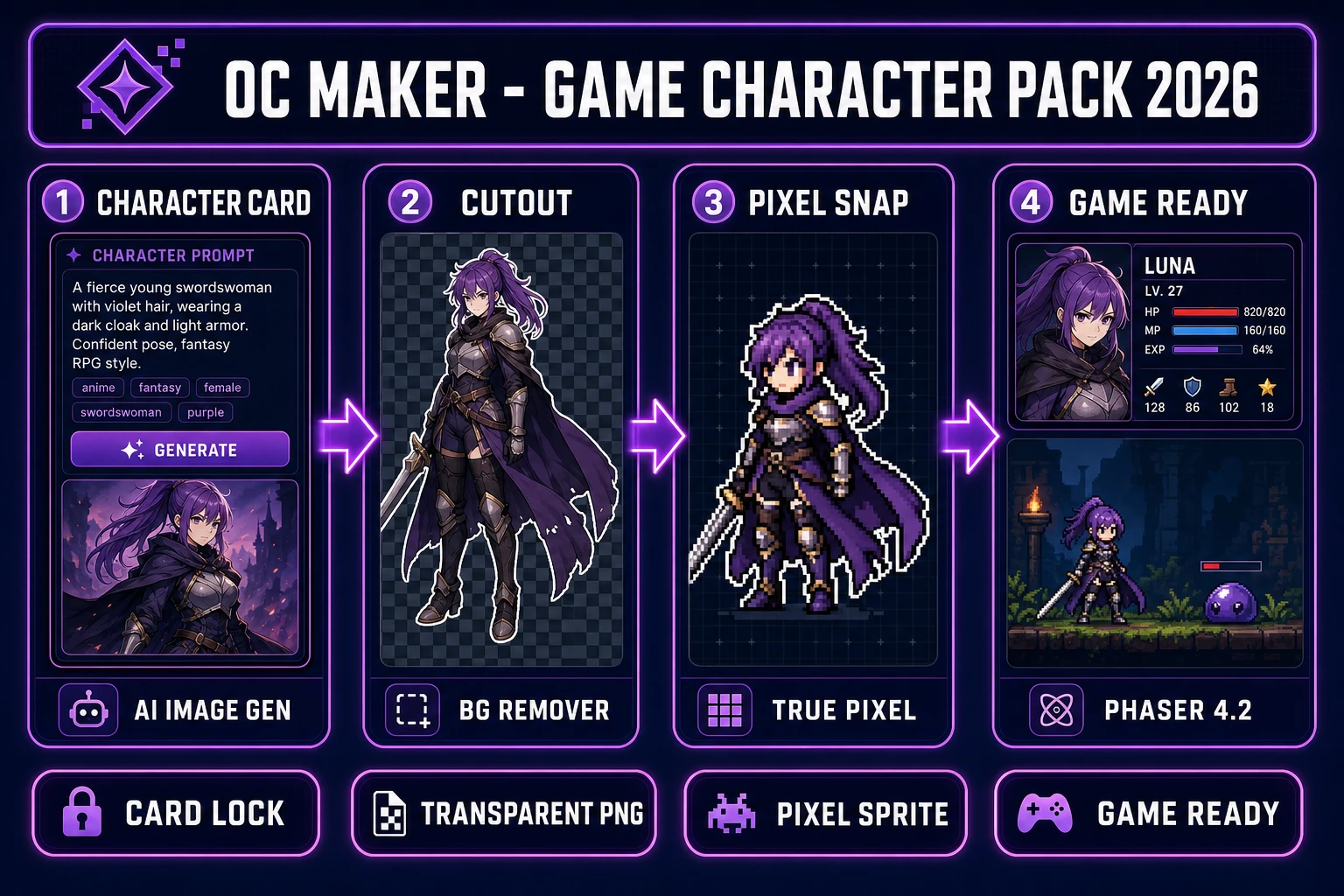
Every shippable OC pack ships four runtime pieces regardless of art style: character card, transparent portrait, pixel sprite, and scene wiring. In 2026 each maps to one Sorceress tool verified against the live catalog on July 11, 2026:
- Character card + portraits — AI Image Gen (AI Credits) with models such as GPT Image 2 and Nano Banana Pro via the unified panel; credit cost varies by model via
getModelCreditsinsrc/lib/models.ts. - Transparent cutouts — BG Remover (AI Credits badge) for clean PNG silhouettes without backdrop crumbs.
- Pixel sprites — True Pixel (Pro badge) converts the cutout into cleaned pixel frames and sprite-sheet export.
- In-game wiring — WizardGenie scaffolds Phaser 4.2 portrait + sprite usage; your API key covers coding credits.
Pricing is a $49 lifetime unlock plus pay-as-you-go credit packs — Starter $10/1,000 credits, Creator $20/2,000, Plus $50/5,000, Studio $100/10,000 — verified against src/app/plans/page.tsx lines 46 and 51–54. New accounts ship with 100 starter credits. The Sorceress tools guide lists every tool in the catalog.