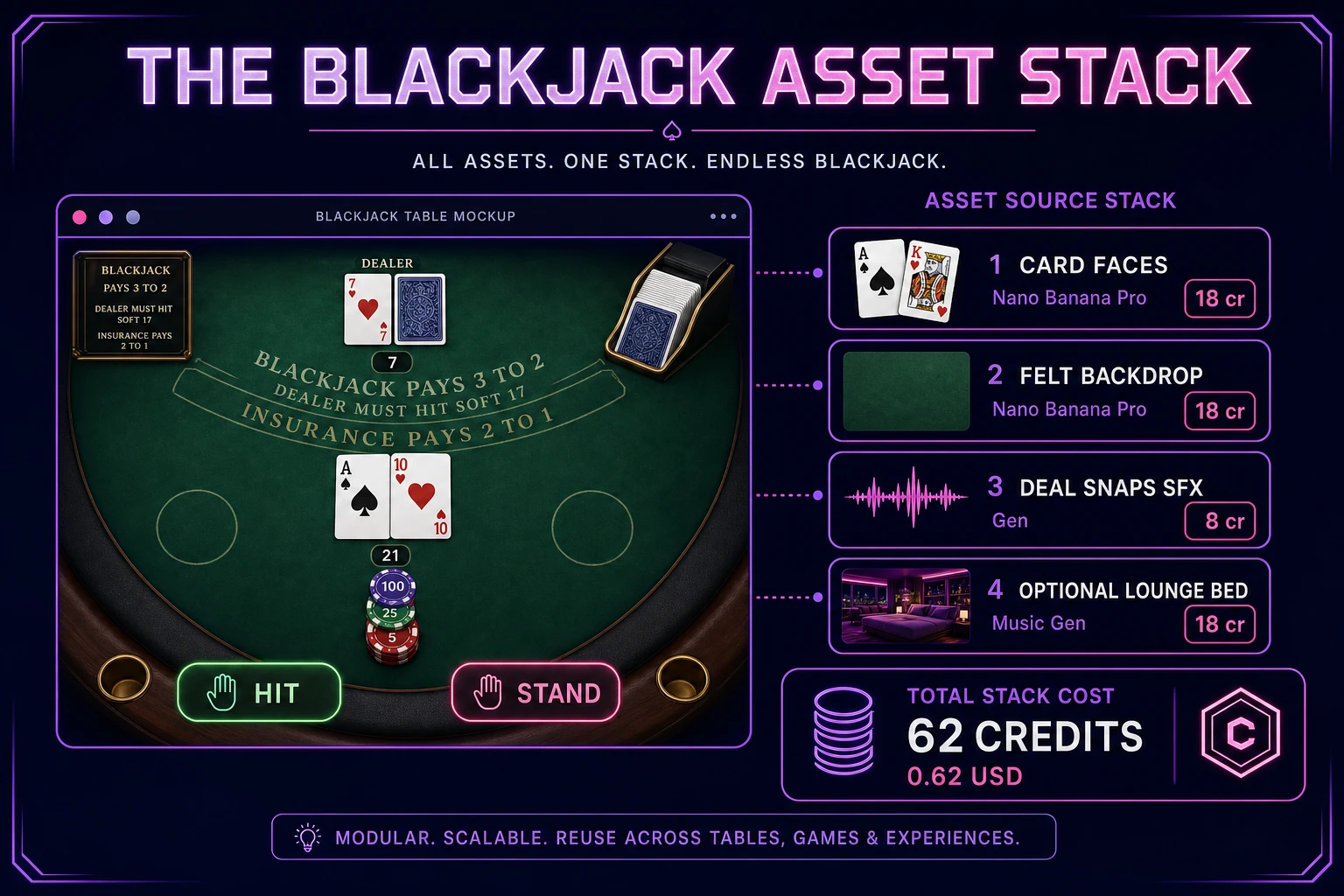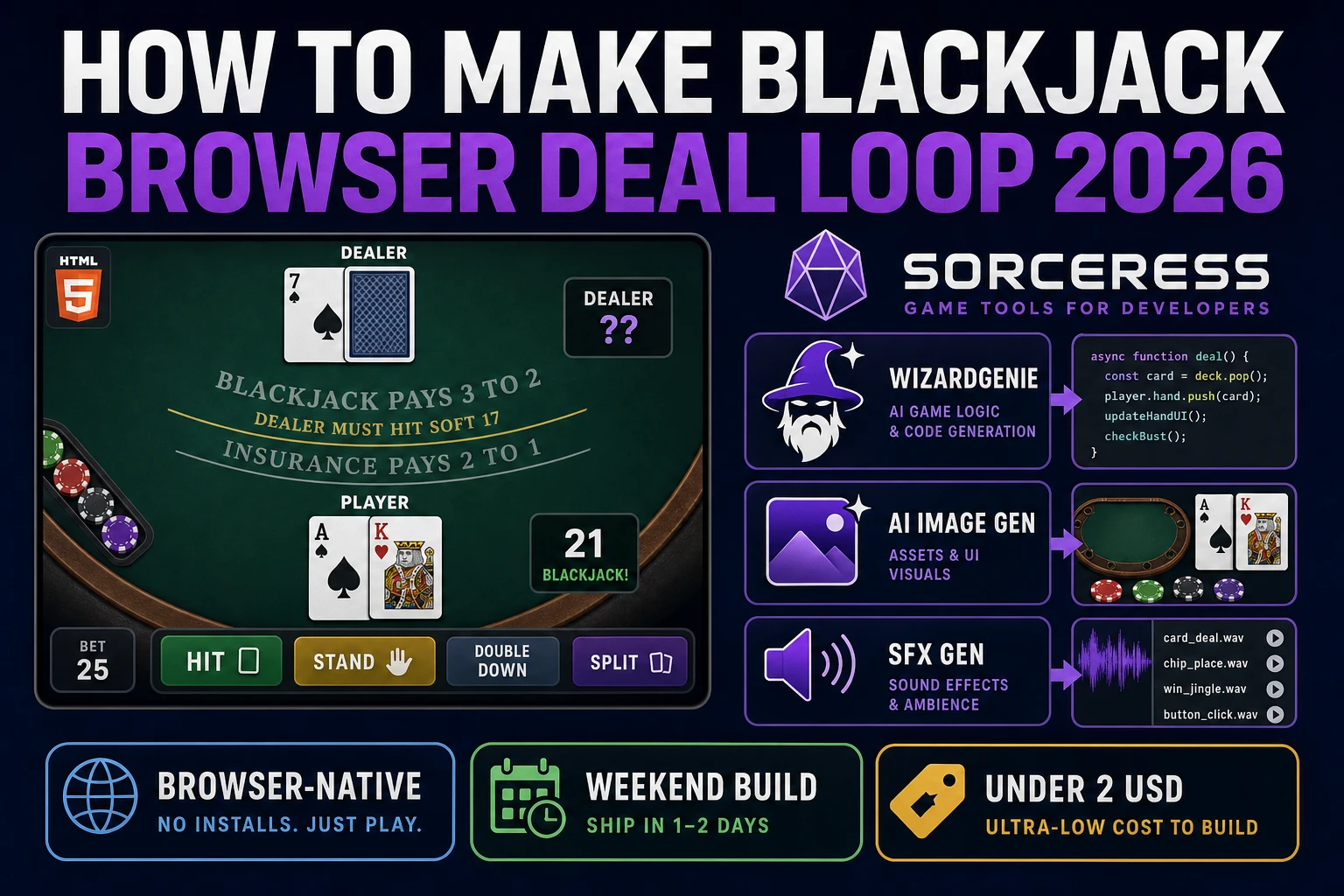
Most beginners who search “how to make blackjack” want a felt table where you get two cards, the dealer gets two (one face down), and you Hit or Stand until someone busts or the totals decide the pot. A full multi-deck shoe with surrender, insurance, and side bets is a casino product. A browser deal loop is different. A coding agent scaffolds a shuffled deck, Ace soft totals, and dealer soft-17 rules from one prompt, and AI generation covers card faces and deal snaps. On desktop or web, that means WizardGenie for the deal-hit-stand loop, AI Image Gen for card art and felt, SFX Gen for deal and chip audio, and optional Music Gen for a lounge bed. This guide is the honest end-to-end for how to make blackjack in 2026, as a weekend build you can finish once.
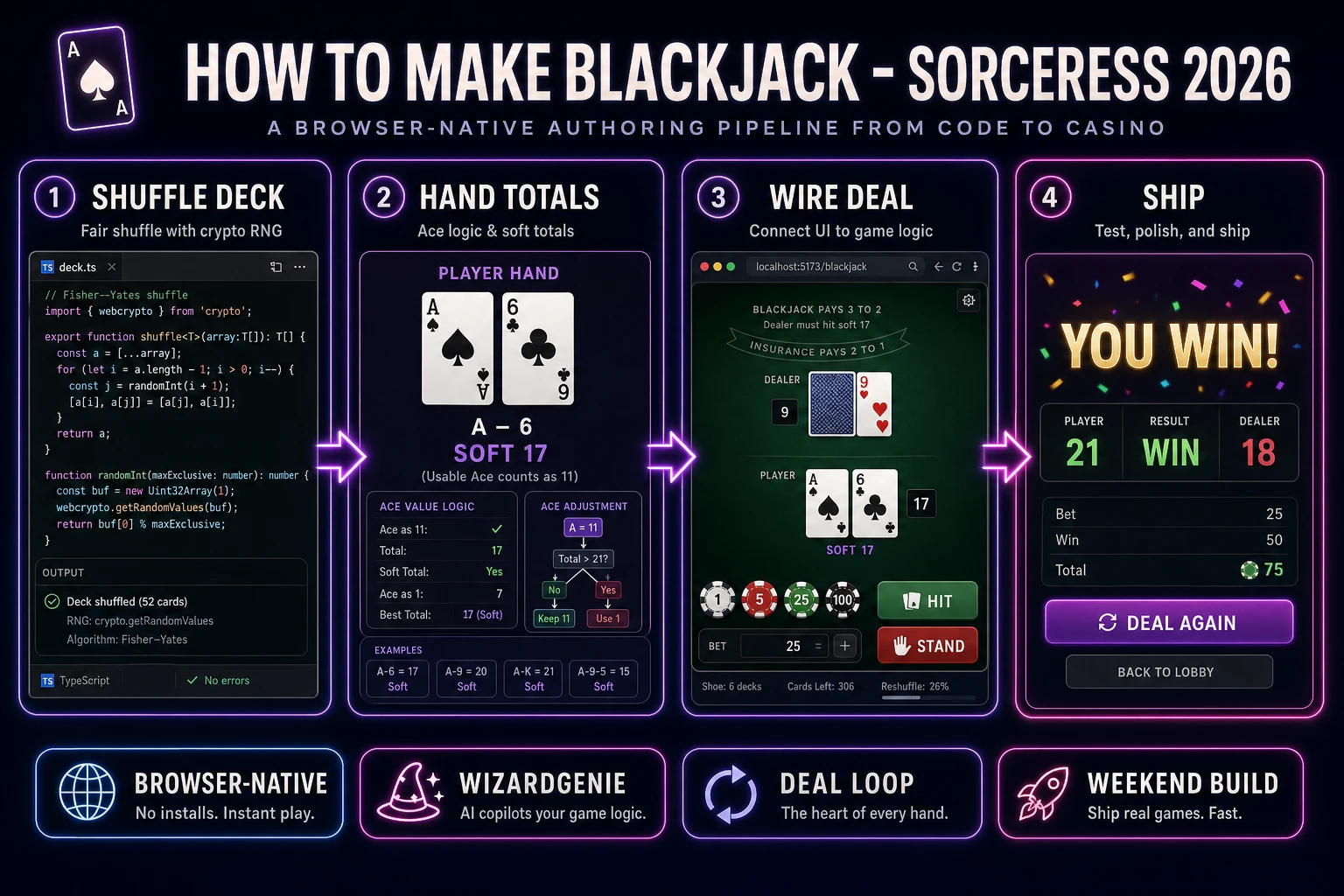
What how to make blackjack actually means in 2026
The query “how to make blackjack” hides three intents. Some searchers want printable strategy charts and flashcards for a casino trip — that is study material, not a playable digital game. A second intent is a full multiplayer shoe with live dealers and KYC cash-out — a regulated product. The third intent, and the one this guide targets, is a browser blackjack card game: one shuffled deck, two cards each, Hit and Stand only, dealer hits soft 17, and a clear Win / Push / Bust banner before Deal again. That is a weekend build, it demos the Sorceress toolset, and it is the format most blackjack tutorial and javascript blackjack searchers actually want.
The presentation contract is small and strict. A title screen shows the game name, chip bank, and Deal. The play screen shows the dealer’s upcard plus hole card back, the player’s hand with a live total, Hit and Stand buttons, and the bank. On natural blackjack, settle 3:2 before the player acts. On player bust, end the hand immediately. On stand, reveal the hole card, run dealer hits, then compare. On settle, freeze input briefly, show the banner, and enable Deal again. The Blackjack overview on Wikipedia (verified 2026-08-25) still separates basic hit/stand rules from double, split, and insurance cleanly — cite it when you write your itch.io blurb so players know which promise you kept. If you already shipped a broader card loop, the sibling guide on how to make a card game covers shared deck UX; this post owns Ace soft totals and dealer soft-17 resolution instead.
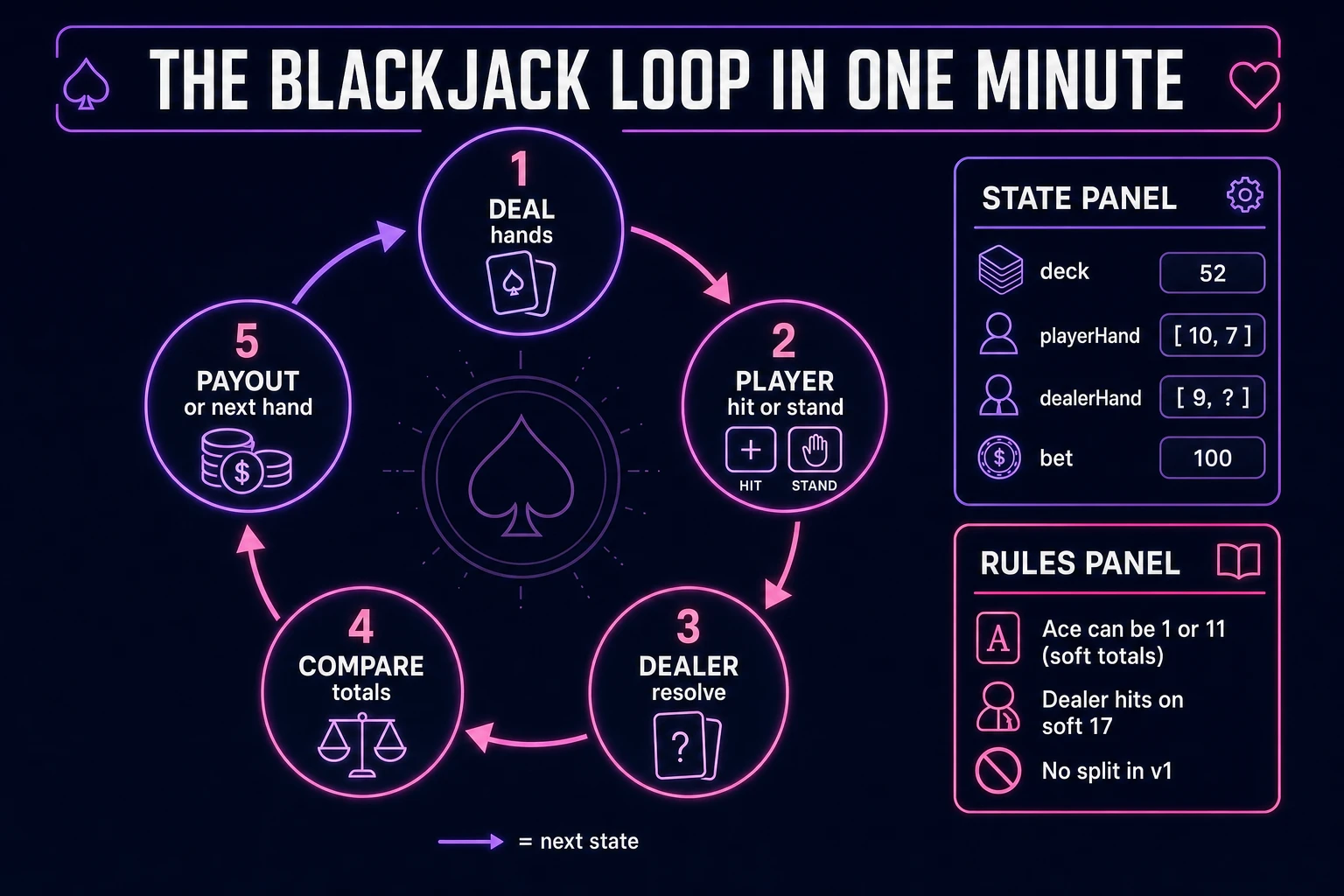
The blackjack loop in one minute (deal, hit or stand, dealer, payout)
Five moving parts, repeated until the bank hits zero or the player quits. First, deal — shuffle if the shoe is thin, deal two cards to the player and two to the dealer with one hole card face down, deduct the bet. Second, player act — Hit draws one card; Stand locks the hand; bust ends the round as a loss. Third, dealer resolve — reveal the hole card; while total < 17 or soft 17, draw; stand on hard 17+. Fourth, compare — player blackjack pays 3:2, higher non-bust total wins 1:1, equal totals push. Fifth, next hand — enable Deal, keep the remaining shoe until a reshuffle threshold. That is the entire browser blackjack loop. Double-down, split pairs, and insurance are polish layered after one honest soft-total table feels fair.
Pick your engine for how to make blackjack: DOM, canvas, or WizardGenie
Three good targets in 2026, each with a different trade-off. Vanilla JavaScript on DOM buttons is the honest default and the pick this guide recommends for a first build. Render card faces as <div> tiles with rank and suit, wire Hit and Stand with click handlers, and keep totals in a status line. Total code footprint for a working html5 blackjack table is under 400 lines including shuffle, soft totals, and dealer logic. No engine to install, ships as a static HTML file, deploys anywhere. The MDN Crypto.getRandomValues() docs cover fair shuffle seeds, and Pointer events cover mouse and touch on the same Hit/Stand buttons.
Canvas with flip tweens becomes the right pick if cards need to slide across a felt table with motion blur. You trade free accessibility and button focus for visuals — fine for a showcase jam, heavier once you reimplement hit-testing and mobile taps yourself.
Phaser 4.1.0 (verified 2026-08-25 on the official Phaser API documentation page) becomes the right pick if you want Scene lifecycle for title-play-settle, tweens when the hole card flips, or chip particle pops on a blackjack win. Phaser does not invent your soft totals — you still need the same Ace helpers and dealer rules. Use Phaser when motion polish is the product; use DOM when the product is a browser blackjack tutorial people can tap on a phone.
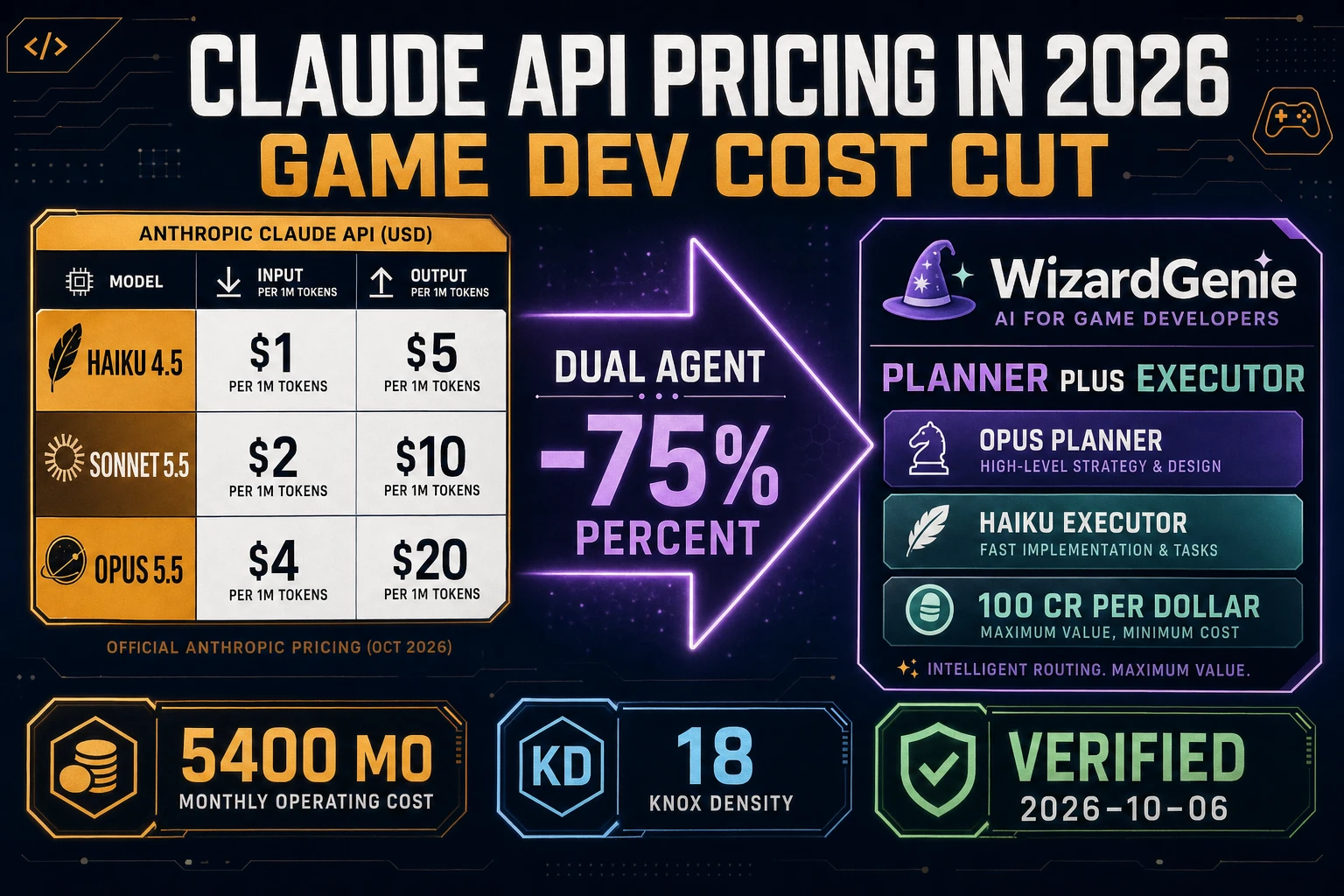
WizardGenie is not a separate rendering engine — it scaffolds whichever of the three you pick from a single natural-language prompt. WizardGenie ships as both a desktop app (Windows installer with auto-update, available to Early Access supporters and above) and a no-install web build. Its coding-model lineup covers Claude Opus 4.7, GPT-5.5, Gemini 3.1 Pro, DeepSeek V4 Pro, Kimi K2.5, Grok 4.2, and MiniMax M2.7 (verified 2026-08-25 in src/app/_home-v2/_data/tools.ts). For blackjack, any frontier model scaffolds shuffle, soft totals, and dealer soft-17 in one prompt. Pair a frontier planner with a budget executor like DeepSeek V4 Pro or Kimi K2.5 for the typing pass — the Dual-agent pattern lands most projects at roughly one-fifth the single-frontier cost.