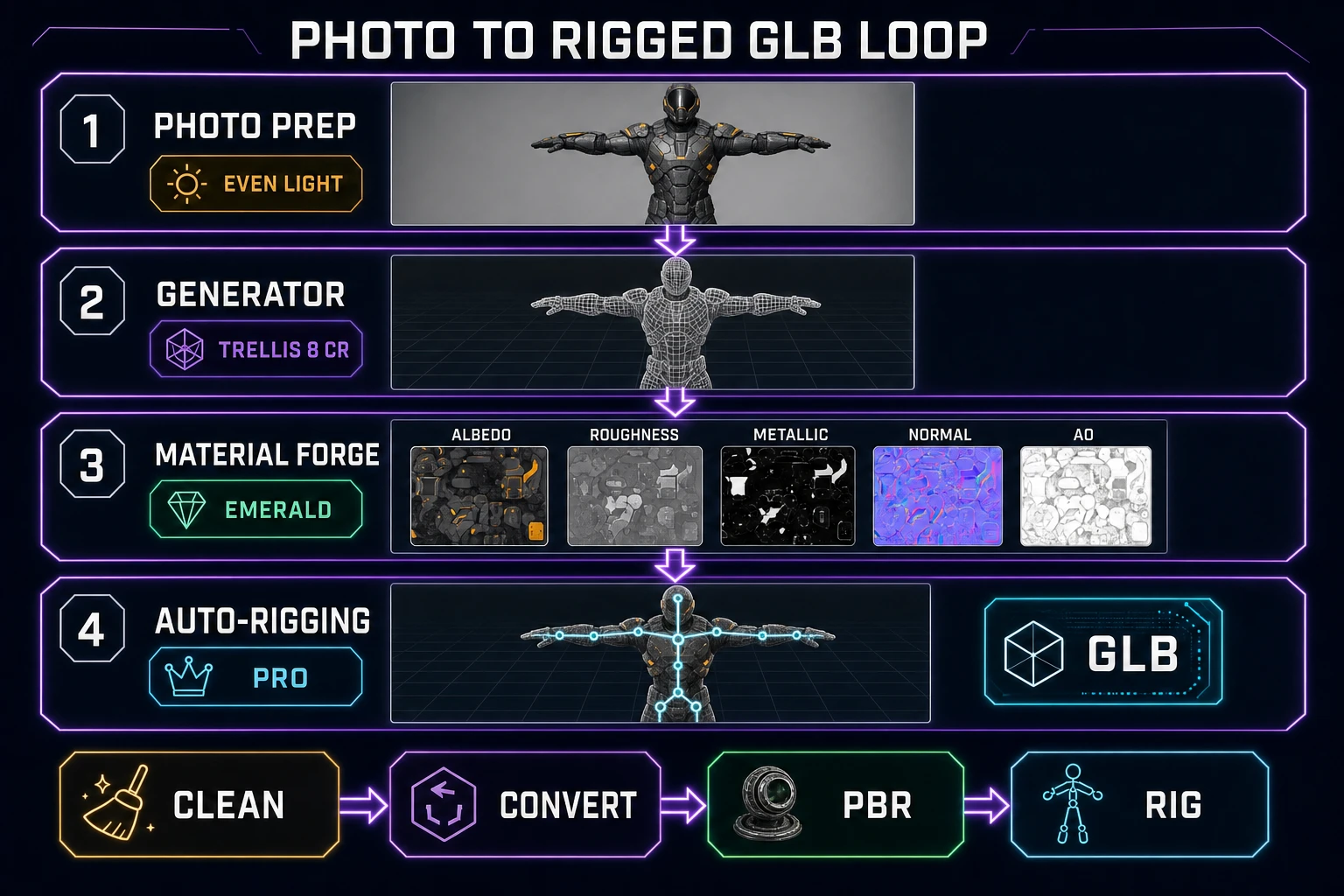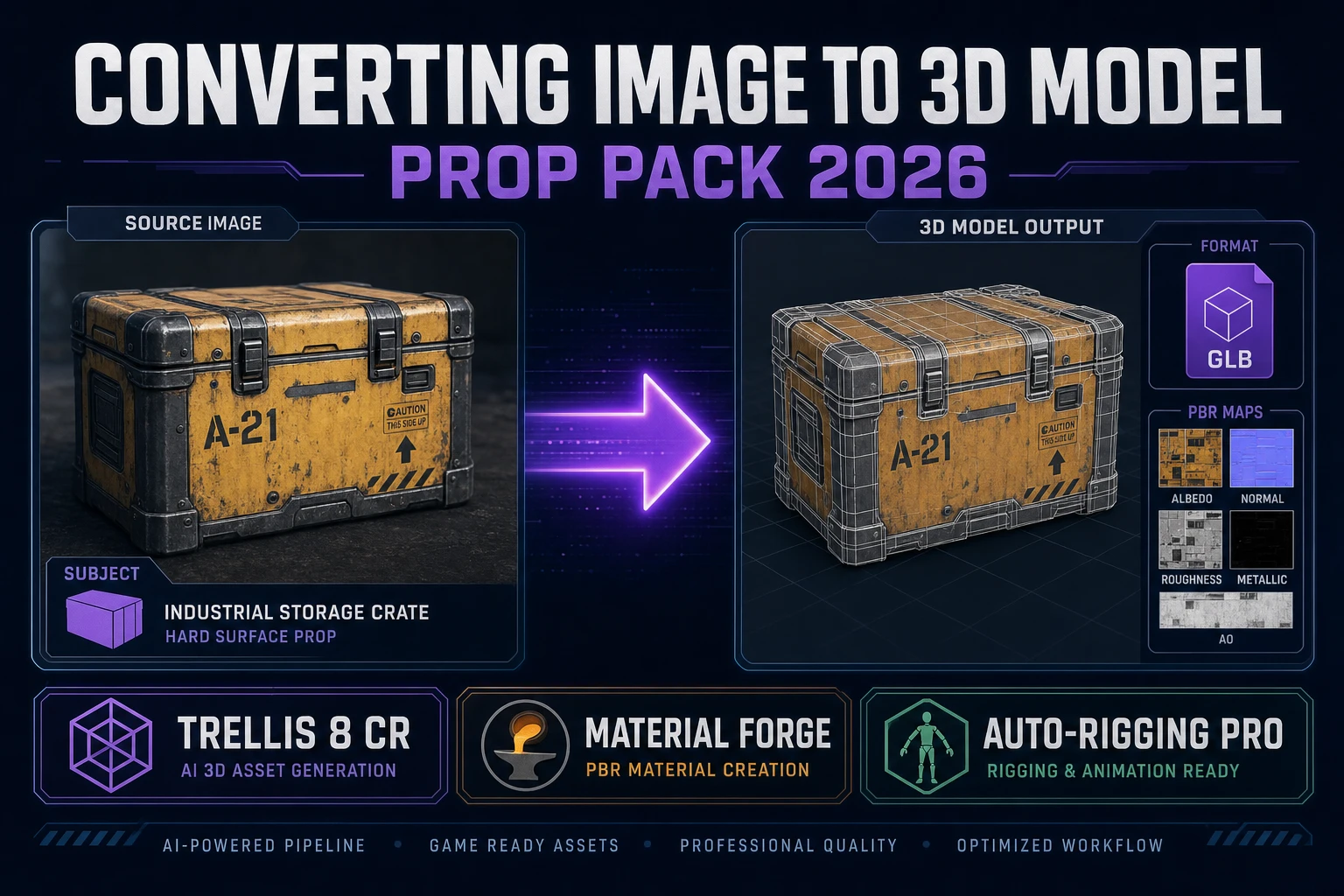
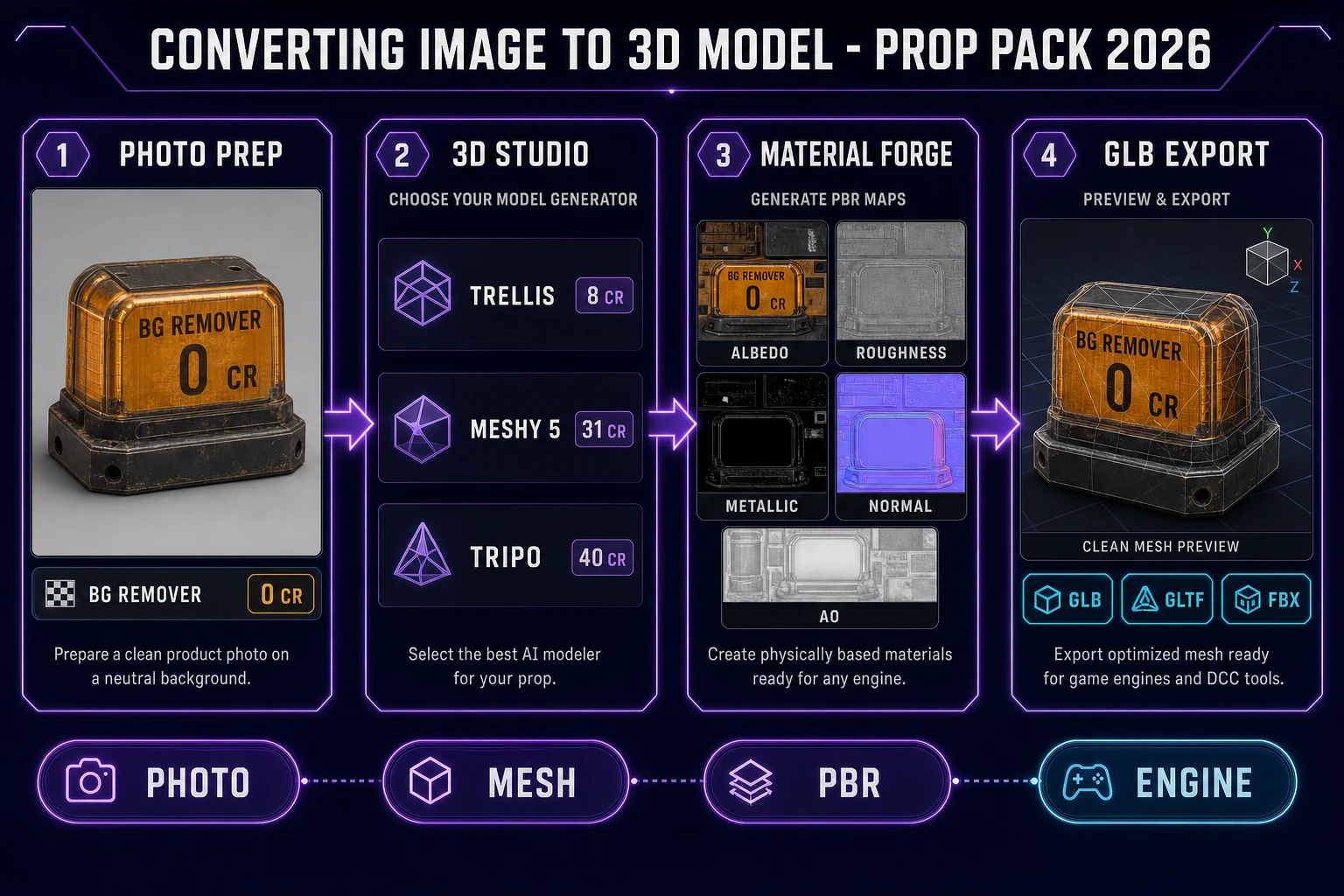
Searchers who type converting image to 3D model are usually staring at a single photo, a concept sketch, or an AI still and asking one question: can this become a rotatable, textured mesh that a game engine can render without a modeling pass. This guide answers that on Sorceress with a browser pipeline: pick the right image-to-3D model in 3D Studio, clean the source photo so the mesh reads clean, add PBR surfaces with Material Forge, and rig with Auto-Rigging when the target is a character. No install, no CAD training, and no Blender detour required to leave with a GLB.
What converting image to 3D model actually asks for
DataForSEO lists converting image to 3d model at 720 searches a month, KD 26, competition 0.55, intent informational (verified 2026-09-30 in tools/research-supplement.md). The sibling phrase convert image to 3d model carries the same 720/mo and KD 26; searchers use the two interchangeably. The intent is a workflow query, not a shopping query: how do I actually take one image and end with a mesh file. This guide answers that end-to-end without asking the reader to open a competitor product or a native app.
Two neutral references frame the problem. Wikipedia’s 3D reconstruction from multiple images entry (verified 2026-09-30) describes the classical photogrammetry problem: given N images, recover the 3D shape and appearance of the depicted object. Modern image-to-3D generators solve a harder cousin — recover a plausible textured mesh from one image, filling occluded geometry with learned priors. Wikipedia’s Photogrammetry article (verified 2026-09-30) confirms the multi-view path stays the reference for measurement-grade accuracy; a single AI still trades that accuracy for speed and coverage.
For readers arriving from adjacent long-tails, the sibling posts how to turn an image into a 3D model and Tripo AI image to 3D model cover slightly different intents (workflow write-up and vendor-specific spotlight). This page stays on converting image to 3D model as the head verb: the mechanical act of turning one bitmap into a mesh file.
The 3D Studio roster for converting an image to a 3D model
3D Studio is the Sorceress hub for image-to-3D. The home card description (verified 2026-09-30 in src/app/_home-v2/_data/tools.ts) is exact: “Type an idea, get a fully rigged, fully animated, game-ready 3D character. 3D Studio chains every step of the pipeline: AI image generation, single-image to textured 3D, automatic humanoid auto-rigging with weight-paint refinement, and AI-powered text-to-animation — all exported to FBX, GLB, or GLTF for any engine.” The generator picker inside 3D Studio wraps a roster of specialized models. Numbers below are quoted straight from src/lib/threed-models.ts (verified 2026-09-30) so nothing here is invented.
| Model | Provider | Credits (image-to-3D) | Best for |
|---|---|---|---|
| TRELLIS | Trellis | 8 | Fast, cheap, small props — first check when you are unsure the photo will convert at all. |
| Hunyuan 3D 2.1 | Hunyuan3D | 15 | Middle-ground fidelity for organic props and stylized characters. |
| Hunyuan 3D 3.1 | Hunyuan3D | 30 | Upgraded topology and texture pass on the same lane. |
| Meshy 5 | Meshy | 31 | Legacy Meshy image-to-3D for consistent hard-surface props. |
| Tripo v3.1 | Tripo | 40 | Strong general-purpose converter with clean UV layouts. |
| TRELLIS 2 | Trellis | 40 (1024p default) | Higher-resolution TRELLIS pass when the first sheet is too soft. |
| Meshy 6 / 7 | Meshy | 50 base (35 image-to-3D pass) | Current Meshy line — Meshy 7 adds Ultra Mode for extra fidelity. |
| Rodin 2.0 | Hyper3D | 50 | Character and creature meshes with clean humanoid topology. |
| Tripo Smart Mesh | Tripo | 65 | Tripo P1 quality mode — cleaner geometry pass for detailed props. |
| Tripo P2 | Tripo | 125 | Highest-fidelity Tripo tier for hero assets. |
| Pixal3D | Pixal3D | 0 (VIP early-access) | Zero-credit lane for the built-in early-access model. |
Two habits that save credits. First, TRELLIS at 8 credits is the honest starter — if TRELLIS cannot even find the silhouette in your image, no premium model will fix a bad photo. Second, quote the credit number to your future self in a note next to each generation, because comparing outputs after a coffee break is otherwise a memory quiz.
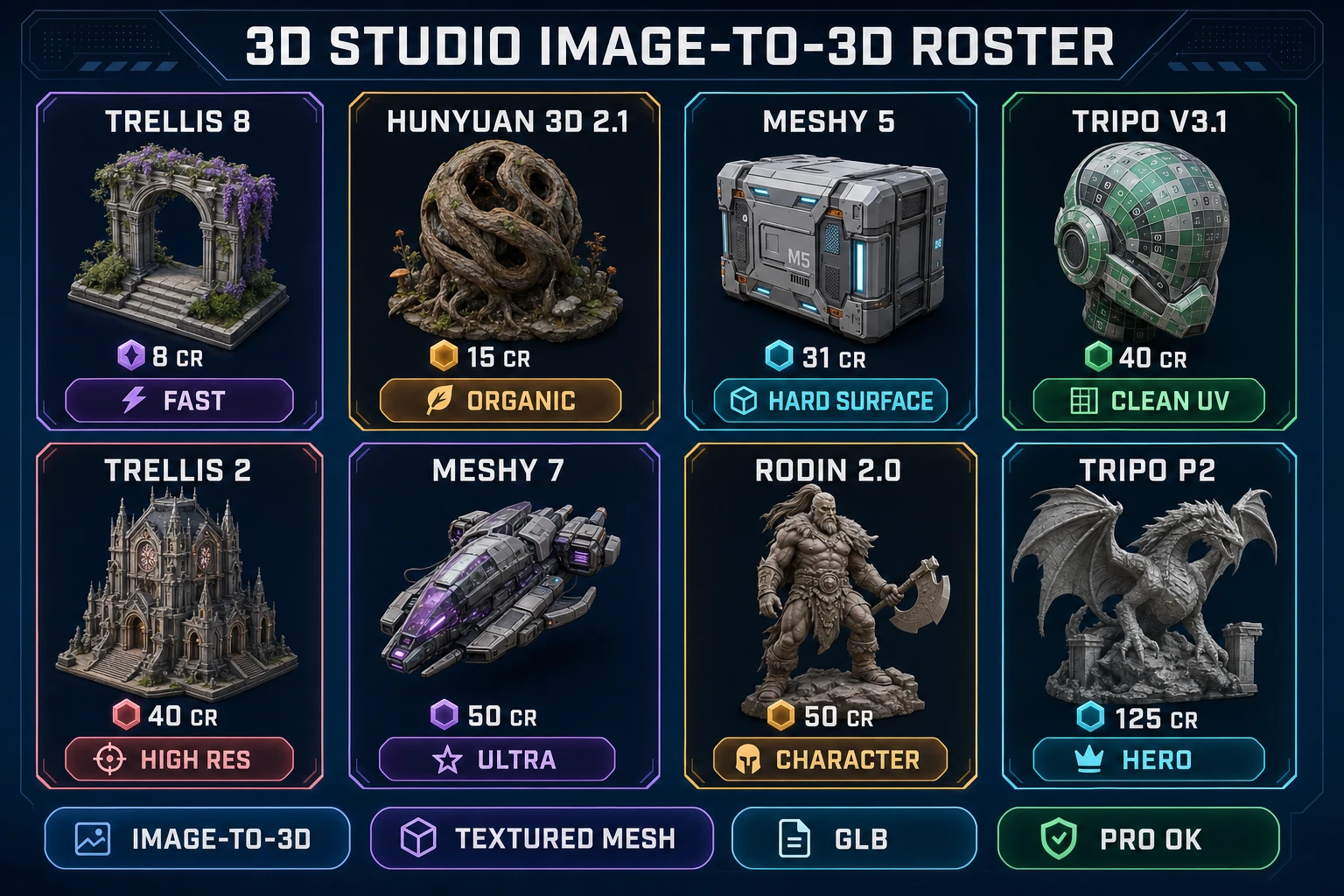
Photo prep before converting the image to a 3D model
Every image-to-3D failure the picker cannot fix traces back to the input. The generators are guessing the back half of the object from statistical priors; the more your photo helps them, the less the mesh looks like a melting candle. A short checklist:
- One subject, plain background. A cluttered bookshelf behind a helmet turns into extra geometry. Isolate the subject over a flat mid-gray or transparent PNG.
- Even lighting, no hard shadows. Baked shadows become part of the albedo texture. The Wikipedia Physically based rendering article (verified 2026-09-30) explains why: PBR expects raw color separate from lighting; a photo that fuses them will look wrong under any new light.
- Three-quarter angle for characters. A pure front view robs the model of hip and shoulder cues; a hard side view robs it of chest depth. Roughly 30 degrees off front reads best.
- Full silhouette in frame. Cropped feet, hats cut off at the top, or a hand pushed against the frame edge all cause geometry to bulge outward at the crop line.
- Resolution ≥ 1024 on the long edge. Sub-512 inputs produce mushy topology no matter which model you pick.
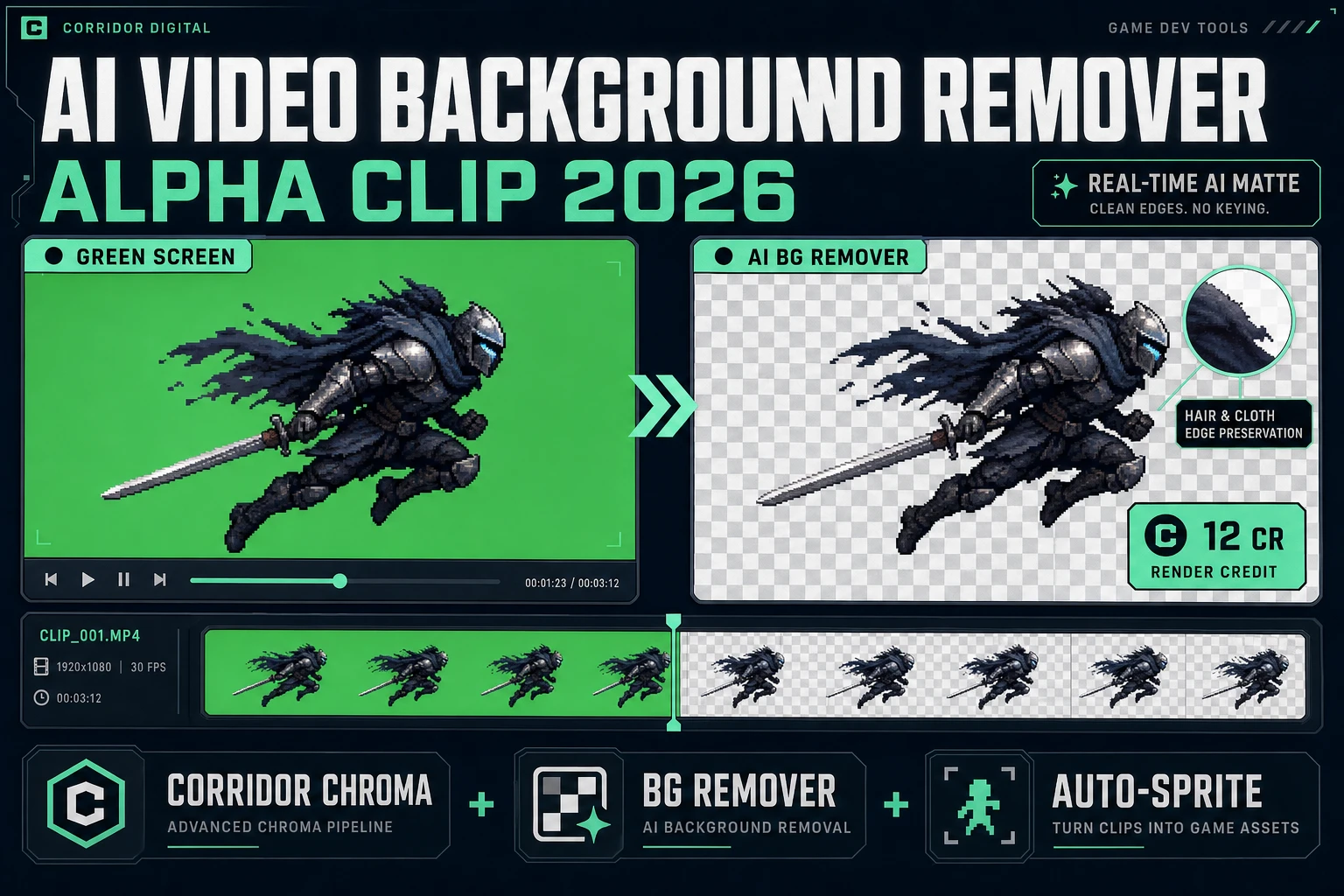
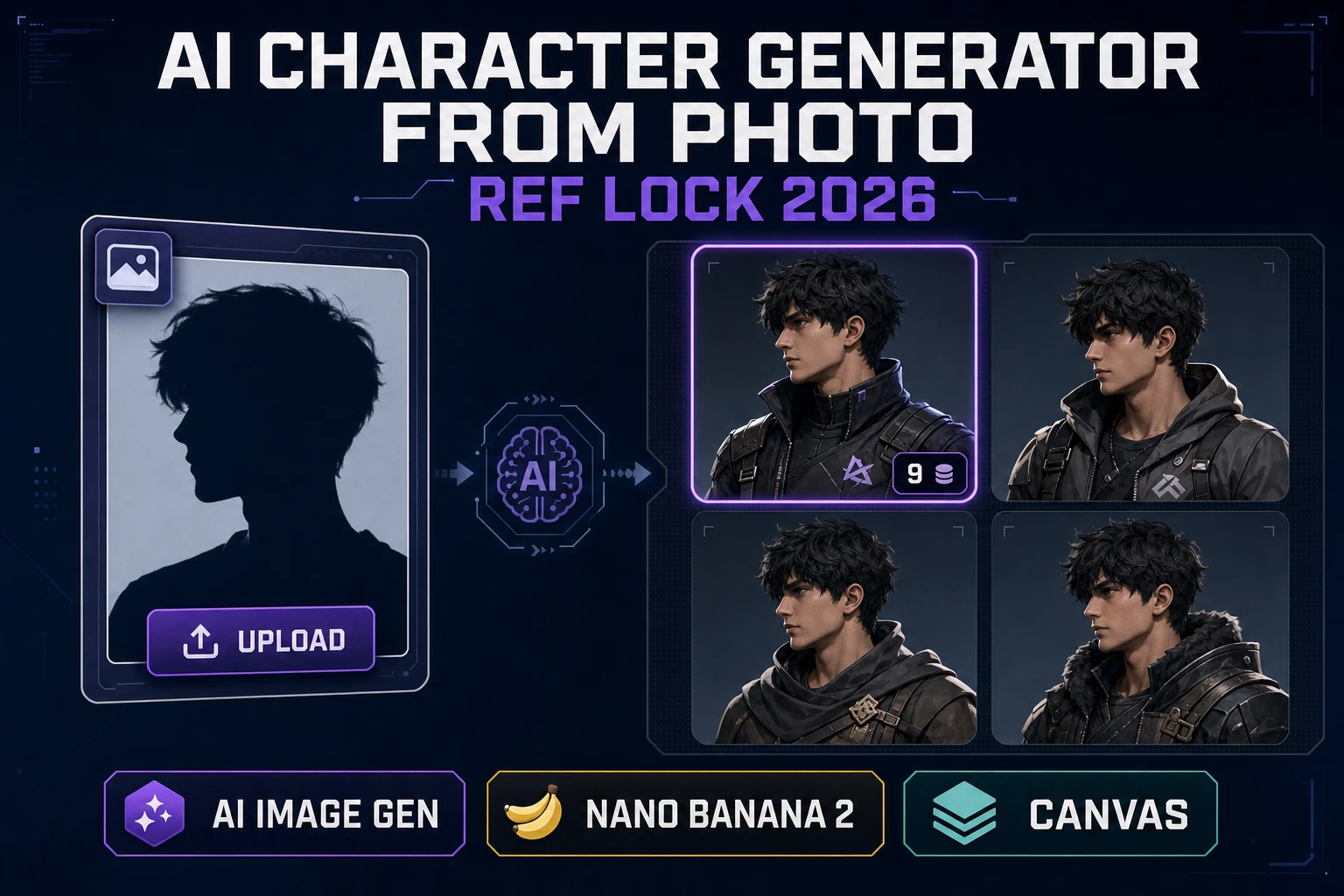
Sorceress cleanup lives in the free lanes. Trim backgrounds in BG Remover. Recompose or paint out obstructions in Canvas (Free badge on the home card, verified 2026-09-30). If the source photo is under-lit, use AI Image Gen to render a fresh reference from a written description — often faster than re-shooting.