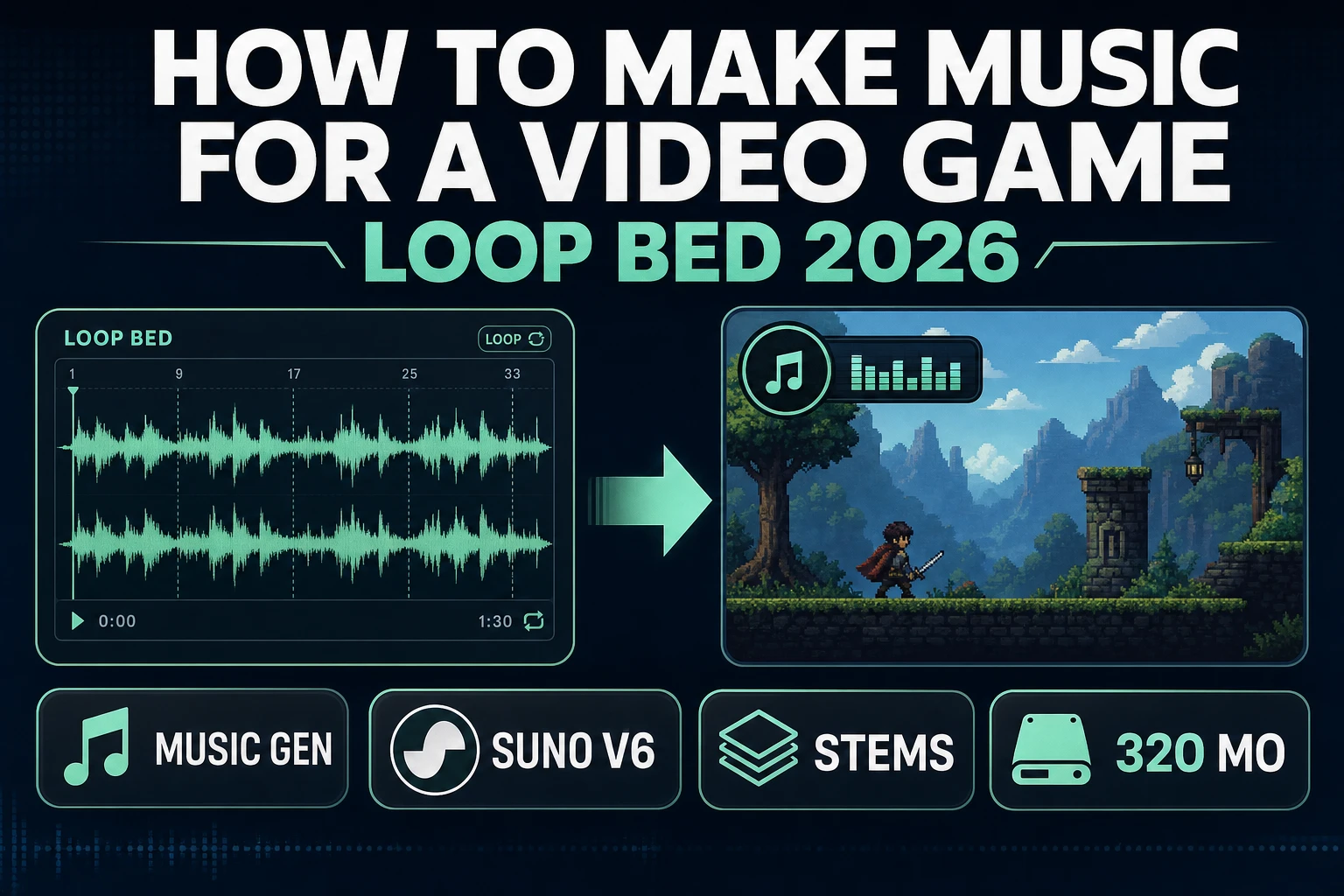
Mix How to Make Music for a Video Game (Loop Bed 2026)

By Arron R.7 min read
How to make music for a video game: ship one looping instrumental bed, keep SFX off that file, then export and cue it. Sorceress Music Gen runs Suno V6, V6 Mini

Searchers typing how to make music for a video game are not asking for a three-minute single with a fade-out. They need a looping bed that survives ten minutes in the same room, plus a clean handoff into the engine. This guide builds that bed on Sorceress with Music Gen, optional stems, hits from SFX Gen, and a cue path that starts on a real gesture.
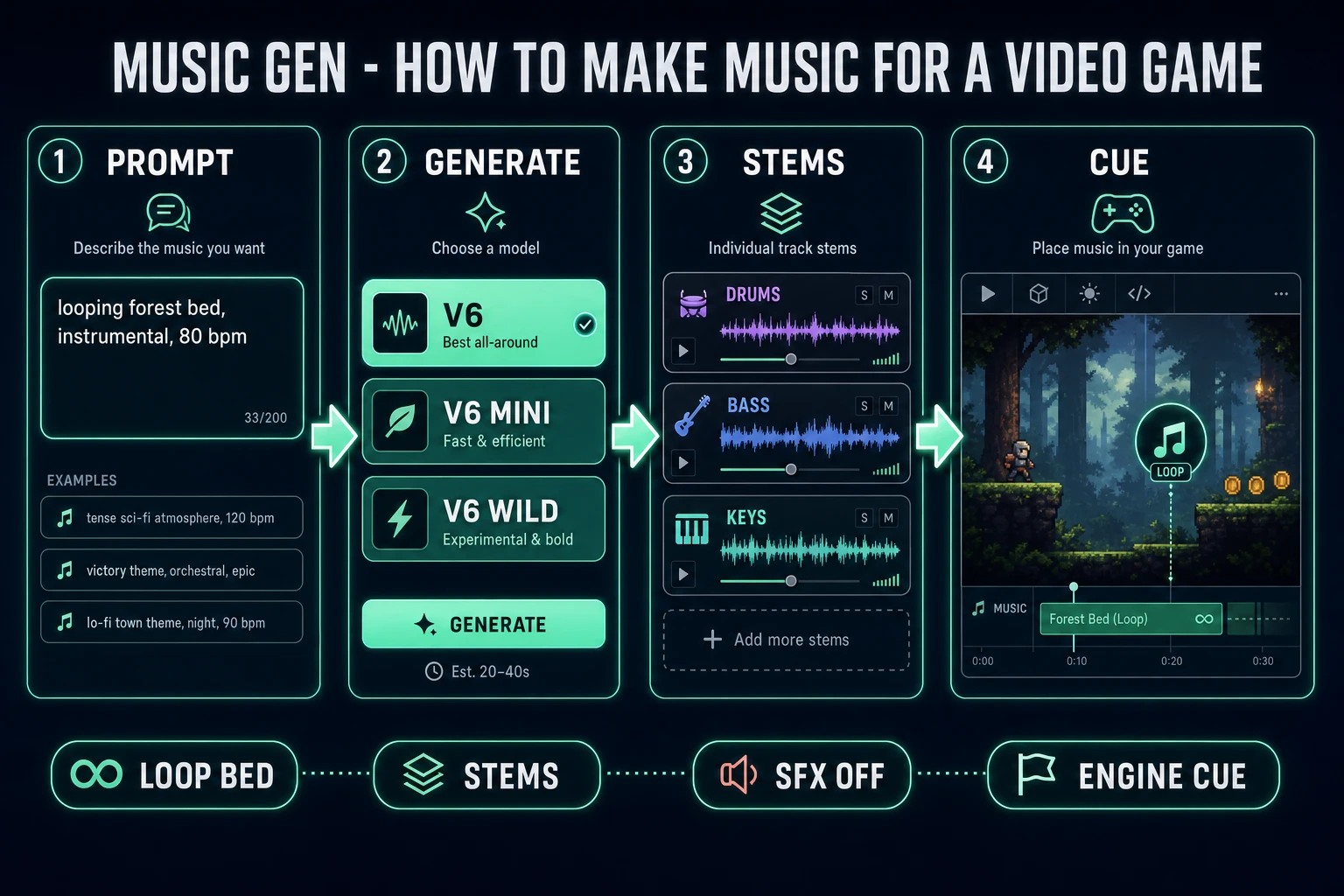
How to make music for a video game pipeline: prompt, Music Gen models, stems, engine loop cue
How to make music for a video game in four beats: prompt a bed, generate it, pull stems if needed, cue with loop on.

Loop bed vs full track when you how to make music for a video game

DataForSEO lists how to make music for a video game at 320 searches a month, KD 13 (confirmed 2026-09-24 in tools/research-supplement.md). Sibling rows at the same volume include how to make video game music and how to make music for game. The deliverable behind all three is the same: files you can drop under a scene.

Wikipedia’s Video game music page (checked 2026-09-26) defines VGM as the soundtrack that accompanies video games. Players hear it on title screens, menus, and gameplay, and scores can change with the player’s situation. Early continuous beds were already loop-shaped: Space Invaders (1978) used four descending chromatic bass notes that sped up as enemies descended; Rally-X (1980) is cited as the first continuous melodic background tune. That history is the job description for a jam — short material that can repeat without a chorus drop at bar 32.

A full track fights the room. Verse, chorus, and ending train the ear to expect arrival. A loop bed is a texture: one harmony pocket, restrained percussion, no sung narrator. When you how to make music for a video game for the first time, ship the bed before you chase adaptive danger layers.

Minimum file plan:

  1. One instrumental bed, 30–90 seconds, written to restart cleanly.
  2. One optional stinger, 2–6 seconds, for a door, chest, win, or fail.
  3. SFX on separate clips — never baked under the melody.
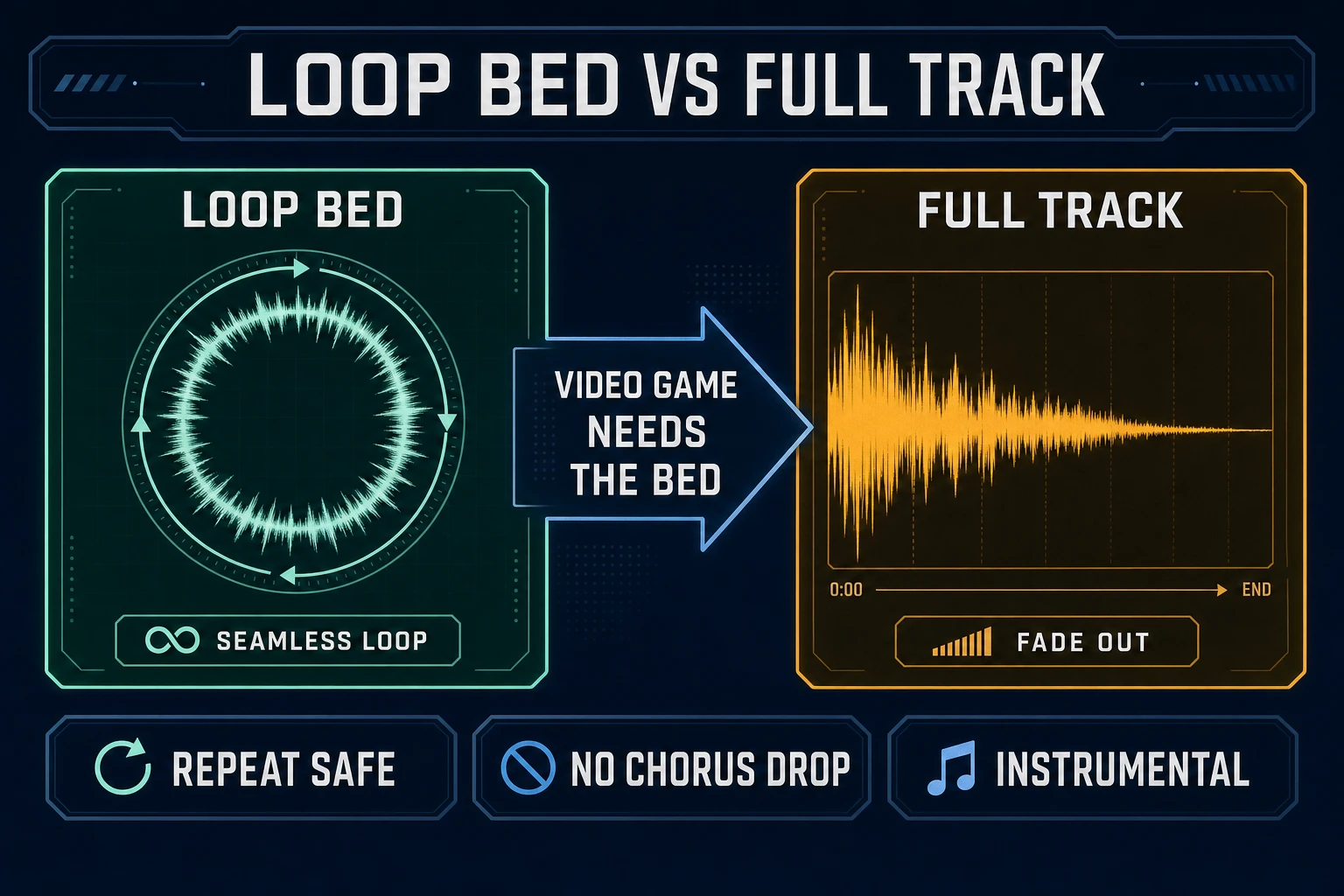
Loop bed versus full track: seamless circle vs fade-out song shape for video game music
Video game levels need the loop bed. A fade-out single restarts mid-narrative every time the player stays in the room.

Music Gen: the Sorceress path for how to make music for a video game

Music Gen is the Audio Studio tool that answers how to make music for a video game on this site. The home catalog badges it AI Credits (verified 2026-09-26 in src/app/_home-v2/_data/tools.ts). Current Suno models on the left checklist (verified 2026-09-26 in src/app/music-gen/page.tsx):

  • V6 — richest detail (default).
  • V6 Mini — fastest iteration.
  • V6 Wild — experimental color.

Create costs 10 credits per selected model. Auto lyrics add 2. Advanced mode accepts a target length from 10–360 seconds (default suggestion 20s when enabled). Turn Instrumental on for level beds so the model does not sing over gameplay. One credit equals one cent (CREDITS_PER_DOLLAR = 100 in src/lib/models.ts, verified 2026-09-26).

A practical first how to make music for a video game run:

  1. Open Music Gen. Leave V6 selected unless you are stress-testing Mini for speed.
  2. Enable Instrumental. Set Advanced length to 45–75 seconds for a hideable seam.
  3. Prompt the place, not a playlist: looping mossy dungeon bed, soft low strings, 72 bpm, sparse pulse, no vocals, no chorus drop.
  4. Generate. Each Create returns two variations — keep the quieter one under dialogue.
  5. Listen for the seam. If the restart clicks, Extend from a point inside the waveform, or trim ends before you set loop.

Do not paste a famous melody into the style box. Wikipedia notes video game music is original or licensed (checked 2026-09-26). A jam that “sounds like” a commercial theme is how a licensed contour ends up inside your loop without a deal.

For a second reactive bed, keep key and tempo family identical to the explore track. Same dungeon, 72 bpm, denser drums, higher strings, still instrumental is a better danger prompt than a new epic orchestra. Konami’s Frogger is the historical picture of state-driven themes — many gameplay tracks plus start and game-over cues that follow player action (Wikipedia, checked 2026-09-26). You do not need eleven files. One bed and one stinger already talk back.
Stems when the bed needs surgery

Most how to make music for a video game sessions end with a single instrumental mp3. Stems matter when you need surgical control after the take lands:

  • Separate vocals — 8 credits — mute a surprise lyric without regenerating.
  • Full stem split — 42 credits — drums, bass, guitar, keys, and more for remix or ducking.
  • Advanced single-instrument — 17 credits — extract one named stem when you only need the bass bed quieter.

Constants verified 2026-09-26 in src/app/music-gen/page.tsx. Use stems to duck percussion under NPC lines from Speech Gen, or to rebuild a quieter explore layer from the same recording. Do not burn a full split on every draft — iterate on Create first, then spend stem credits on the keeper.

Replace Section (5 credits) patches a bad bar without throwing away the rest of the loop. That is cheaper than a fresh Create when only the last four seconds fight the seam.

Keep SFX off the score

Early consoles often shared music channels with sound effects — a laser on the square wave would interrupt the tune (Wikipedia history, checked 2026-09-26). Modern browser games do not have that hardware excuse. Still, baking jumps and hits into the music file recreates the same failure: every jump restarts the bed, or the hit never fires because the score is locked.

Generate one-shots in SFX Gen. Trim tails in SFX Editor or manage the library in Sound Studio. Name files the loader can trust: bed_explore.mp3, stinger_win.mp3, sfx_jump.mp3. How to make music for a video game fails quietly when code looks for music.mp3 and the folder has three anonymous downloads.

Loudness rule: match peak across UI clicks, and leave headroom under the bed so a pickup chime does not clip the strings. Never put a music bed under a hit clip — that is two jobs fighting for one bus.

Export files the build can trust

Download the keeper as mp3 for the jam. Optional WAV export costs 2 credits when you need a cleaner master. MIDI export is 15 credits when you want note data for a tracker or live rearrange — useful, not required for a first browser loop.

Folder by role:

  • /audio/music/bed_explore.mp3
  • /audio/music/stinger_clear.mp3
  • /audio/sfx/ for hits from SFX Gen

Keep a sheet with columns: id, prompt, model, length, credits, filename. That sheet is how you know a 40-credit evening became two usable beds instead of twenty abandoned A/B folders.

Credit the tool on the about screen the same way most jams credit AI art. Do not claim the bed came from a public-domain library if it came from Music Gen.

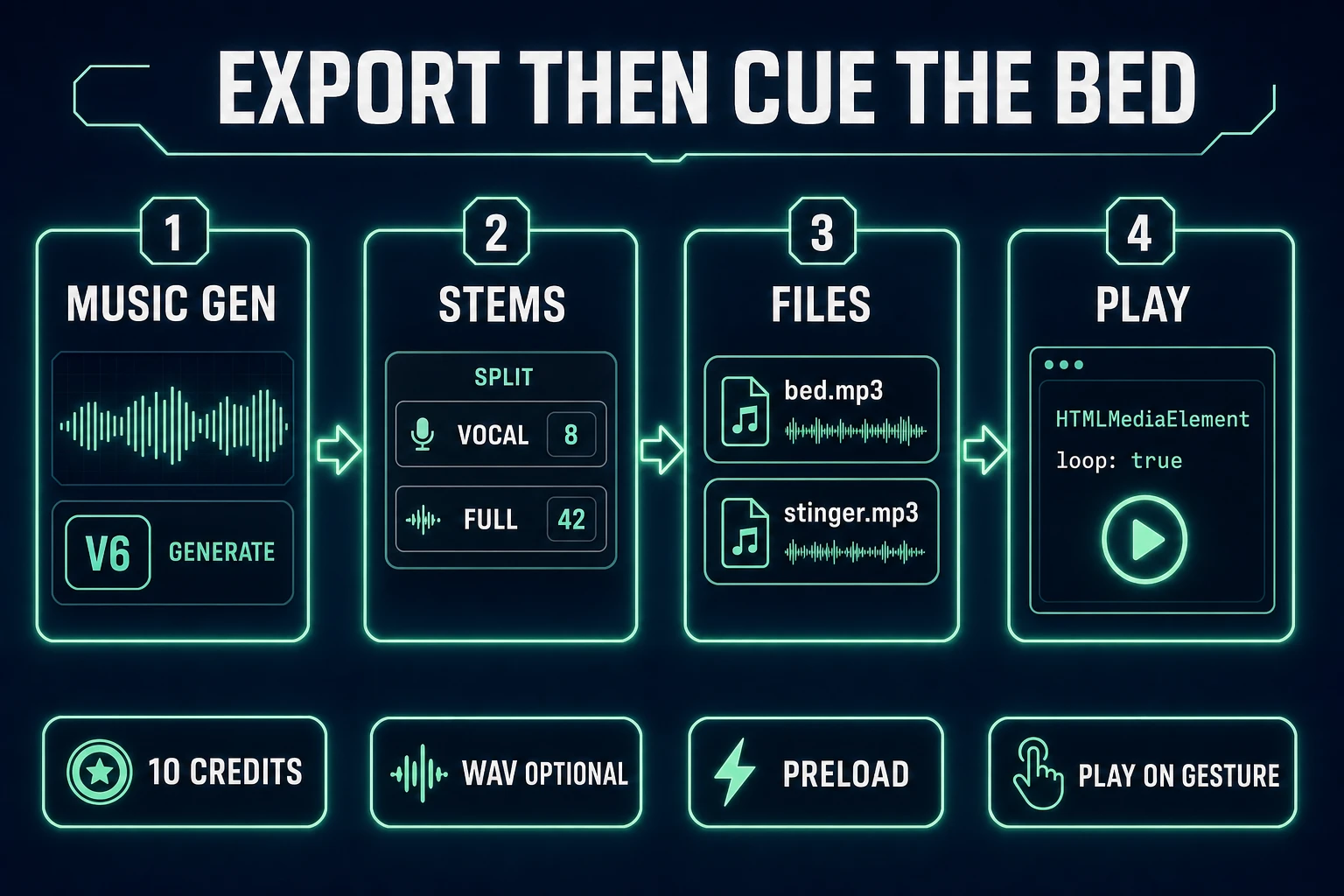
Export then cue the loop bed: Music Gen, stems, files, HTMLMediaElement loop
Export the bed, optionally split stems, then cue with loop true from a user gesture.

Cue the bed in the engine

MDN’s HTMLMediaElement.loop property (checked 2026-09-26) reflects the loop attribute and restarts playback when the media ends. For a simple browser jam:

const bed = new Audio('/audio/music/bed_explore.mp3');
bed.loop = true;
bed.volume = 0.35;
// call bed.play() from a click / Start button — not on page load

Browsers block surprise autoplay. Start the bed from a user gesture such as Start, Continue, or the first jump. Preload during the loading screen so the first loop does not stall.

When you need ducking, crossfades, or sample-accurate restart, step up to the Web Audio API (MDN overview checked 2026-09-26). Decode into an AudioBuffer, set AudioBufferSourceNode.loop = true, and route through a GainNode so combat can lower the bed without stopping it. That modular graph is how you how to make music for a video game that reacts without restarting the whole score on every state change.

Stingers stay one-shots: new Audio(url).play() on the event, or a short buffer source with loop off. Never set loop true on a win sting — it will celebrate forever.

Credits: worked examples for 2026

Constants verified 2026-09-26:

  • One Create on V6 = 10 credits ≈ $0.10 (two variations).
  • Auto lyrics = +2 credits when you need sung title themes.
  • WAV = 2, MIDI = 15, vocal stems = 8, full stems = 42, Advanced instrument = 17, Replace Section = 5.
  • A careful how to make music for a video game night: two Creates + one Extend + one WAV ≈ 32 credits before stems.

If budget is tight, lock the prompt on V6 Mini for drafts, then spend one V6 Create on the final bed. Do not multi-select three models on every experiment — costs multiply by selected model count.

Verdict: how to make music for a video game in one session

How to make music for a video game is a loop problem, then a file problem, then a cue problem. Write an instrumental bed that can repeat. Keep SFX and stingers on their own clips. Export with names the loader trusts. Set loop = true and start from a gesture.

Sorceress Music Gen fills the bed with Suno V6, V6 Mini, or V6 Wild. SFX Gen fills the hits. Sound Studio keeps the library in one place when you want music, voice, and effects together. Ship the explore bed first — adaptive danger layers can wait until the room already feels directed.

Frequently Asked Questions

How to make music for a video game if I cannot compose?

How to make music for a video game is a file plan first: one looping instrumental bed for the scene, optional short stingers for events, and SFX on separate clips. Sorceress Music Gen writes full tracks from a prompt with Suno V6, V6 Mini, or V6 Wild (verified 2026-09-26 in src/app/music-gen/page.tsx). Turn Instrumental on so lyrics do not narrate over gameplay.

What is a loop bed versus a full track?

A loop bed is short music written to restart cleanly under a level. A full track is a song shape with verse, chorus, and ending. Wikipedia’s video game music article (checked 2026-09-26) notes that early continuous scores were already looping textures that could speed up with play. For jam levels, prefer beds over singles.

How many credits does Music Gen cost?

Create costs 10 credits per selected Suno model. Auto lyrics add 2. WAV export is 2, MIDI is 15, vocal stem split is 8, full stem split is 42, Advanced single-instrument split is 17, and replace section is 5. One credit equals one cent (CREDITS_PER_DOLLAR = 100). Constants read from src/app/music-gen/page.tsx and src/lib/models.ts on 2026-09-26.

When should I export stems?

Export stems when you need to mute vocals, duck drums under dialogue, or rebuild a quieter explore layer without regenerating the whole bed. Vocal separate is 8 credits; full split is 42; Advanced single-instrument extract is 17 (verified 2026-09-26). For a simple jam, one instrumental mp3 is enough.

How do I loop music in a browser game?

MDN’s HTMLMediaElement.loop property (checked 2026-09-26) reflects the loop attribute and restarts playback at the end. For tighter seams, decode with the Web Audio API and set AudioBufferSourceNode.loop. Start from a user gesture; browsers block surprise autoplay.

Sources

  1. Video game music - Wikipedia
  2. Web Audio API - MDN Web Docs
  3. HTMLMediaElement.loop - MDN Web Docs
  4. HTML audio element - MDN Web Docs
Written by Arron R.·1,567 words·7 min read

Related posts