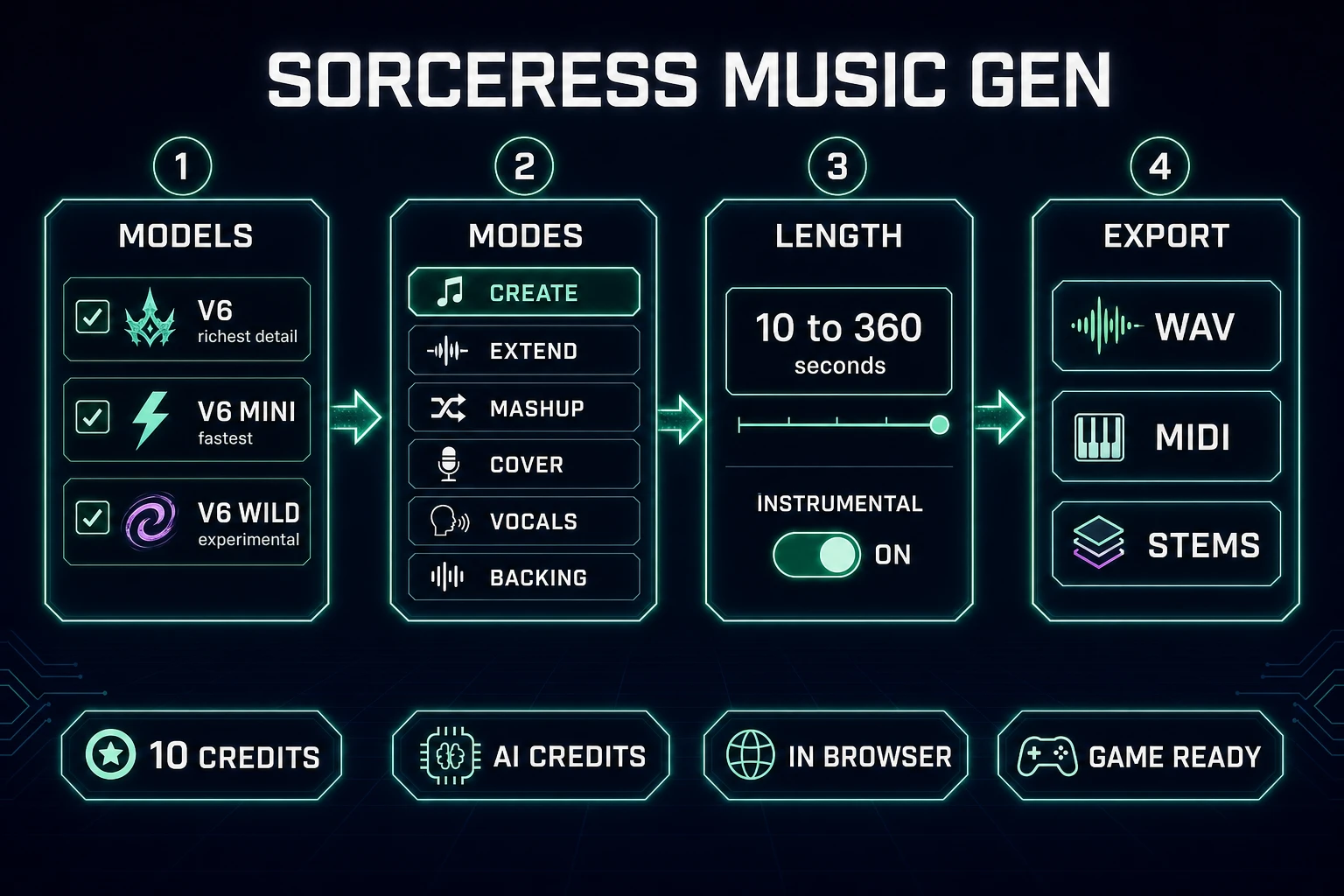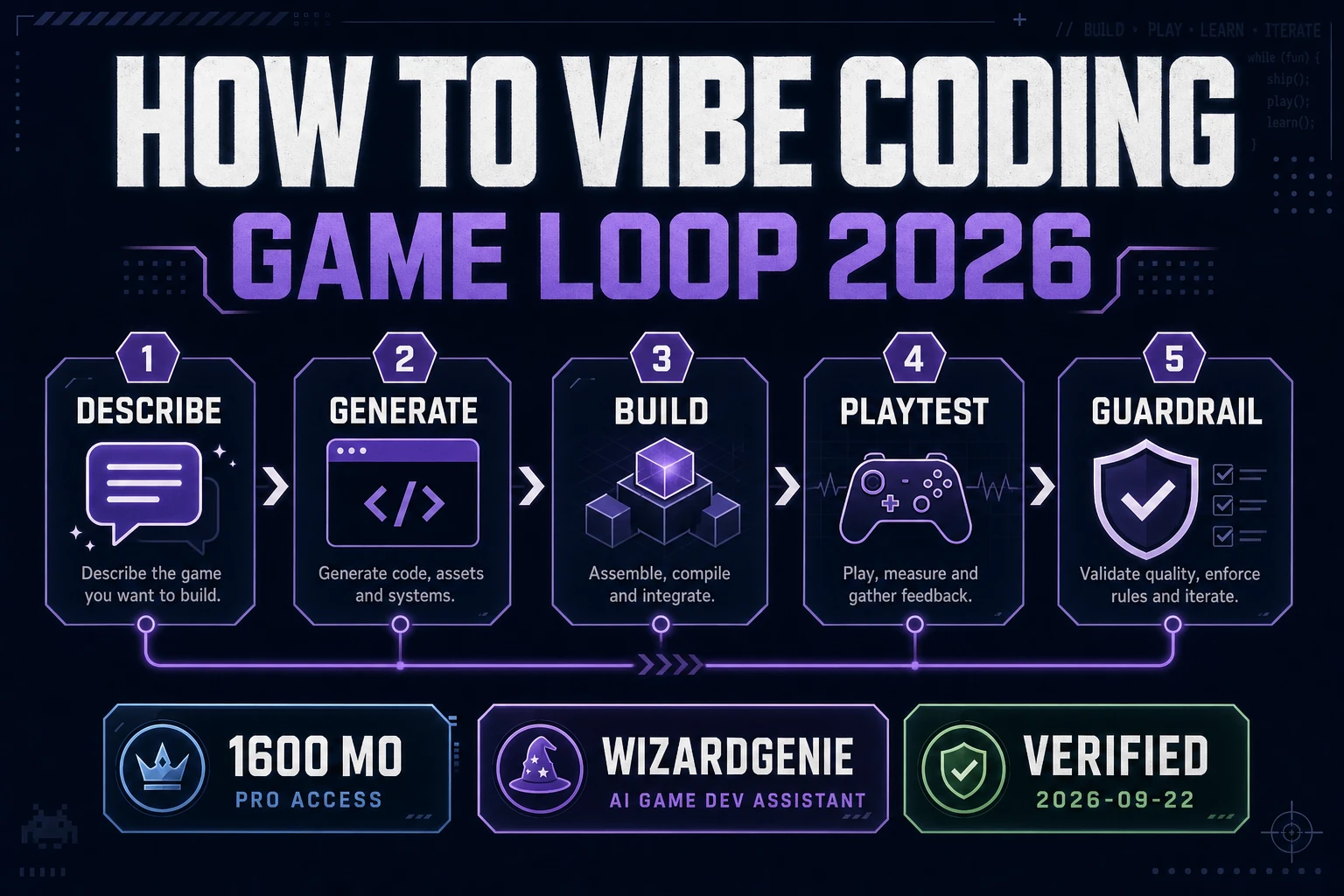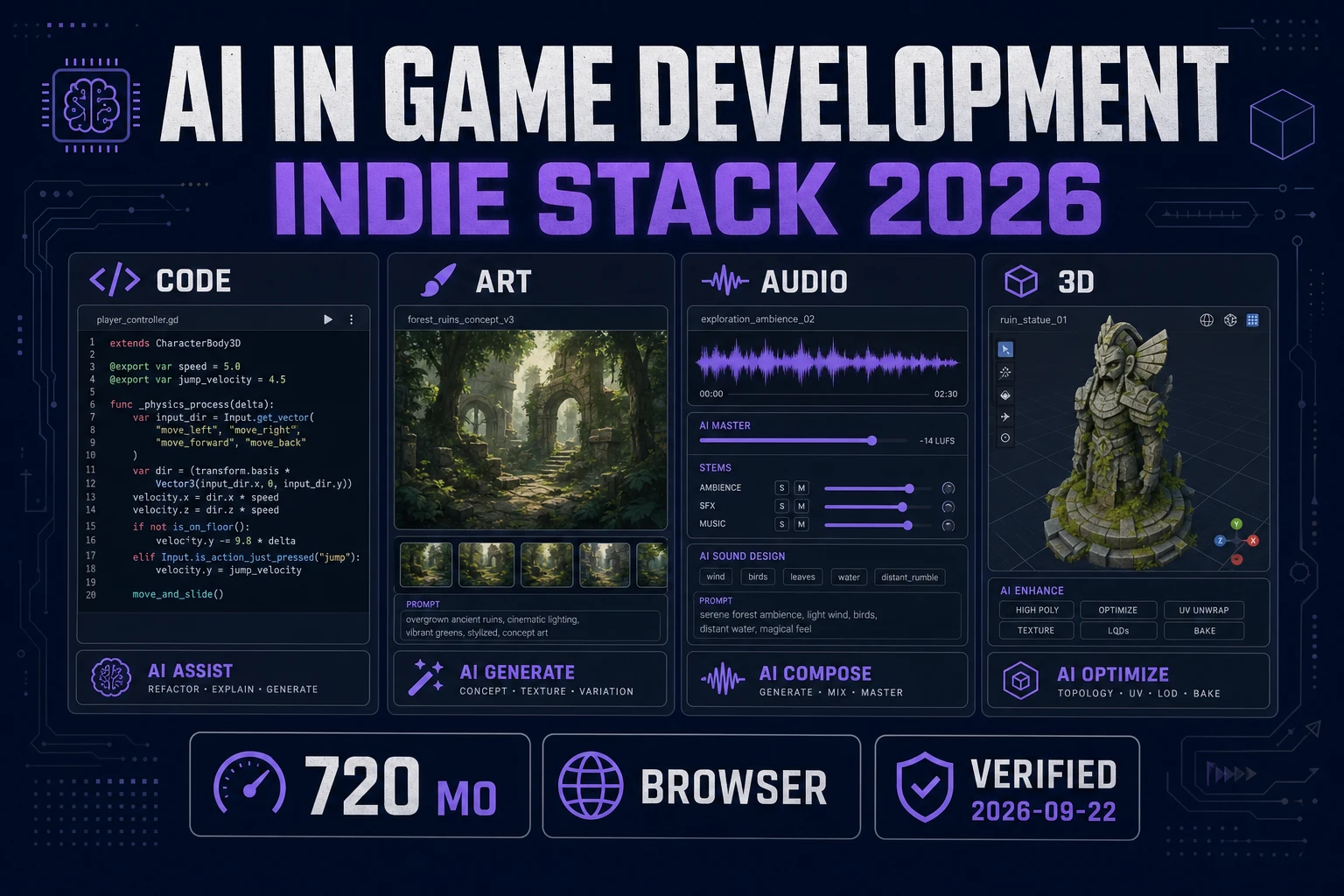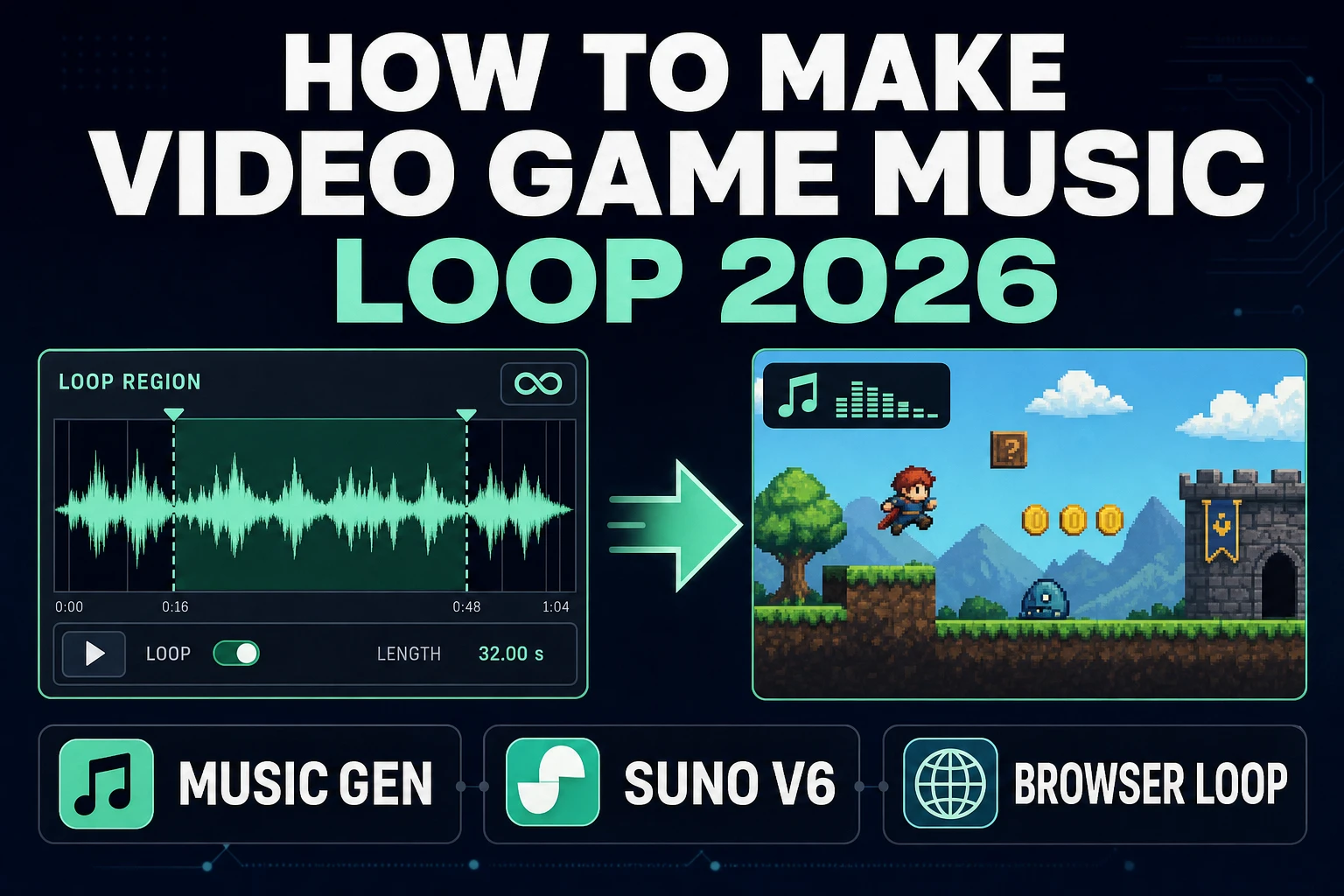
How to make video game music is a loop problem before it is a composition problem. A three-minute song with a verse, a chorus, and a fade-out fights the player who is still in the same room. This piece is the practical split for a browser level: what the bed is for, what a stinger is for, and how Sorceress Music Gen writes those files without a studio session. Model names, credit costs, and mode labels below were read on 2026-09-21 from src/app/music-gen/page.tsx, src/app/sfx-gen/page.tsx, and src/app/_home-v2/_data/tools.ts. Historical claims were checked the same day on the Wikipedia video game music article. Playback claims were checked on MDN.
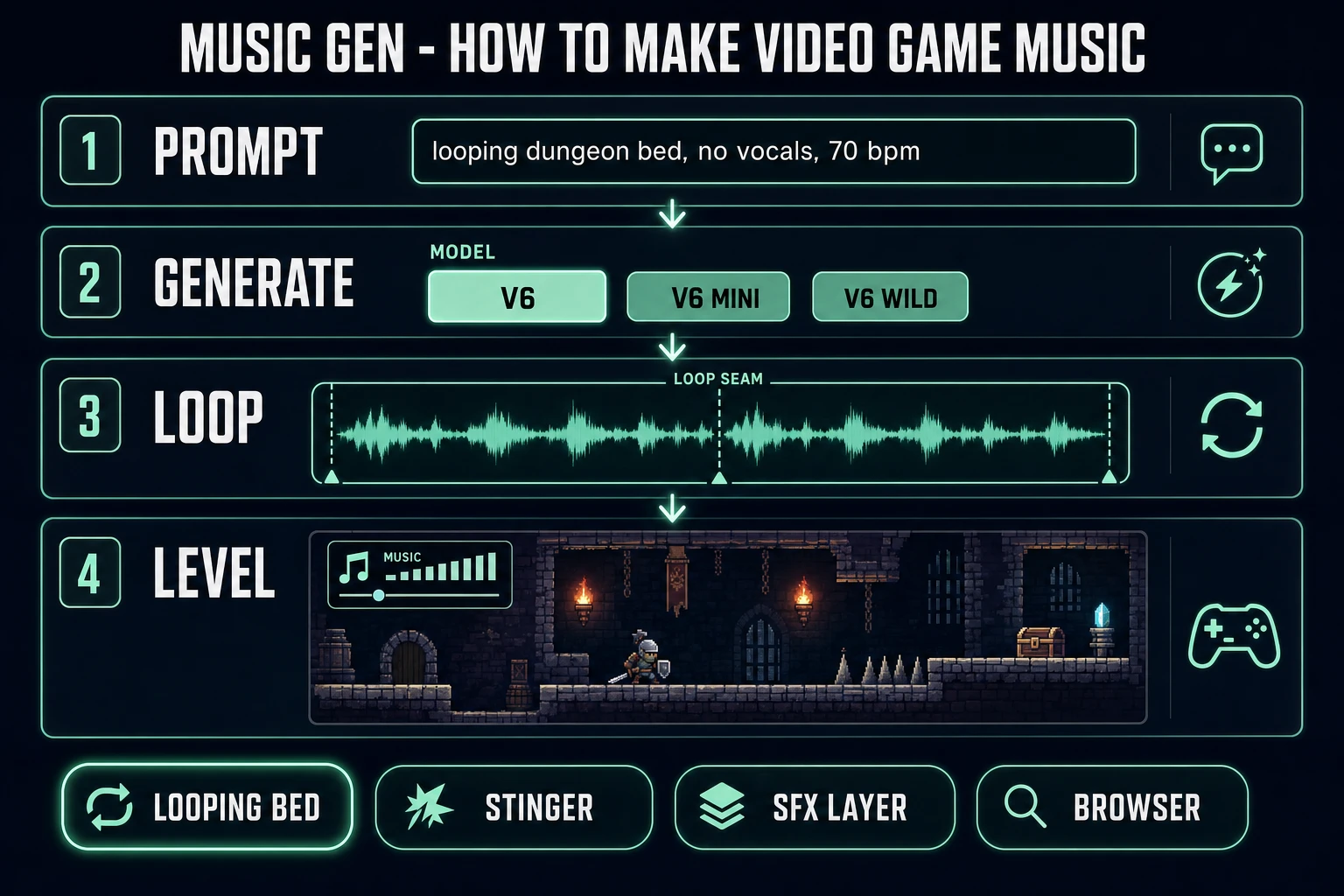
How to make video game music without a studio degree
The Wikipedia definition, verified 2026-09-21, is plain: video game music is the soundtrack that accompanies a game. It can sit on a title screen, a menu, or gameplay, and it can change when the situation of the player changes. Early games were stuck with programmable sound generators and FM chips, which is why chiptune still reads as a game even when your project is not retro. You do not need that hardware history to ship a jam. You do need the job description those chips forced on composers: short material that can repeat, and a separate channel for noises that must not erase the tune.
How to make video game music with no experience starts by refusing the pop-song template. A level bed is not a single. It is a texture the player can ignore for ten minutes and still recognize when it drops out. Space Invaders (1978) is the usual first example of a continuous background score, and it was already dynamic: four descending chromatic notes sped up as the aliens descended. Rally-X (1980) is cited as the first continuous melodic background tune. Those facts are on the Wikipedia page checked 2026-09-21. The lesson for a modern browser game is the same. The music has a job inside the rules, not beside them.
People also search how to make music for a video game, how to make music for game, and how to make music for a game. Those phrases want the same deliverable: files you can drop into a scene. DataForSEO lists how to make video game music at 320 searches a month, KD 13 (verified 2026-09-21 in tools/research-supplement.md). The neighboring phrase how to make music for a video game is the same volume and the same KD. Answer the structure first. The generator is the way you fill the files, not the definition of the job.
A workable first pass has three files and nothing else:
- One instrumental bed that loops cleanly for the main scene.
- One short stinger, two to six seconds, for a door, a chest, or a win.
- A handful of one-shot effects that never share a file with the melody.
If you only finish the bed, the level already feels directed. The other two files are how the game talks back.
What a level bed actually is
A bed is music that can survive repetition. Harmony stays in one pocket. Percussion does not build to a chorus drop at bar 32 unless you want the drop every time the loop restarts. Vocals are usually wrong here, because a sung lyric becomes a narrator the player cannot turn off. How to make video game music for exploration means prompting for stay, not for arrive.
Prompt the bed like a location, not like a playlist genre soup. Useful constraints:
- Scene: stone dungeon, slow footsteps, no combat yet.
- Tempo band: 70 bpm, sparse percussion.
- Instrumentation: low strings, soft pulse, no lead vocal.
- Length target: long enough to hide the seam, short enough to iterate. Thirty to ninety seconds is the indie default.
- Energy ceiling: never climaxes, stays under dialogue.
Original versus licensed is the other fork the Wikipedia article names. A jam should stay original. A prompt-written instrumental you generated for this project is original in the practical sense that you are not dropping a commercial master into the build. Do not paste a famous melody into the style box and hope the model makes it gamey. That is how a famous melody ends up inside your loop without a license.
Stingers, danger layers, and silence
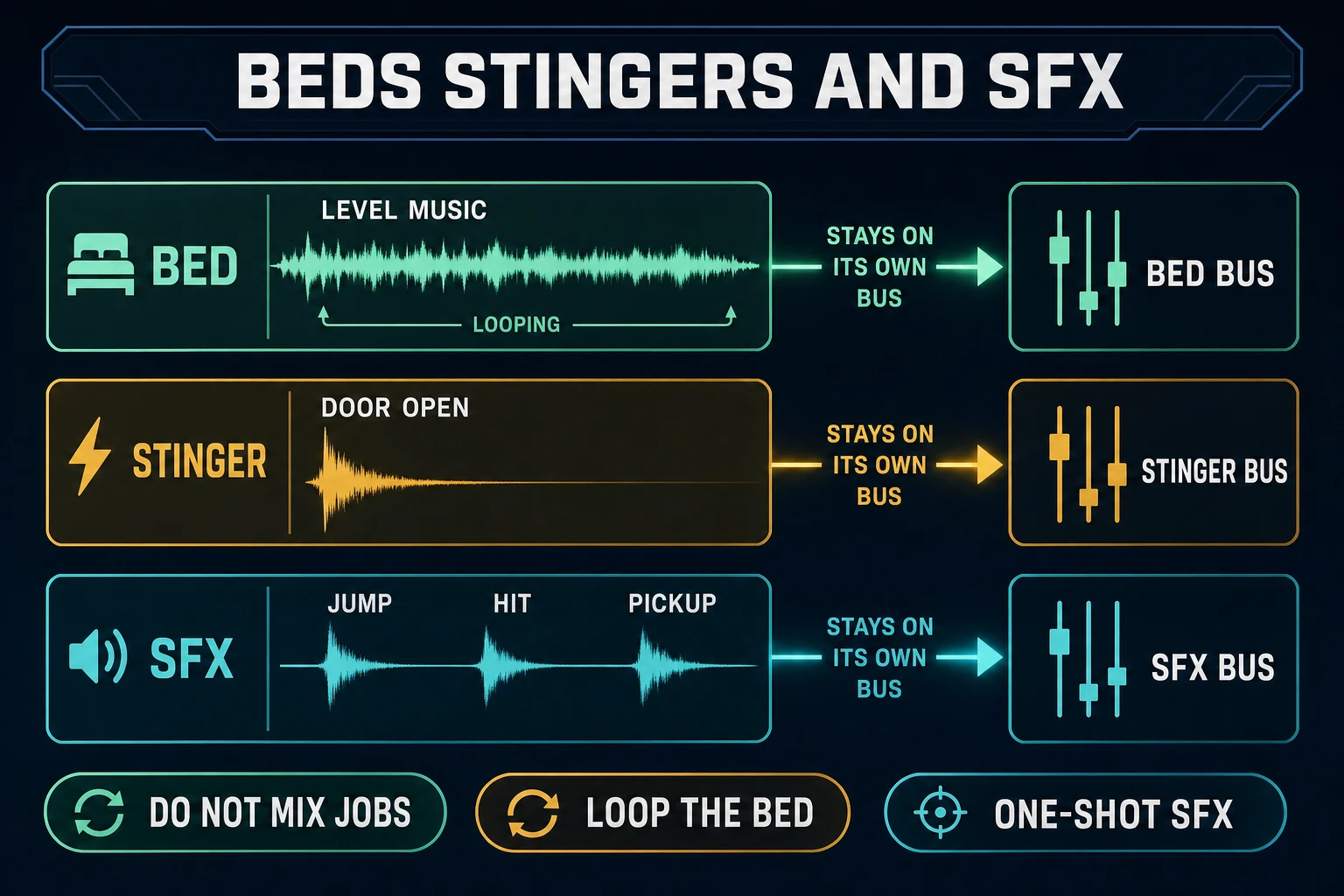
A stinger is a musical punctuation mark. The bed keeps going, or it ducks, and a short phrase announces that something changed: door unlocked, boss spotted, run failed. The Frogger arcade score is the historical picture of this idea, with many gameplay tracks plus start and game-over themes that follow what the player does (Wikipedia, verified 2026-09-21). You do not need eleven tracks. How to make video game music at this scale is a small set of files, not a soundtrack album. You need one bed and one or two stingers.
Danger music is a second bed, not a louder copy of the first. Prompt it with the same key and tempo family so the crossfade does not feel like a radio station change. Same dungeon, 70 bpm, tighter drums, higher strings, still no vocals is a better second prompt than an epic orchestral battle. When the threat ends, return to the calm bed. Silence is also a legal arrangement. A puzzle room with no bed makes the stinger on the correct switch much louder than any mix trick.
How to make video game music that reacts to play is mostly state, not composition. Your code holds a variable: explore, alert, or victory. Each state points at a file. The job of the composer, human or model, is to make those files agree with each other. If you only have time for one reactive moment, make it the win stinger. Players remember the noise that means they finished.