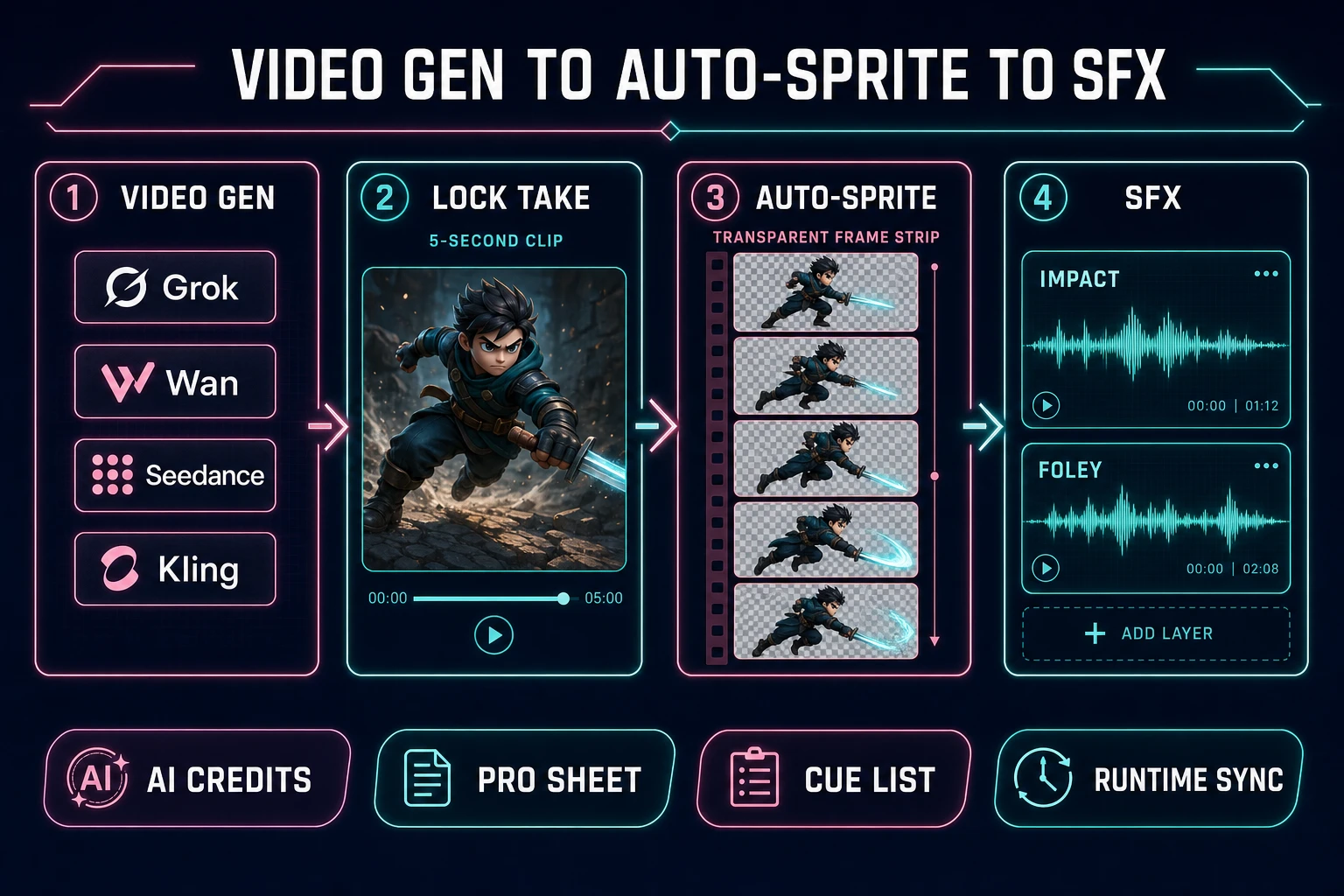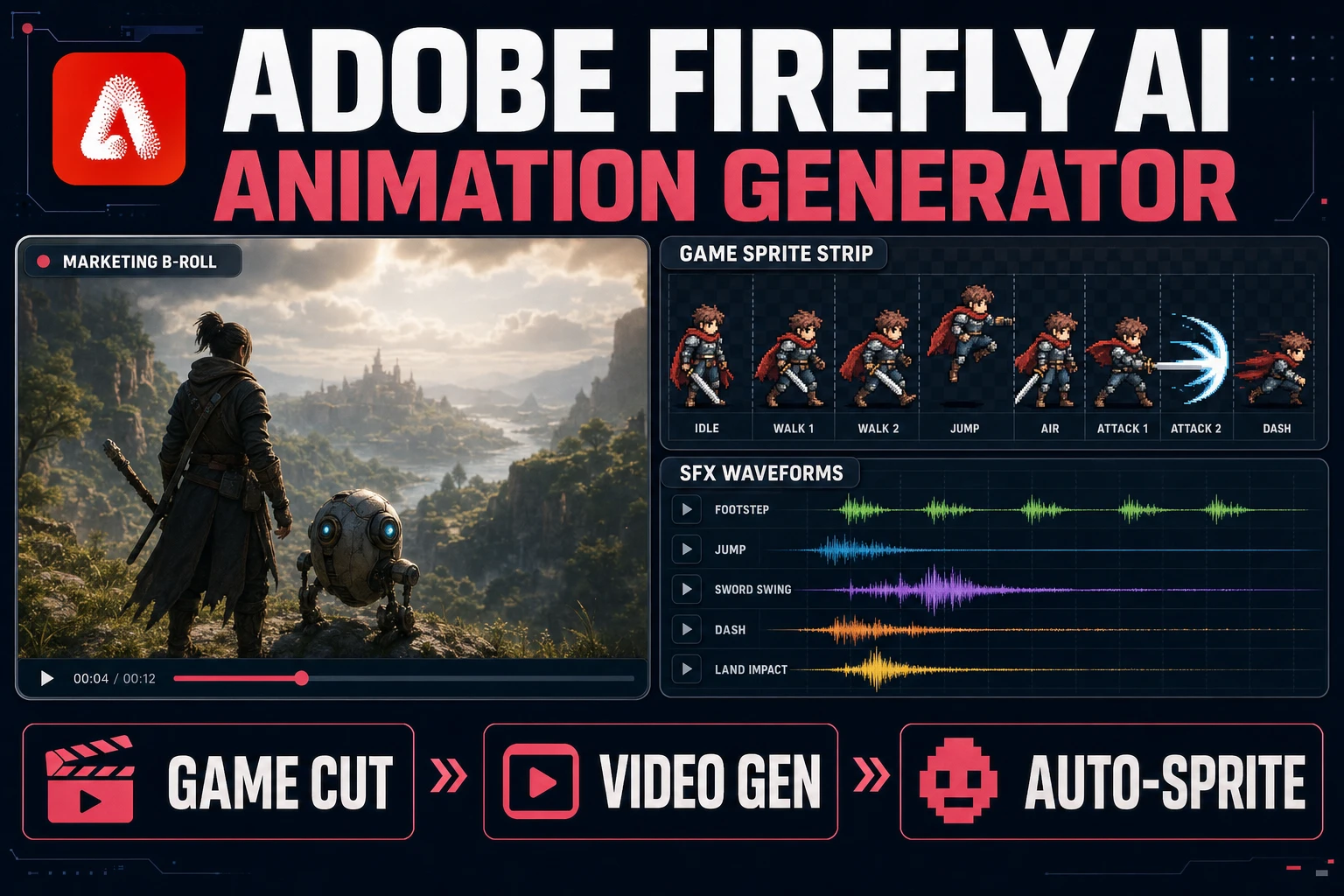
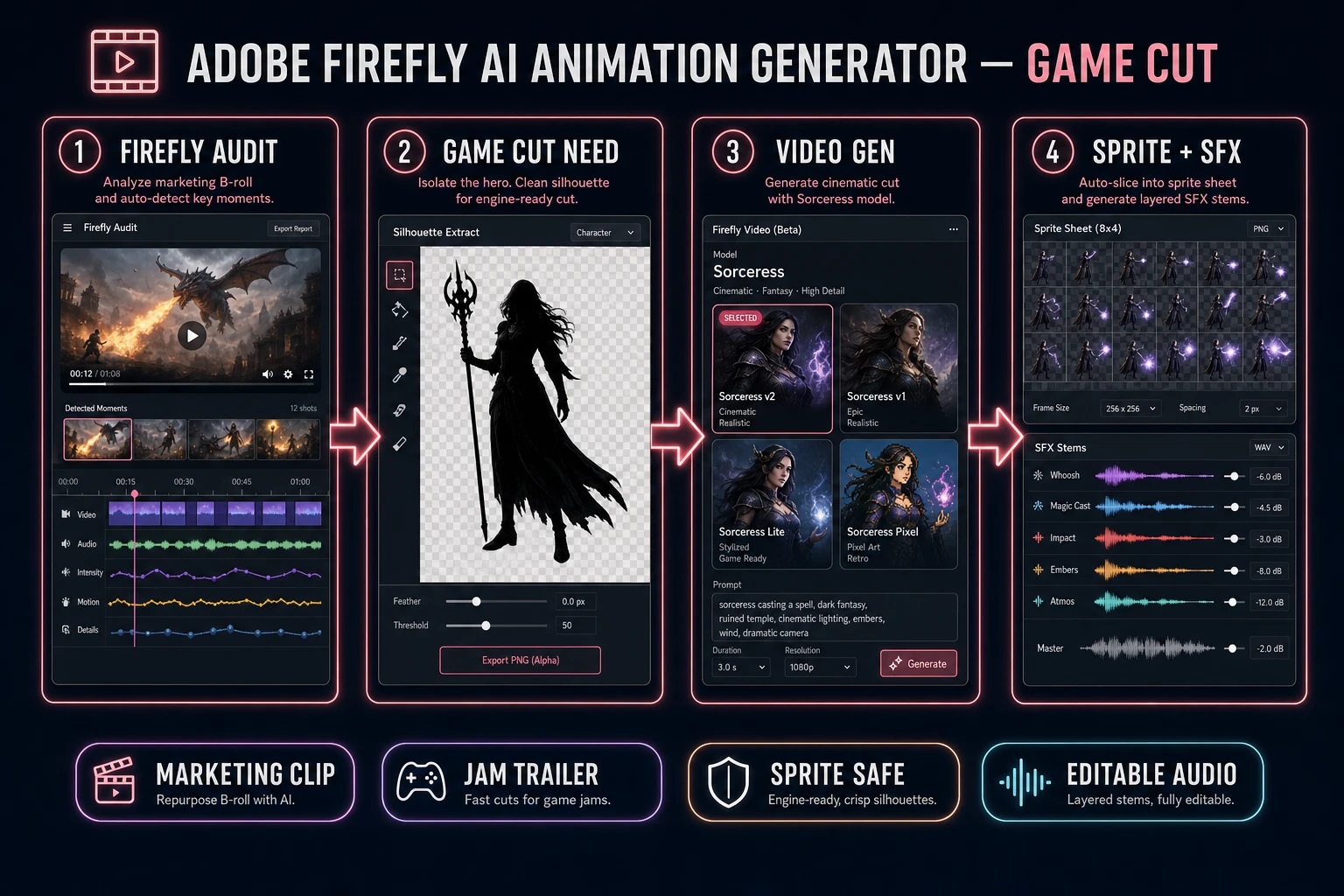
Searching adobe firefly ai animation generator usually means you want motion from a prompt without opening a full DCC suite. Adobe Firefly’s video path is built for commercially framed creative clips—pitches, B-roll, social motion, Premiere Generative Extend. Indie jam trailers and sprite-safe loops need a different finish: locked action, hard silhouettes, and audio you can edit. This audit maps where Firefly wins, where game cuts diverge, and how Sorceress AI Video Gen, Auto-Sprite v2, and SFX Gen close that gap. Firefly plan and credit rates below were live-checked July 24, 2026 against Adobe’s Firefly product page and generative credits FAQ (named in plain text only—no competitor outbound links). Sorceress video models were verified the same day in VIDEO_MODELS inside src/app/_home-v2/_data/tools.ts.
What adobe firefly ai animation generator optimizes for
DataForSEO lists adobe firefly ai animation generator at 1,900 monthly searches with KD 56 in research-supplement.md (citation row still current for this draft). Related transactional tails include ai animation video generator at 1,600/mo, KD 35. Intent is informational-to-transactional: people type the vendor name because they want Firefly-shaped motion, not a generic “what is animation” explainer.
Adobe’s Firefly product surface (verified July 24, 2026) positions the Firefly app as a space for images, video, audio, and design, with Adobe’s own models plus partner models for text-to-video and image-to-video. Marketing copy stresses commercially framed outputs, cinematic motion, and handoff into Creative Cloud apps such as Premiere Pro and Express. That is a serious creative-suite lane. It is not automatically a game-asset lane.
Premium video is metered. Adobe’s generative credits FAQ (live-checked July 24, 2026) prices Generate Video at 100 credits per second for 1080p at 24 FPS, 50 for 720p/24, and 20 for 540p/24. Generative Extend in Premiere sits on a separate premium table (for example 100 credits/second at 1080p/24). Name Firefly in plain text when you compare—do not treat Adobe’s marketing site as an internal link target. The job of this page is to answer the search, then show the Sorceress path that continues into jam trailers and sprite sheets. For the adjacent sound-first workflow already on the blog, see Direct an AI video generator with sound effects.
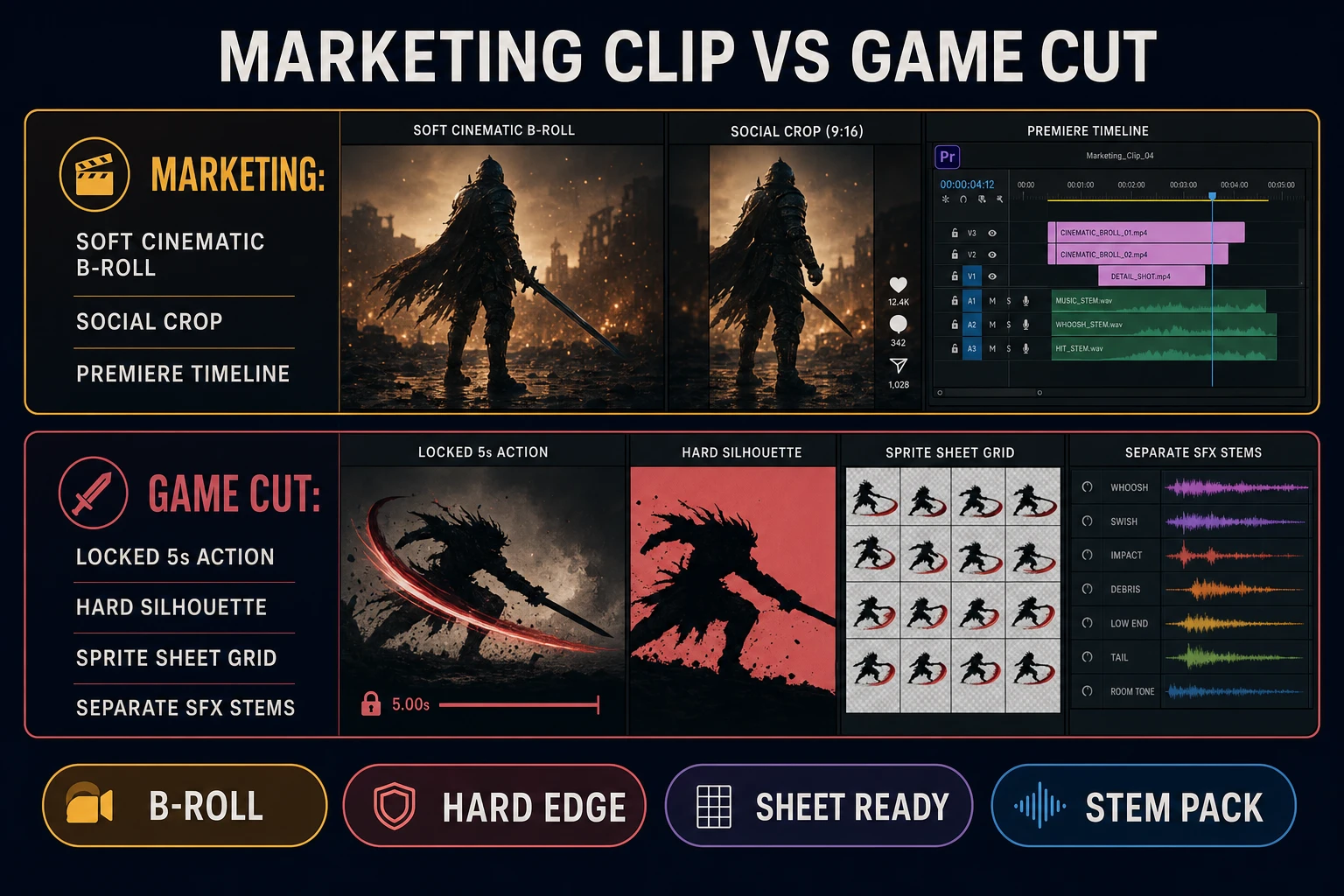
Where marketing clips diverge from game loops
Computer animation (Wikipedia, live-checked July 24, 2026) covers everything from cinematic sequences to interactive real-time assets. A Firefly marketing clip succeeds when motion feels premium in a social crop. A game cut succeeds when one readable action survives engine playback, UI overlays, and—if you sheet it—nearest-neighbor zoom.
- Subject stability: trailers tolerate camera flourish; sprites punish silhouette drift and limb morph between frames.
- Background policy: soft bokeh sells a brand film; muddy grounds defeat chroma and Auto-Sprite cleanup.
- Duration job: B-roll can wander for fifteen seconds; a jam beat usually needs one locked 4–6 second action.
- Audio ownership: a mixed MP4 is fine for a pitch deck; games need separate dialogue, ambience, Foley, and impacts.
- Downstream tools: after Firefly you often open Premiere. After a game cut you open a sprite sheet, an atlas packer, or a timeline in code.
If your only deliverable is a store page hero loop or a Discord announcement, Firefly’s commercially framed path is a fair stop. If the deliverable is a playable trailer beat or a walk-cycle sheet, treat Firefly (or any cinematic generator) as ideation—then finish in a game stack.
Scorecard for jam trailers and cutscenes
Before you spend credits on either stack, score the shot against five gates. Pass all five and any generator can feed production. Fail two and you are buying pretty noise.
- One sentence action: “Hero draws blade, two steps, camera locked medium.” If you need three cuts, you need three generations.
- Readable silhouette: subject separates from ground at thumbnail size. Costume detail that vanishes at 128px does not help a jam trailer.
- Contact frames: feet plant, latch closes, impact lands on a visible frame you can spot for SFX.
- Loop or cut policy: decide whether the MP4 is a one-shot cutscene or a looping teaser before you regenerate for novelty.
- Audio plan: native mix for review only, or stems for runtime. Write the choice down so you do not argue with yourself after the tenth take.
Browser playback is a first-class review surface. The HTML video element (MDN, live-checked July 24, 2026) gives you scrubbing and frame inspection without leaving the browser; the Canvas API is how many sprite tools sample frames for sheets. Use those primitives as your QA desk even when the generator lives elsewhere.